


Small Business Line of Credit Qualification Checklist for 2026
- anthonyarallen
- Aug 1
- 11 min read
Updated: Aug 16
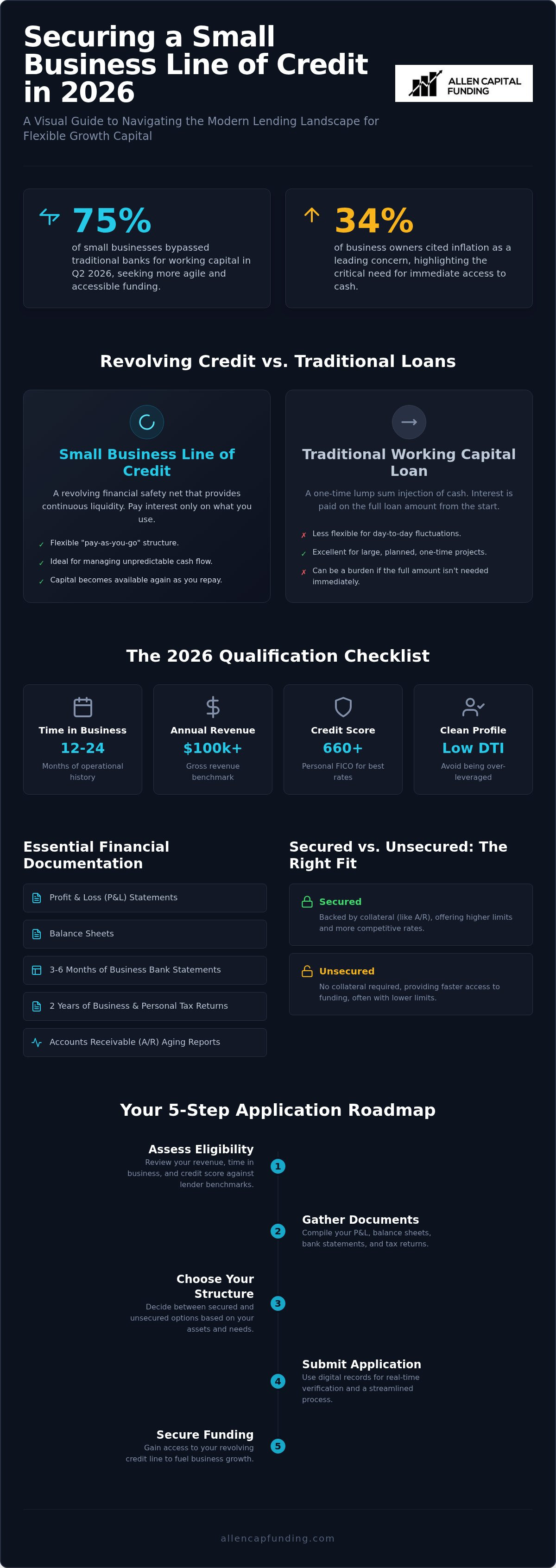
Did you know that 75% of small businesses reported bypassing traditional banks for their working capital needs in the second quarter of 2026? This shift highlights a growing demand for agility and a more accessible small business line of credit over traditional bureaucracy. You've likely felt the frustration of slow approval processes or the fear that hidden fees might eat into your margins. It's exhausting to navigate a financial landscape that feels designed to hold you back rather than propel you forward.
We're here to change that narrative. You'll learn exactly how to master the qualifications and documentation needed to secure funding that aligns with your 2026 growth strategy. By the end of this guide, you'll understand how to build a lender-ready profile that attracts competitive rates and flexible terms. We'll walk through a comprehensive checklist of financial requirements, explain the impact of recent regulatory updates, and show you how a strategic brokerage approach can accelerate your path to funding.
Table of Contents
Understanding the Small Business Line of Credit in 2026
A small business line of credit functions as a financial safety net and a high-octane growth engine. Unlike a traditional term loan where you receive a lump sum and pay interest on the full amount, this facility is revolving. You have access to a predetermined pool of capital, but you only pay for what you actually use. To understand the foundational mechanics, it helps to review what a line of credit is in a broader financial context. As you repay the funds you've drawn, that capital becomes available to use again. This cycle provides continuous liquidity that adapts to your business needs.
In 2026, market conditions have made flexibility a top priority. With inflation remaining a leading concern for 34% of business owners according to Q2 2026 data, having immediate access to cash is vital. Fixed-term loans can often feel like a burden if you don't need the entire amount immediately. A line of credit allows you to bypass that weight. Common use cases include:
Managing inventory surges during peak demand.
Covering seasonal payroll to retain top talent.
Capitalizing on bulk purchase discounts from vendors.
Bridging the gap between invoicing and payment.
Revolving Credit vs. Working Capital Loans
The primary distinction lies in the interest model. With a line of credit, you benefit from a "pay-as-you-go" structure. You only accrue interest on the specific balance you draw. Contrast this with a working capital loan, which provides a one-time injection of cash. While a lump sum is excellent for large, planned projects, the revolving model is superior for managing day to day fluctuations. Businesses with unpredictable revenue cycles or those in high growth phases typically find the revolving structure more cost effective.
The Role of Credit Lines in Strategic Growth
Securing a small business line of credit isn't just about survival; it's about leverage. Having capital ready allows you to negotiate better terms with your suppliers. If you can pay upfront or buy in larger quantities, you often unlock discounts that improve your bottom line. This facility also bridges the "cash flow gap" that occurs during rapid expansion. When your accounts receivable lag behind your operational costs, the line fills the void. It's always better to establish this facility before a crisis occurs. Lenders prefer to see a strong financial profile during a period of stability rather than a desperate search for emergency cash.
The 2026 Small Business Line of Credit Qualification Checklist
Qualifying for a small business line of credit in 2026 requires more than just a healthy bank balance. It's about demonstrating stability and a clear path to repayment. Most national lenders now look for 12 to 24 months of operational history as a standard benchmark. This timeframe proves your business model can survive market fluctuations and seasonal dips. While some fintech options accept lower figures, top-tier lenders often require annual gross revenue exceeding $100,000 to $250,000. They want to see that your cash flow is consistent enough to handle revolving debt without straining your daily operations.
Essential Financial Documentation
Lenders need a clear window into your financial health to approve your request. You should be prepared to provide the "Big Three" documents: Profit and Loss (P&L) statements, Balance Sheets, and at least three to six months of business bank statements. These records help lenders verify your actual cash flow against your claims. You'll also need the last two years of business and personal tax returns to confirm long-term profitability. If you're seeking a secured line, have your Accounts Receivable (A/R) aging reports ready. These reports show the value of your outstanding invoices, which can often serve as collateral to unlock higher limits.
Credit Thresholds and Score Optimization
Aim for a score of 660 or higher to unlock the most competitive business line of credit rates. Scores below this threshold may still qualify, but they often come with higher draw fees or shorter repayment windows. Check your business credit reports for errors through bureaus like Experian or Dun & Bradstreet before you apply. Correcting a simple reporting mistake can boost your score significantly in a short period. Working with a broker can help protect your score; they often use soft pulls to find the right fit, avoiding the multiple hard inquiries that occur when you apply to individual banks yourself. If you want to ensure your profile is lender-ready, starting with a financial check-up can help identify any gaps in your documentation.
Secured vs. Unsecured: Choosing the Right Structure
Choosing the right structure for your small business line of credit depends on a critical trade-off: speed versus cost. Unsecured lines are the most popular choice for businesses that need capital quickly. These facilities don't require you to pledge specific assets like real estate or equipment. Because the lender takes on more risk, they typically charge higher interest rates, often ranging from 10% to 22% APR depending on your credit profile. The approval process is streamlined, frequently providing access to funds in as little as 24 to 48 hours. This makes them ideal for seizing immediate market opportunities or covering unexpected gaps.
Secured lines of credit offer a different strategic advantage. By backing the line with collateral, you unlock lower interest rates and significantly higher credit limits. Lenders feel more secure when they have a claim to tangible assets, which allows them to offer terms that are more favorable to your bottom line. However, you must be aware of UCC liens. Most lenders will file a "blanket lien" on your business assets. This gives them a legal interest in your property until the debt is satisfied. Additionally, almost every small business line of credit requires a personal guarantee. This founder signature ensures you are personally committed to the repayment, regardless of your business's legal structure. Following the SBA guide to establishing business credit can help you build the strong profile necessary to negotiate these terms effectively.
The SBA CAPLine Advantage
For businesses with specific operational cycles, the SBA line of credit programs, known as CAPLines, provide a powerful alternative. Seasonal CAPLines are designed specifically for businesses that experience predictable surges in expenses, such as retailers preparing for the holidays. Working Capital CAPLines function more like a traditional revolving facility but come with the added security of an SBA guarantee. While the paperwork is more intensive than an unsecured online line, the interest rates are often the most competitive in the market, typically hovering between 9% and 11.5% APR in 2026.
Asset-Based Liquidity Strategies
If your business holds significant inventory or a large volume of unpaid invoices, you can leverage these as collateral. This approach, often referred to as asset-based lending for small business, allows you to convert your balance sheet directly into revolving liquidity. It's a highly efficient way to fund growth without the high costs of unsecured debt. You should perform a cost-benefit analysis before pledging assets. While you'll save on interest, you must ensure your cash flow can support the structured repayment schedules required by asset-based lenders.
The Application Roadmap: 5 Steps to Funding
Securing a small business line of credit requires a methodical approach to ensure you get the best terms possible. While some lenders promise instant deposits, a strategic roadmap prevents you from falling into high-interest traps. Start with a thorough assessment of your capital needs. You don't want to pay for a credit limit you'll never use. Similarly, you don't want to be under-capitalized during a growth surge. Each small business line of credit application should be a calculated move based on your specific 2026 objectives.
Follow these five steps to navigate the process with confidence:
Step 1: Conduct a financial check-up. Identify your target funding amount based on current cash flow and projected expenses.
Step 2: Aggregate digital financial records. Use real-time verification tools to gather your P&L, balance sheets, and bank statements.
Step 3: Consult with a brokerage expert. Map your specific profile to lender appetites across a national network to find the best fit.
Step 4: Review and compare term sheets. Focus on the total APR, including origination fees (typically 1% to 3%) and draw fees.
Step 5: Finalize and activate. Complete any necessary UCC filings for secured lines and activate your draw access immediately.
Strategic Draw Management
Managing your first draw is a critical test of financial discipline. Only withdraw what's necessary for the immediate project or inventory purchase. This approach keeps your interest expenses low and proves to the lender that you can manage debt responsibly. Timely repayments on these initial draws often trigger automatic limit increases. It's a "pay-as-you-go" system that rewards consistency. If you're ready to see where your business stands, you can start with a professional financial check-up to prepare your application.
Avoiding Common Application Pitfalls
One of the most dangerous mistakes is "stacking" multiple credit facilities. Having too many open lines can lead to a default spiral and permanent credit damage. Lenders in 2026 use sophisticated algorithms to detect this behavior quickly. Also, keep a sharp eye out for hidden fees. Some lenders charge non-utilization fees if you don't draw funds, or maintenance fees that add up over time. Avoid applying to multiple banks directly. Each hard inquiry can lower your credit score. A brokerage search is more efficient and protects your profile by targeting the most likely approval candidates first.
Accelerate Your Funding with Allen Capital Funding
The complexity of the national lending market shouldn't be a barrier to your progress. Securing a small business line of credit is a strategic move that requires more than just filling out forms; it requires an ally who understands the nuances of lender appetites. Allen Capital Funding acts as a strategic bridge. We connect your business to a vast network of national lenders, ensuring you don't waste time on applications that don't fit your profile. Our approach is built on professional confidence and a genuine desire to see your business reach its 2026 growth targets.
Generic bank offerings often fall short because they rely on rigid, one size fits all algorithms. We provide tailored capital solutions that reflect the unique strengths of your financial profile. Whether you need an unsecured facility for rapid response or a secured line to leverage your balance sheet, we guide you through every phase. This partnership doesn't end when you receive your approval. We remain a dedicated resource, helping you manage your draws and optimize your credit usage for long term success.
Our Multi-Lender Advantage
Applying to banks individually is inefficient and can lead to unnecessary hard inquiries on your credit report. Our brokerage model changes that. With a single application, you gain access to SBA specialists, alternative fintech lenders, and traditional institutional partners. We have deep expertise in SBA 7(a) and CAPLines, which are often the most cost effective options for growing firms. We match your specific industry and credit profile to the right funding source immediately. This precision saves you weeks of searching and positions you for accelerated success from day one.
Ready to Secure Your 2026 Line of Credit?
Your growth strategy deserves a financial foundation that is as flexible as your vision. By starting the qualification process today, you gain the peace of mind that comes from having capital ready before you need it. You'll benefit from competitive rates based on a strong, lender ready narrative that we help you build. Don't let cash flow gaps dictate your business's future. Our team is ready to provide the expert guidance and supportive empowerment you need to unlock your full potential. Explore tailored funding options with Allen Capital Funding and take the first step toward a more resilient financial future.
Secure Your Financial Future in 2026
Mastering the qualifications for a small business line of credit is the first step toward building a resilient growth strategy. You've learned how to prepare your digital financial records and evaluate the critical trade-offs between secured and unsecured facilities. Having this liquidity in place before you need it ensures you can capitalize on bulk discounts or navigate seasonal gaps without stress. It's about being proactive rather than reactive in an increasingly fast-paced market.
Allen Capital Funding simplifies this journey by acting as your dedicated guide to national lending pools. Our expert brokerage team provides access to both alternative credit facilities and specialized SBA CAPLines. We prioritize rapid processing and deliver tailored term comparisons that respect your bottom line. You don't have to navigate complex bank requirements alone. Book Your Strategic Funding Consultation today to unlock a capital solution that grows with you. Your business's next chapter starts with the right financial partner by your side.
Frequently Asked Questions
What is the minimum credit score for a small business line of credit in 2026?
Most lenders look for a personal FICO score of 660 or higher to offer the most competitive terms. While some alternative lenders may accept scores as low as 600, these options often come with higher interest rates and more frequent repayment schedules. Maintaining a strong score ensures you can access the full range of a small business line of credit without excessive costs.
How long does it take to get approved for a business line of credit?
Approval times vary significantly based on the lender type. Fintech and online lenders often provide a decision within 24 to 48 hours. Traditional banks and SBA CAPLines typically require a more intensive review process, which can take several weeks. Working with a brokerage can help you identify the fastest path based on your urgent capital needs.
Can I get a business line of credit with no collateral?
Yes, you can obtain an unsecured small business line of credit without pledging specific assets like real estate or equipment. These lines rely on your business's cash flow and your personal credit history. Keep in mind that unsecured lines usually have lower credit limits and higher APRs compared to secured options. Almost all lenders will still require a personal guarantee from the business owner.
How much revenue does my business need to qualify for a credit line?
Most national lenders require a minimum annual gross revenue of $100,000 to $250,000 to qualify. Lenders also examine your monthly bank statements to ensure consistent cash flow. They want to see that your business generates enough surplus to manage revolving debt payments without compromising your daily operations.
What is the difference between a business line of credit and a credit card?
A line of credit provides direct access to cash with lower interest rates, making it ideal for payroll or large inventory purchases. Credit cards are better suited for daily transactional expenses and offer grace periods, but they carry significantly higher interest rates if you carry a balance. Lines of credit also typically offer much higher borrowing limits than standard business credit cards.
Are there annual fees associated with a business line of credit?
Many lenders charge an annual or monthly maintenance fee to keep the credit facility open. These fees are typically under $200 per year, though some premium lines may have higher costs. You should also watch for origination fees and draw fees, which are charged each time you move funds into your business bank account.
Can a new business (startup) qualify for a line of credit?
Qualifying as a new startup is challenging because most lenders require at least six to twelve months of operational history. If your business is less than a year old, you may need exceptionally high personal credit or tangible assets to secure a line. Some alternative lenders offer smaller micro-lines to newer businesses that demonstrate rapid revenue growth.
How do interest rates work on a revolving line of credit?
Interest on a revolving line is typically variable and tied to the WSJ Prime Rate plus a lender spread. You only pay interest on the specific amount you draw, not the total credit limit. As you repay the principal, your available credit restores, and your interest charges decrease accordingly. This pay-as-you-go model is one of the most cost-effective ways to manage working capital.


Comments