


SBA Express Loan Process: 2026 Step-by-Step Guide
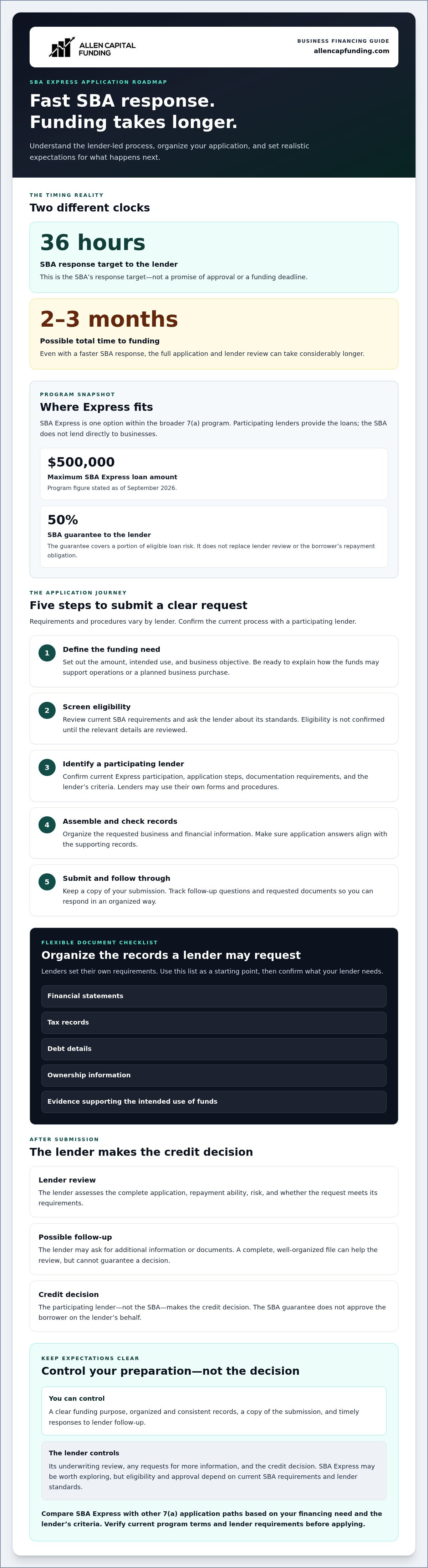
What if the fastest part of the SBA Express loan application process is the SBA’s response, not the funding? The SBA aims to respond to a lender within 36 hours, but that doesn’t guarantee approval or immediate access to capital. To plan realistically, understand what the lender needs and what happens after you apply.
If eligibility rules and document lists feel unclear, you’re not alone. Lenders set their own application requirements and underwriting procedures. A complete, well-organized file can help the lender review your request, but it can’t guarantee a decision. Total time to funding may still take two to three months.
This 2026 guide walks through the stages, from defining your funding need and checking basic eligibility to gathering financial records, submitting your application, and reviewing the lender’s decision. You’ll learn what to prepare, what may happen after submission, and how to compare SBA Express with other financing paths. The goal is to make your application easier to assess and give you a clearer basis for deciding what fits your business.
Table of Contents
What Is an SBA Express Loan, and Who Should Consider Applying?
SBA Express is a loan program within the SBA’s broader 7(a) program. Participating lenders provide the loans, rather than the SBA lending directly to businesses. The lender reviews your complete application, evaluates repayment ability and risk, and makes the credit decision. The SBA provides a guarantee to the lender for a portion of an eligible loan. That guarantee doesn’t replace the lender’s review or approve the borrower on the lender’s behalf.
As of September 2026, the maximum SBA Express loan amount is $500,000, and the SBA guarantee is 50%. The SBA aims to respond to the lender within 36 hours, but that target applies to the SBA’s response, not the full application or funding timeline. It doesn’t guarantee approval or quick access to funds. For broader context on SBA loan programs and how 7(a) fits into them, see this overview.
How SBA Express fits within the 7(a) loan program
Think of 7(a) as the umbrella program and Express as one option within it. Participating Express lenders have delegated authority and can use their own application forms and underwriting procedures. They assess the business and make the credit decision. The SBA guarantee helps cover part of the lender’s risk if an eligible loan defaults, but it doesn’t remove the lender’s review or transfer the borrower’s repayment obligation.
Businesses may explore financing for needs such as working capital, equipment, or eligible business real estate. The intended use must comply with current SBA rules, and the lender will review whether the request and supporting details meet its requirements.
Which businesses may want to explore an Express application?
An Express application may be worth exploring if you can explain what the business needs the funds for and provide records that help a lender assess its finances. Be ready to describe how financing would support operations or a planned business purchase, and how the business expects to repay it. A clear purpose helps frame the request, but it doesn’t determine the outcome.
Eligibility depends on current SBA requirements and the participating lender’s standards. A newer business, smaller funding request, or credit challenge doesn’t automatically mean an applicant qualifies or fails. The lender considers the full application and may ask for more information. Before beginning the SBA Express loan application process, confirm the lender’s criteria and check whether this path matches your business objective. SBA rules, program terms, and lender requirements can change, so verify current details before applying.
How the SBA Express Loan Application Process Works, Step by Step
The SBA Express loan application process involves a series of decisions and reviews, not just one form submission. You control how clearly you explain the request and how promptly you provide records. The lender controls its underwriting review, requests for additional information, and credit decision. Use these stages to plan, then confirm current requirements and procedures with the participating lender.
Before applying: define the request and identify a lender
Start with a specific business need. Estimate the amount required, explain how you would use the funds, and connect that use to a business objective. For an equipment request, for example, identify what the equipment will support and prepare relevant cost or business-use information. Then speak with potential participating lenders about their current Express participation, eligibility criteria, documentation requirements, and application steps. For broader context, review the SBA’s information on 7(a) loan program options. The SBA Express Loan: Requirements & Application guide also offers an additional reference for business owners.
1. Define the funding need. Set out the amount, intended use, and a concise explanation. The lender assesses whether the request fits its criteria.
2. Screen eligibility. Review current SBA requirements and ask the lender about its standards. Eligibility isn’t confirmed until the relevant details are reviewed.
3. Select a lender. Confirm that it participates in the program and learn how it handles applications. Lenders may use different processes and forms.
4. Assemble records. Organize the financial and business information requested. The lender determines whether the file is complete and may request more.
5. Submit the application. Check that your answers align with the supporting records. Submission starts the review, but it isn’t an approval.
6. Respond to follow-ups. Reply clearly and promptly, and track open questions. The lender decides whether the added information addresses its review needs.
7. Review and close. If approved, examine final conditions and loan documents carefully. Signing and disbursement are distinct steps, and funding depends on completing applicable requirements.
After submission: underwriting, follow-up, and closing
During underwriting, the lender evaluates repayment capacity, business finances, ownership information, and supporting records. Follow-up questions are a normal part of that review. Keep a copy of your submission, note who requested each item, and maintain a list of outstanding documents. Organized, consistent responses make it easier to track the review, but they can’t ensure a particular decision or timeline.
Approval isn’t the same as completing final conditions. Read the proposed terms and documents, resolve outstanding requirements, and confirm with the lender how disbursement will work. To discuss how SBA financing compares with other business capital options, you can review your business financing objectives.
What Documents Do SBA Express Applicants Need?
There isn’t one fixed document checklist for every SBA Express application. Participating lenders set their own procedures and may ask for different records based on the business, ownership, financing request, and underwriting review. Use the list below to prepare, then confirm the lender’s current requirements before sending sensitive or time-consuming documents. The SBA’s SBA Express program guidelines explain the program, while your lender can clarify its documentation process.
Financial records that help demonstrate repayment capacity
Financial records help the lender understand how the business earns revenue, manages expenses, and may repay debt. Prepare current statements where available. If results have changed materially, or a period shows an unusual gain or loss, be ready to explain why and provide relevant context. A debt schedule can make existing obligations easier to review by summarizing balances, payments, and terms. Ask the lender what format it prefers.
As a starting point, commonly requested materials may include:
Business tax returns and personal tax returns for the owners, often covering the last three years, subject to lender requirements
Current business financial statements, such as profit-and-loss information and a balance sheet
Cash-flow information or projections, if requested to support the repayment picture
A business debt schedule and details about existing credit obligations
Ownership details and identification materials requested by the lender
A clear explanation of the requested funding purpose, supported by relevant estimates, quotes, contracts, or agreements
Ownership, purpose, and supporting documents
Make the use of funds easy to follow. If you’re requesting financing for equipment, an estimate or quote can help connect the requested amount to the planned purchase. For working capital, explain the business need and provide the supporting information the lender requests. Ownership records and identity documents may also be needed, but requirements can vary. Confirm how the lender wants these materials submitted before sharing sensitive information.
Check for consistency across tax records, financial statements, debt details, and application answers. If the amount requested differs from an estimate or a statement, explain the difference rather than leaving the lender to reconcile it. Clear explanations help reviewers understand the file, though they don’t guarantee approval.
Application document checklist: Before submitting, confirm which items your lender requires, the requested date range, acceptable formats, and secure submission method. Verify specific SBA forms and lender requirements for the current application. A well-organized file gives the lender a clearer starting point for reviewing your SBA Express loan application.
SBA Express vs. Standard 7(a): Which Application Path Fits Your Need?
SBA Express is part of the 7(a) program, not a separate alternative to it. The useful comparison is between the Express option and other 7(a) loan paths. Both involve lender underwriting, but current program terms and lender processes can differ. For broader context, review the U.S. Small Business Administration’s information on 7(a) loan program options.
The 36-hour target is for the SBA’s response to the lender, not a promise of a lender decision or funding within that period. Underwriting, follow-up, closing requirements, and disbursement all affect the full timeline. Don’t choose Express on the assumption that funds will arrive immediately. Focus on whether the program’s terms and the lender’s process suit your request.
When an Express application may be worth discussing
Consider asking a participating lender about Express if your funding purpose appears to fit current program rules and you can provide organized records. Be ready to explain the request and respond to questions. A short eligibility checklist can guide an initial conversation, but only the lender can assess your full application against current SBA requirements and its own standards.
When to compare other business funding options
Compare alternatives if the purpose, repayment structure, collateral expectations, or timing doesn’t align with the lender’s Express process. A credit line may be worth discussing for recurring expenses or revolving access. For context, see this business line of credit guide. For a defined equipment purchase, equipment financing may also merit consideration. The right fit depends on your needs and the terms available for review.
Allen Capital Funding helps businesses explore options such as SBA loans, credit lines, working capital, and equipment financing. You can compare financing options for your business objectives.
How to Submit a Strong SBA Express Application and Plan Your Next Step
A strong application is clear, consistent, and organized around a defined business need. Before submitting, use this readiness sequence to spot gaps and confirm the lender’s current process. Preparation can support a smoother review, but it can’t guarantee approval or funding.
A lender-ready application checklist
Define the request. State the amount you’re seeking, the business purpose, and how the funds support your plans.
Confirm business and ownership details. Check that ownership information is accurate and consistent across the application and supporting records.
Organize current financial records. Gather the materials your selected lender requests, including relevant financial statements, tax records, and debt details.
Reconcile the numbers. Compare key figures across your records and application. Prepare a brief explanation for material changes, irregular results, or outstanding obligations.
Identify missing information. Note documents you still need and questions you want answered before submission.
Confirm lender requirements. Ask for the latest forms, supporting-document list, and submission method. Requirements can differ by lender and may change.
Keep a complete copy. Save what you submit and track open questions, follow-ups, and requested documents so you can respond accurately.
Use the lender’s checklist as your final reference. A checklist from another applicant or an older application may not match the lender’s current requirements.
Discuss the right financing path with a funding guide
Before committing to an application route, compare its requirements and structure with your business purpose. An SBA request may be worth discussing, while another commercial financing option could fit a different need. The right path depends on your objectives and lender review, not just on how quickly an application can be submitted.
Allen Capital Funding helps businesses explore SBA loans and other commercial financing options, including credit lines, working capital, and equipment financing. The team can help you consider which path may align with your goals, but it isn’t the SBA or a lender and can’t promise eligibility, approval, or timing. Reviewing your options before starting the SBA Express loan application process can help you prepare questions and compare paths with greater clarity.
To discuss your financing objectives, book an online consultation.
Prepare Your Next Financing Move with Confidence
A clear funding purpose and organized financial records give a lender a stronger starting point for reviewing your request. The SBA Express loan application process also depends on lender-specific criteria, so confirm current requirements before submitting and plan to respond to follow-up questions.
Keep the distinction between an SBA response target and actual approval or funding in mind. Then compare SBA financing with other business capital options based on your intended use, repayment needs, and lender requirements. Preparation can help you make a more informed decision, but no application guarantees a particular outcome.
Allen Capital Funding offers guidance to help businesses explore SBA and other commercial financing options. An online consultation is an opportunity to discuss your needs and consider possible paths, not a promise of approval or funding. Discuss your business funding options with Allen Capital Funding and take your next step with a clearer plan.
Frequently Asked Questions
How long does the SBA Express loan application process take?
The SBA Express loan application process can take two to three months from application to funding, though actual timing varies. The SBA aims to respond to the lender within 36 hours, but that target isn’t a lender decision or funding deadline. The lender still needs to review the application, complete underwriting, address follow-up questions, satisfy closing conditions, and arrange disbursement. Ask the participating lender for its current estimate, and don’t rely on a guaranteed decision or funding date.
What documents do I need for an SBA Express loan application?
Commonly requested materials include business financial statements, business and personal tax information, ownership details, existing debt information, and records supporting the requested use of funds. A lender might ask for a quote or agreement related to a planned purchase, for example. Requirements vary by lender, so treat any general list as a starting point, not a universal SBA checklist. Confirm the lender’s current forms, requested records, date ranges, and secure submission method before applying.
Can a startup apply for an SBA Express loan?
A startup may be able to apply, but eligibility depends on current SBA rules, the business’s circumstances, and the participating lender’s underwriting. A newer business may need to explain its operating plan and provide owner financial information and evidence supporting its ability to repay. Requirements can differ between lenders. Ask a participating lender what it expects from startup applicants and whether your business purpose and records fit its review process. A startup isn’t automatically eligible or ineligible.
Is SBA Express easier to get than a standard 7(a) loan?
No program guarantees easier approval. SBA Express is a 7(a) program option, and lenders still assess eligibility, repayment capacity, and supporting documents. Application requirements and decision processes can vary based on the lender, the request, and the 7(a) path being considered. Compare current program terms and the specific lender’s criteria before choosing. A faster SBA response target doesn’t mean the lender’s full review is simpler or that an application will be approved.
Does an SBA Express loan require collateral?
Collateral expectations depend on loan size, current SBA rules, lender policy, and the applicant’s circumstances. As of September 2026, lenders aren’t required to take collateral for SBA Express loans of $50,000 or less; for larger Express loans, lenders follow their internal collateral policies. Confirm current SBA guidance and ask the participating lender how its policy applies to your request. Ask the lender to explain the collateral expectations for your application, since its review determines what applies.
What happens if my SBA Express loan application is incomplete?
If your application is incomplete, the lender may ask for missing documents or clarification before it can finish its review. That follow-up can add time and delay a decision. Keep a copy of everything submitted, ask the lender to identify outstanding items, and respond with consistent information across forms and records. A complete file can help the lender review your request, but it doesn’t guarantee approval, a decision by a particular date, or funding.


Comments