


How to Fulfill a Large Purchase Order With No Capital
A big purchase order can be a growth opportunity and a cash-flow trap at the same time. If your supplier needs payment before your customer pays, figuring out how to fulfill a large purchase order with no capital means looking beyond the order’s headline value. First check whether the margin can absorb financing costs and whether funding, production, and delivery can stay on schedule.
It’s reasonable to hesitate before accepting an order that could strain cash reserves or put a customer relationship at risk. The right funding route depends on when the cash is needed and how the order will be paid for, not just on the size of the shortfall. Purchase order financing may fit when supplier costs come due upfront; a credit line, working capital, or factoring may suit a different stage of the cash cycle.
This guide shows you how to test an order’s profitability and delivery risks, compare funding options, and map the timeline from supplier payment through customer payment. With a clear plan, you can judge whether the order is workable and coordinate financing, production, and delivery without relying on cash you don’t have.
Table of Contents
How to fulfill a large purchase order with no capital: start with the numbers
How purchase order financing can fund supplier costs before customer payment
Purchase order financing vs. other ways to fund a large order
A practical fulfillment plan: documents, suppliers, delivery, and repayment
How Allen Capital Funding can help you evaluate purchase order financing
How to fulfill a large purchase order with no capital: start with the numbers
A promising order can create pressure quickly when suppliers need deposits or production payments before your customer pays. A signed purchase order confirms what the customer intends to buy, but it doesn’t put working capital in your account. To understand how to fulfill a large purchase order with no capital, first establish whether the transaction can support its costs and timing.
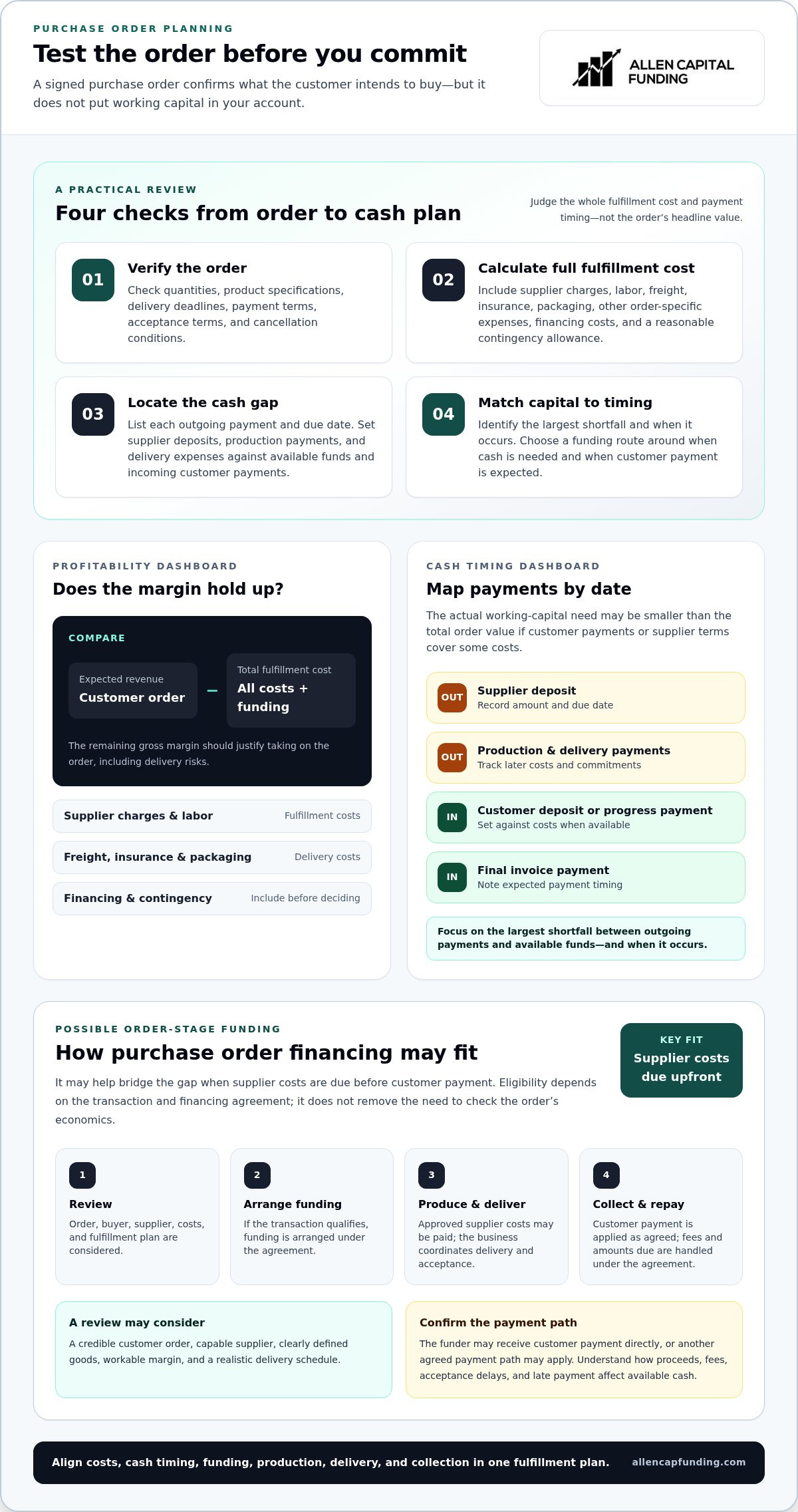
Order profitability depends on total fulfillment costs and payment timing, not the purchase order’s headline value. A purchase order documents the buyer’s request for goods; purchase order financing is one potential way for a seller to fund the costs of meeting that commitment. Before choosing a funding route, work through these steps:
Verify the order, quantities, specifications, deadlines, and payment terms.
Calculate the total cost and the cash shortfall by date.
Match the shortfall to a suitable source of capital.
Plan production, delivery, invoicing, and customer payment.
Is the purchase order commercially sound?
Check the customer’s quantities, product specifications, delivery dates, acceptance terms, and cancellation conditions. Then estimate every cost tied to fulfillment, including supplier charges, labor, freight, insurance, packaging, and other order-specific expenses. Compare expected revenue with the full cost, and include financing costs and a reasonable contingency allowance before deciding whether the remaining gross margin justifies taking on the order.
Use realistic assumptions rather than best-case estimates. A narrow margin can disappear if freight costs rise, production takes longer than planned, or goods don’t meet the customer’s acceptance requirements. If the order only works when every step goes perfectly, pause and reassess its terms, pricing, or delivery plan.
How large is the actual cash gap?
List each expected payment and its due date. Include supplier deposits, later production payments, and delivery expenses. Set these against any customer deposit or progress payment, then note when the final invoice is expected to be paid. This timeline shows when cash is needed and whether incoming payments will arrive in time to cover the next commitment.
Separate the total order value from the upfront working capital required. You may not need financing for the entire order if customer payments or supplier terms cover some costs. Focus on the largest shortfall between outgoing payments and available funds, and identify when it occurs. That amount and timing are a more useful basis for comparing capital options than the order’s total value alone.
How purchase order financing can fund supplier costs before customer payment
Purchase order financing may help bridge the gap when a business has a customer order but lacks cash to pay its supplier. It can fund eligible supplier costs tied to that order, subject to the transaction and financing agreement. This can be a potential route for businesses considering how to fulfill a large purchase order with no capital, but not every order qualifies, and financing doesn’t remove the need to check the economics.
The basic sequence is straightforward: the business provides order and supplier details for review; if the transaction qualifies, funding is arranged; and approved supplier costs may be paid so the goods can be produced and delivered. How purchase order financing works can vary in practice, including who receives customer payment and how the funder is repaid. The agreement determines how proceeds are applied and what remains for the business.
What happens from order approval to customer payment?
The review may consider the customer order, buyer, supplier, cost breakdown, and fulfillment plan. Depending on the financing structure, the funder may pay an approved supplier directly rather than provide funds to the business. The supplier then produces or prepares the goods, while the business coordinates delivery and any required customer acceptance.
After delivery, invoicing and collection become central to repayment. The customer may pay the funder or follow another agreed payment path. The funder applies the payment according to the agreement, including any fees or amounts due, and the remaining proceeds, if any, go to the business. Confirm this payment flow before committing so you understand how acceptance delays or late customer payment could affect cash available for other expenses.
Which orders and businesses may fit?
A credible customer order, capable supplier, clearly defined goods, and workable margin can support a transaction review. These factors help show that the order can be fulfilled and that expected customer payment can support repayment. They don’t guarantee eligibility.
Requirements differ by funder and agreement. A review may consider the product, customer, supplier, business, and transaction as a whole. For example, unclear specifications or a supplier unable to meet the delivery schedule may raise practical concerns, even if the buyer is established. Keep the timeline, costs, and responsibilities aligned before relying on financing.
Purchase order financing addresses an order-stage cash gap; factoring typically concerns receivables after goods are delivered and invoiced. Allen Capital Funding helps businesses explore purchase order financing and other capital solutions. A purchase order financing review can help you compare the order’s cash needs with potential funding routes.
Purchase order financing vs. other ways to fund a large order
The right funding route depends on when cash is needed and what supports repayment. Purchase order financing may cover eligible supplier costs before fulfillment. Other options can help with supplier payment timing, recurring cash gaps, or an invoice that already exists. Forbes’ overview of Purchase Order Financing explains the basic transaction and the roles of the business, supplier, funder, and customer.
Which funding route matches each cash-flow stage?
Match the option to the point where cash falls short. Purchase order financing may fit an eligible supplier-payment gap before fulfillment. A line of credit may suit recurring, flexible needs across several operating expenses. Factoring generally applies after delivery and invoicing, when an eligible receivable exists. Structures and eligibility vary, so compare each option’s timing and repayment obligations with your order calendar. For recurring or flexible cash-flow needs, see this guide to business lines of credit.
How can you protect the order’s profit?
Don’t judge financing by the amount advanced alone. Compare the full financing obligation with the gross profit remaining after supplier costs, labor, freight, packaging, and other order expenses. Then test the plan against slower customer acceptance, late delivery, supplier price changes, and delayed payment. If a realistic setback leaves too little margin or cash to complete the order, revisit the terms or funding mix before committing. That discipline is central to how to fulfill a large purchase order with no capital without turning a promising sale into a cash-flow strain.
A practical fulfillment plan: documents, suppliers, delivery, and repayment
Once you’ve mapped the funding gap, turn the order into an execution plan. A clear file and shared schedule connect the funding review to supplier commitments, delivery milestones, and repayment. This is the operational side of how to fulfill a large purchase order with no capital: every payment and handoff needs an owner, a date, and a next step.
What should you organize before seeking funding?
Prepare a concise package that shows what the customer ordered, what it will take to fulfill the order, and when cash moves. Common review materials may include:
The customer purchase order and customer details
Supplier quotes and payment terms
A cost breakdown and fulfillment schedule
Relevant business financial information
Explain the order’s expected revenue, costs, and cash cycle. Flag unresolved details, such as possible order changes, quality standards, shipping responsibilities, customer acceptance requirements, and invoice timing. Clear answers help keep assumptions from becoming costly surprises later.
How do you manage execution and repayment risk?
Build a milestone schedule from supplier payment through collection. Assign an owner and target date for purchasing, production checkpoints, quality review, shipping, delivery confirmation, customer acceptance, and invoicing. Confirm that supplier commitments align with the customer’s specifications and deadline. If a milestone slips, identify who will communicate the change and what decisions must happen next.
Plan for disruptions before production begins. A supplier delay, rejected goods, or a customer change can affect delivery and payment timing. Set out practical responses, such as escalating a production issue early, documenting approved order changes, or clarifying how a quality concern will be resolved. Keep records of shipment, delivery, and acceptance so invoicing and collection can proceed with the necessary support.
Track order proceeds against the agreed funding structure. Note which customer payment is expected to go toward repayment, when it is due, and what obligations remain. If a funding option is supported by business assets or receivables rather than one order alone, explore how asset-based lending for small businesses may relate to your broader capital needs.
A disciplined plan keeps financing and fulfillment connected from the first supplier payment to final collection. Discuss your purchase order funding needs with Allen Capital Funding to explore purchase order financing and other capital solutions suited to your business.
How Allen Capital Funding can help you evaluate purchase order financing
Choosing a funding route is a decision about the specific order, its cash gap, and the profit left after fulfillment. Allen Capital Funding helps businesses explore purchase order financing alongside other capital solutions, so you can compare the order’s needs with potential options before making a commitment. The aim is a clear, informed next step, not a financing decision based on urgency alone.
As you consider how to fulfill a large purchase order with no capital, keep two tests in view: can the business deliver what the customer ordered, and can expected proceeds support the costs and repayment obligations? Funding options, terms, and eligibility depend on the transaction, review, and financing agreement. No particular outcome is guaranteed.
What to bring to a funding conversation
A concise snapshot of the order helps focus the conversation on its real requirements. Gather the customer and purchase order details, delivery deadline, supplier information, and amount of upfront cash required. Add your cost-and-margin estimate, supplier timeline, and expected schedule for customer payment.
It also helps to note alternatives you’ve considered, such as supplier terms, a customer deposit, a credit line, or factoring. This gives the discussion context: whether the gap arises before production, during delivery, or after invoicing. Bring open questions too, especially about order changes, customer acceptance, or timing that could affect payment.
Choose the next step based on the order, not urgency alone
A viable order must work financially and operationally. If the margin cannot absorb the full fulfillment costs and financing obligation, or the delivery plan has unresolved risks, accepting the order may create more pressure than growth. Use the funding discussion to test those assumptions and compare the cash-flow structure with the order’s milestones.
Allen Capital Funding can help you explore whether purchase order financing, a credit line, working capital, or factoring may better match your business’s needs. The right fit depends on when funds are required, what supports the funding, and how repayment aligns with customer payment. You’ll be better prepared to decide when the order details, costs, and timing are in one place.
For a focused discussion of your order and potential funding routes, book an online consultation to discuss your business funding needs.
Turn your purchase order into a workable funding plan
A large order can create momentum, but only if the numbers and delivery plan hold up. Start by checking the full fulfillment costs and expected margin, then identify exactly when cash is needed and how customer payment will support repayment. Comparing options against that timeline helps clarify how to fulfill a large purchase order with no capital without relying on urgency alone.
Purchase order financing may help address eligible supplier costs before customer payment. Other needs may be better matched to a credit line, working capital, or factoring. The right option depends on the order, its cash cycle, and the terms available. A coordinated plan for suppliers, production, delivery, and collection can help you move forward with greater confidence.
Allen Capital Funding helps businesses explore purchase order financing alongside credit lines, working capital, and factoring. Book an online consultation to explore a funding strategy for your order. With a clear view of the economics and next steps, you can evaluate the opportunity thoughtfully and pursue growth with a practical plan.
Frequently Asked Questions
Can I fulfill a large purchase order with no capital?
Possibly, if the order is profitable, deliverable, and supported by a funding plan that covers the cash gap. Start by confirming the customer’s terms, calculating all fulfillment costs, and mapping when supplier payments fall due versus customer payments. Purchase order financing may help with eligible supplier costs, while supplier terms, customer deposits, a credit line, or working capital may also help. Funding depends on the transaction and agreement.
How does purchase order financing work for a small business?
Purchase order financing may fund eligible supplier costs tied to a customer order before the business receives customer payment. The business provides order, customer, supplier, and cost details for review. If financing is arranged, the funder may pay approved suppliers directly, depending on the structure. After fulfillment, delivery, and customer payment, funds are applied according to the agreement. The repayment path and any remaining proceeds depend on its terms.
What types of purchase orders may qualify for purchase order financing?
Orders for tangible goods may be considered, particularly when the customer order is credible, suppliers can fulfill it, and the transaction has workable margins. Distributors, wholesalers, and resellers commonly use this type of financing; service-based work generally isn’t its focus. These are general patterns, not universal eligibility rules. Review can depend on the product, customer, supplier, business, and transaction details, as well as the funder’s requirements.
Is purchase order financing the same as invoice factoring?
No. Purchase order financing may address supplier costs before goods are delivered and invoiced. Factoring generally applies after delivery, when the business has an eligible invoice or receivable. The two options can address different stages of the same order’s cash cycle, but their structures and eligibility differ. Consider what payment is due now, whether an invoice exists, and how customer payment will be handled under the relevant agreement.
What happens if my customer pays late or rejects the order?
A late payment can delay the cash expected to support repayment, while rejected goods or a dispute may delay acceptance, invoicing, or collection. The effect depends on the financing agreement and the customer’s order terms. Before proceeding, understand who receives customer payment, what obligations remain if collection is delayed, and how quality issues or changes are handled. Keep delivery records and communicate potential delays promptly to limit avoidable disruption.
How much of a purchase order can financing cover?
There isn’t one amount that applies to every transaction. Industry research indicates that purchase order financing providers may advance between 70% and 100% of supplier cost, but that range isn’t a promise or a specific offer from Allen Capital Funding. The amount depends on the transaction and financing agreement. Also distinguish supplier costs from the order’s total value, and plan for any expenses the funding doesn’t cover.
Can I use a business line of credit instead of purchase order financing?
Yes, a business line of credit may be an alternative if its available funds and terms suit the order’s cash-flow needs. It can be useful for recurring, flexible working-capital gaps, while purchase order financing may be more directly tied to eligible supplier costs for a specific order. Compare when funds are available, what supports the financing, repayment obligations, and how each option fits the order’s margin and timeline.


Comments