


Inventory Financing Before Customer Payment: A Guide
A profitable customer order can still strain cash if suppliers need payment before your customer pays. The key isn’t just finding financing for inventory before customer payment. It’s matching funding to where the order sits in your cash-conversion cycle.
That timing gap is familiar: cash goes out for stock, production, or fulfillment, while customer payment may be weeks away. Relying only on available cash can limit your ability to accept orders or cover routine expenses. Financing costs and repayment schedules also need to fit the order’s margin and expected payment date.
This guide compares ways to fund inventory and fulfill customer orders before cash comes in, including purchase order financing, credit lines, working capital, and factoring. You’ll see how each option fits different needs, what repayment timing to consider, and which documents and cash-flow details can help you evaluate your choices. Allen Capital Funding helps businesses compare funding approaches and prepare for a focused financing discussion.
Table of Contents
Financing inventory before customer payment: understand the cash-flow gap
Compare financing options by inventory and customer-order stage
Choose inventory financing by testing order certainty and repayment fit
Prepare a financing request with clear order and cash-flow details
Explore a funding path for inventory before customer payment
Financing inventory before customer payment: understand the cash-flow gap
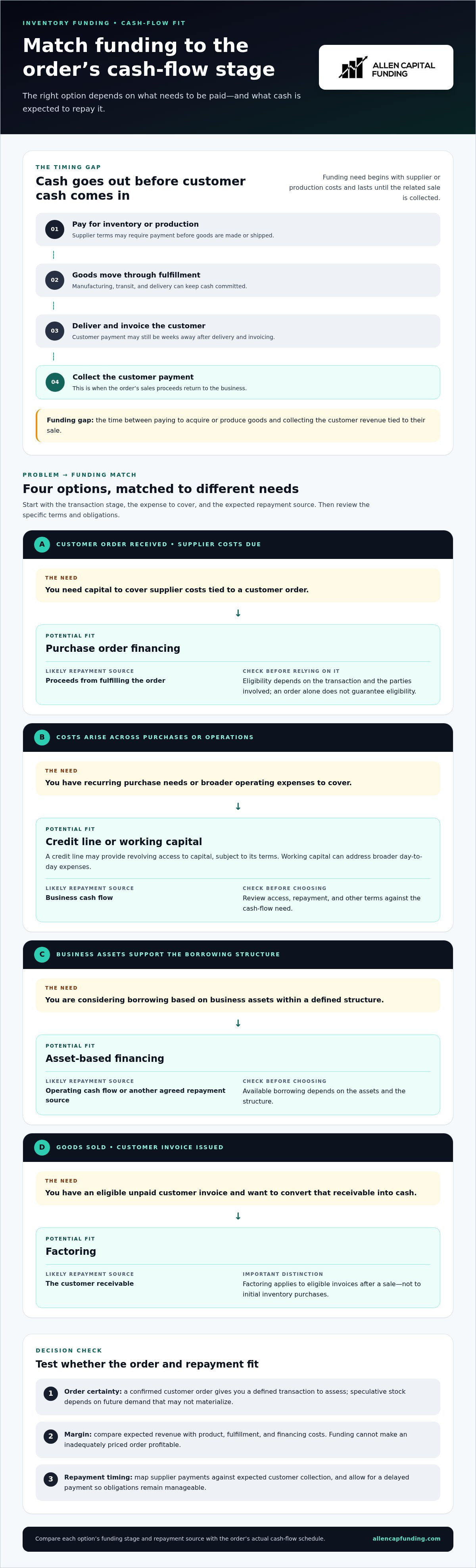
A business can have a sound sale in progress and still face a cash shortage. Suppliers may require payment before goods are made or shipped, while the customer pays only after delivery and invoicing. That mismatch creates a timing need, not necessarily a sign of weak demand. The broader purpose of trade finance mechanisms is to help facilitate transactions between buyers and sellers. The right funding approach depends on where cash is tied up and when it’s expected to return.
Follow the cash conversion cycle: the business pays for inventory or production, receives or ships the goods, delivers the order, sends an invoice, then collects payment. Until collection, the money spent on the order remains committed. A confirmed customer order gives the business a defined transaction to assess. Speculative stock, by contrast, depends on future demand that may not materialize. Neither guarantees profit, so financing should support a viable order, not disguise weak pricing or uncertain sales.
What does financing inventory before customer payment mean?
Financing for inventory before customer payment means using capital to cover supplier or production costs before the related sales proceeds arrive. Working capital is the money available to run day-to-day operations, including paying suppliers, covering payroll, and meeting other business expenses. Funding can bridge a temporary timing gap, but it can’t turn an order with inadequate margins into a profitable one. First, compare expected revenue with product, fulfillment, and financing costs to see what cash the order is likely to leave available.
Where does the inventory cash-flow gap occur?
The gap can begin when supplier terms require payment before production or shipment. It may continue through manufacturing, transit, and customer delivery, then extend through invoicing and the customer’s payment period. Longer customer terms can leave cash committed for longer, even after the goods have been delivered. Supplier terms matter too: if the supplier expects payment sooner than the customer, the business must cover the difference.
The inventory funding gap is the time between paying to acquire or produce goods and collecting the customer revenue tied to their sale. Map each milestone to clarify how much funding is needed and when repayment could reasonably begin. Compare expected collection timing with the order’s margin, and allow for a delayed payment. If cash arrives later than planned, the business still needs a workable way to meet its obligations.
Compare financing options by inventory and customer-order stage
The right funding structure depends on what needs to be paid and what cash will repay it. A supplier invoice tied to a customer order presents a different need from a general operating expense or an unpaid customer invoice. Start by identifying the transaction stage, the expense to cover, and the expected repayment source. Then review the specific terms and obligations of each option.
When might purchase order financing fit an order?
Purchase order financing may help cover supplier costs tied to a qualifying customer order when the business needs capital to fulfill it. The funding need is linked to that transaction rather than an open-ended inventory build. The customer, supplier, order terms, and fulfillment details can all shape whether the structure fits. A purchase order alone doesn’t guarantee eligibility, so assess the full transaction before relying on funding. Allen Capital Funding offers purchase order financing as one of its business funding solutions.
How do credit lines, asset-based funding, and factoring differ?
A business credit line can provide revolving access to capital, subject to its terms, and may suit recurring needs across purchases. Working capital can address broader operating expenses. Asset-based financing uses business assets within a defined borrowing structure. Factoring is tied to eligible receivables after a sale and invoice, so it generally helps convert an unpaid invoice into cash rather than pay for inventory upfront.
For a broader overview of financing tools used in trade, the U.S. Department of Commerce’s Trade Finance Guide explains options relevant to exporters. For financing for inventory before customer payment, compare each option’s funding stage and repayment source with the order’s actual cash-flow schedule. Allen Capital Funding offers purchase order financing and other business funding solutions to help businesses address these needs. See purchase order financing options.
Choose inventory financing by testing order certainty and repayment fit
Before selecting financing for inventory before customer payment, test whether the order and expected cash inflow can support the obligation. Funding can help manage a timing gap, but it doesn’t eliminate the risk of a customer canceling, paying late, or buying less than expected. Inventory finance can also play a strategic role in supply chain resilience, but sound repayment planning still starts with the details of your own transaction.
What should a business assess before financing inventory?
Start with the strength of demand. Is the purchase order confirmed, and what do its cancellation or change terms allow? Review supplier reliability, production and delivery schedules, and any commitments you’ve made to the customer. Then estimate the cash required from supplier payment through fulfillment and collection. Include operating costs that continue during that period.
Compare expected gross margin with the full cost of fulfilling the order and meeting financing obligations. A healthy sales price alone doesn’t guarantee enough available cash: shipping, labor, returns, or other operating expenses can reduce what remains. If the order’s margin cannot support repayment and routine expenses, financing may increase pressure rather than solve it.
How can owners reduce the risk of a payment delay?
Build a downside case before taking on repayment obligations. If you expect collection 30 days after delivery, model what happens if payment arrives two weeks later, sales slow, or some goods are returned. Check whether the business can still cover scheduled payments, supplier commitments, and regular expenses. Avoid basing the plan on one optimistic invoice date.
Compare the amount and duration of funding with the cash expected back. A short funding need paired with a repayment schedule that starts before customer cash is likely to arrive can create a second cash-flow squeeze. Borrowing more than the transaction requires can also add unnecessary repayment pressure. Align the funding amount and timing with realistic order milestones, while leaving room for delays.
A business line of credit guide can help explain how revolving access to capital may support changing cash needs. Whatever structure you consider, financing doesn’t transfer sales or collection risk away from the business. Use conservative assumptions and make sure the repayment plan still works if the customer pays late.
Prepare a financing request with clear order and cash-flow details
A focused request explains why capital is needed, how much the transaction requires, and where repayment is expected to come from. For financing for inventory before customer payment, organize the details around the order and the cash timeline. Requirements vary by financing structure and transaction, so treat this as a preparation guide, not a universal approval checklist.
What information helps explain the inventory transaction?
Bring together records that show what you’re buying, who you’re buying it from, and how it connects to a customer sale. Separate confirmed facts, such as a signed purchase order, from estimates, such as projected sales beyond that order. This makes the request easier to assess and keeps forecasts distinct from documented commitments.
1. Define the funding gap. Estimate the amount needed and when supplier or production payments are due.
2. Summarize the transaction. Identify the products, quantities, supplier, order amount, and intended use of funds.
3. Map fulfillment. Include production or shipment details, delivery milestones, and customer obligations.
4. Show the expected cash return. Document customer payment terms, invoicing timing, and any relevant cancellation or return terms.
5. Organize supporting records. Gather purchase orders, supplier quotes or invoices, inventory details, and current financial records.
These materials connect the amount requested to the transaction’s timing. If a borrowing structure involves business assets, organize details about those assets alongside the cash-flow information so the funding need and repayment plan are clear.
How should a business present its repayment plan?
Lay out expected collections alongside financing obligations and regular operating cash needs. Show when the customer is expected to pay, when repayments may be due, and how the business would manage a delay. Include a conservative scenario, such as slower inventory turnover or late payment, rather than relying only on the most favorable forecast.
Organize the purchase order, supplier quote, customer payment terms, inventory details, delivery plan, and financial records, then map expected collections against repayment and operating needs. This gives a funding discussion a clear foundation while making assumptions visible. Allen Capital Funding helps businesses compare funding approaches and prepare a focused request. You can discuss your inventory funding needs.
Explore a funding path for inventory before customer payment
Choosing a path starts with four details: where the goods are in the order cycle, how much cash is tied up, what will repay the funding, and what could disrupt the transaction. Financing for inventory before customer payment isn’t one-size-fits-all. The structure should match the specific need, whether supplier costs are due before fulfillment or cash is tied up in an invoice after delivery.
How can Allen Capital Funding help evaluate the options?
Allen Capital Funding helps businesses discuss their cash-flow needs and compare relevant capital solutions, including purchase order financing, credit lines, working capital, and factoring. A customer order with supplier costs may point toward purchase order financing. Recurring expenses could make a credit line or working capital worth considering. Factoring relates to eligible invoices after a sale. The right fit depends on the transaction, repayment timing, and the company’s broader cash flow.
These funding categories serve different purposes, and no single structure suits every business. Comparing them against the order’s timeline can clarify which questions and records matter most.
What are the next steps for a business owner?
Prepare a concise snapshot of the transaction before discussing options. Note the customer order and delivery plan, when supplier payment is due, the customer’s payment terms, and the size of the gap between cash going out and coming in. Include relevant purchase orders, supplier quotes, inventory information, and financial records. Distinguish confirmed terms from estimates, and identify how a delay could affect repayment and day-to-day expenses.
That preparation keeps the discussion grounded in the business’s actual cash cycle. It also connects the funding need to a potential repayment source, rather than focusing only on the amount requested. Allen Capital Funding helps businesses compare options and prepare a focused funding discussion.
If you’re ready to review your order, supplier timing, and cash-flow needs, start with a business financing consultation. Bring the key transaction details you have to explore a funding path that aligns with your business needs.
Move forward with a funding plan built around your order
The right financing choice starts with the cash-flow timeline: when supplier costs are due, when the order will be fulfilled, and when customer payment is expected. Match the funding structure to that stage, then test whether the repayment plan still works if collection is delayed. Financing for inventory before customer payment can bridge a timing gap, but the order’s margin and cash-flow risks still matter.
Prepare the purchase order, supplier details, customer payment terms, and financial records so the funding need is clear. Allen Capital Funding helps businesses explore financing categories and compare options tailored to their needs.
Discuss your business funding needs with Allen Capital Funding to take a clearer next step toward supporting your order. A well-prepared plan helps you evaluate the decision with the transaction details in view.
Frequently Asked Questions
Can I finance inventory before a customer pays?
Yes, businesses may explore financing for inventory before customer payment to bridge the time between paying suppliers and collecting sales revenue. The relevant option depends on the transaction stage: you may have a confirmed purchase order, inventory already on hand, or an issued invoice. Before proceeding, map the repayment source, customer terms, supplier obligations, and cash-flow risks. Financing can help with timing, but it can’t guarantee a sale or prompt customer payment.
What financing can help pay for inventory tied to a purchase order?
Purchase order financing may help eligible businesses cover supplier costs connected to qualifying customer orders. Suitability can depend on the order, customer, supplier, expected margin, and supporting documentation. A business line of credit or working capital solution may be worth considering for other inventory or operating needs. Compare each structure with the order timeline and expected collections, rather than assuming one option fits every purchase or business.
How much financing should I seek for an inventory purchase?
Start with the documented cash-flow gap, not simply the total order value. Include supplier payments, delivery and fulfillment costs, operating expenses, and the expected timing of customer collections. Then model a late-payment scenario and check how repayment could affect other obligations. The amount and available terms depend on the business and transaction. Keep the request tied to a realistic need, not an optimistic forecast of when cash will arrive.
What happens if my customer pays late after I finance inventory?
A late customer payment can leave your business responsible for financing obligations while cash remains tied up in the order. Before accepting financing, compare repayment dates with customer terms and consider whether available cash can cover a delay. Read the agreement carefully and understand how its terms apply to your transaction. Don’t assume that a customer’s late payment automatically delays, reduces, or settles a separate financing obligation.
Is purchase order financing the same as factoring?
No, they generally apply at different stages. Purchase order financing may help cover supplier costs related to eligible customer orders before goods are delivered and invoiced. Factoring generally involves an eligible receivable after a sale has produced an invoice. Each has different transaction requirements and cash-flow uses. Identify whether you need funds to fulfill an order or to access cash tied up in an issued invoice, then compare the relevant options.
Can a business line of credit fund inventory before customer payment?
A business line of credit may provide access to capital for eligible business needs, including inventory, subject to its agreement and available credit. Unlike transaction-specific funding, it may support recurring needs, but access and repayment follow the credit line’s terms. Compare the expected draw and repayment schedule with your customer’s payment timeline. Available credit doesn’t replace checking that the order is profitable and that the business can manage a delay.
What documents may help when applying for inventory financing?
Useful records may include purchase orders, supplier quotes or invoices, customer payment terms, inventory details, delivery plans, and financial statements. The documents requested depend on the financing structure and transaction. Organize them to show the amount needed, when payments are due, and how expected customer collections relate to repayment. Clearly separate confirmed orders and documented terms from forecasts, so the funding discussion reflects both known facts and remaining uncertainties.


Comments