


Hard Money Commercial Loans: A 2026 Guide to Choosing Project Financing
Could financing that gets a commercial property project moving become a problem without a clear exit plan? Hard money commercial loans can offer a short-term path when a project timeline or property profile doesn’t align with traditional financing. They’re best viewed as project-specific bridges, not default long-term loans.
It’s understandable to focus on speed or flexible underwriting when a deal is time-sensitive. A stronger decision starts with the full picture: what property secures the loan, how repayment will work, and whether a refinance or sale is realistic before the term ends. A loan that fits the asset still needs to fit the project’s cash flow and risk.
This 2026 guide explains how hard money commercial loans work, when they may suit a project, and what to compare before moving forward. You’ll learn how to assess collateral, repayment plans, loan structure, and alternatives, then prepare a clear project profile for a funding discussion. Allen Capital Funding helps businesses explore commercial real estate funding and broader business financing options, so you can consider potential paths in the context of your project.
Table of Contents
What Are Hard Money Commercial Loans, and When Can They Fit a Project?
Hard money commercial loans are asset-focused financing assessed in relation to commercial property and the project it supports. The real estate serves as collateral, while the property’s condition, intended use, ownership, and proposed repayment plan may all shape the financing discussion. The term hard money loan offers a neutral overview of this asset-based approach and related terminology.
Businesses and investors may consider this type of financing for an acquisition, a property repositioning, or another project with a defined timeline. For example, a buyer planning improvements before pursuing longer-term financing may need a temporary capital path. That doesn’t make hard money the right fit by default. The loan’s purpose, collateral, repayment strategy, and lender criteria all matter.
How Do Commercial Hard Money Loans Work?
The property is central to the assessment, but it isn’t the whole project. A lender may review the collateral alongside the proposed use of funds, project scope, ownership details, and the borrower’s expected repayment source. Assessment methods and criteria vary, so there isn’t one underwriting formula that applies to every lender or transaction.
Prepare to explain the project clearly: what you’re financing, what milestones must be reached, and where repayment funds are expected to come from. A sale, refinance, or business cash flow may form part of the plan, depending on the project. Be specific about assumptions and possible delays. A credible plan helps frame the discussion, but it doesn’t guarantee approval.
Which Projects May Be a Better Fit?
Look for a defined purpose and a realistic exit. Hard money commercial loans may be worth evaluating when a project has a clear property-related objective and a plausible way to repay or refinance within the financing period. A time-sensitive acquisition or repositioning may involve a temporary need that differs from the plan to own and operate a property over the long term.
That distinction matters. Short-term project financing is a bridge, not automatically a durable strategy for long-term ownership. If the refinance depends on uncertain future conditions, or sale proceeds may not cover repayment, pressure can build before the loan comes due. Weak repayment planning can make an otherwise promising property project unsuitable for this structure.
Before comparing financing options, separate the project’s immediate capital need from its lasting financing goal. This can clarify whether temporary, property-secured funding belongs in the plan or whether another commercial financing path is a better match.
How to Evaluate Hard Money Commercial Loan Terms and Collateral
A loan’s headline amount or proposed payment doesn’t show the full commitment. Before comparing hard money commercial loans, review the written terms alongside the property being pledged and the repayment plan. Market descriptions and promotional summaries can explain general concepts, but the signed documents and transaction-specific disclosures determine the obligations for a particular deal.
What Should Borrowers Review in the Loan Structure?
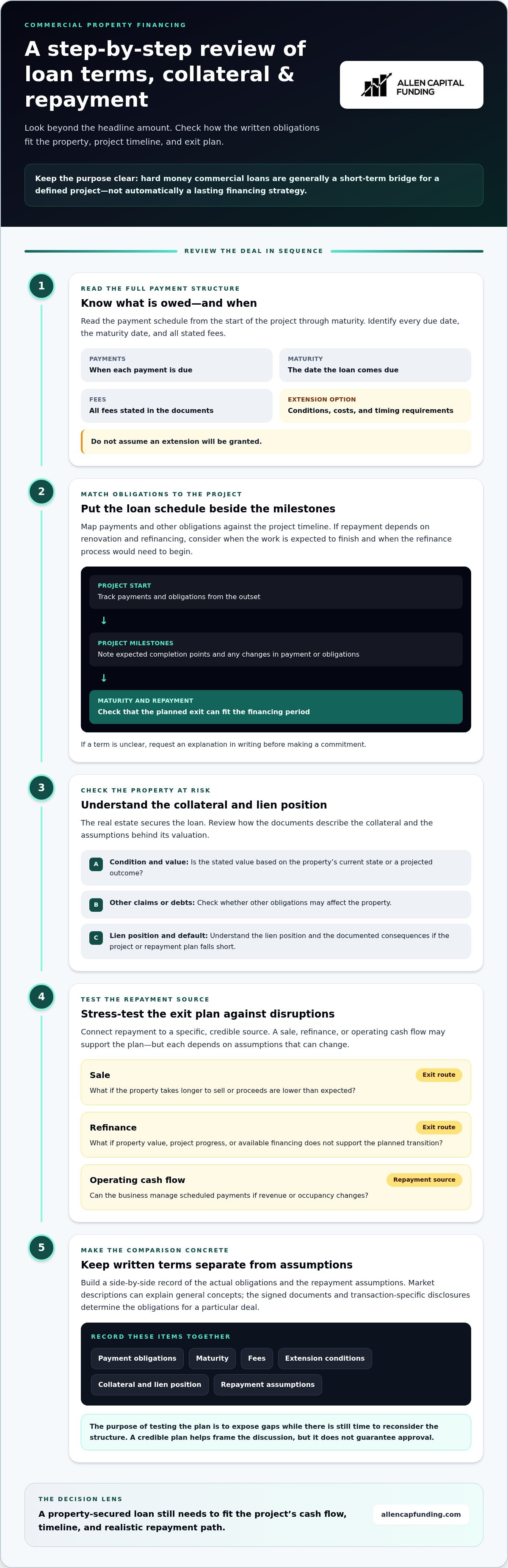
Read the payment schedule from the start of the project through maturity. Identify when payments are due, the maturity date, all stated fees, and whether the documents describe an extension option. If an extension is available, note its conditions, costs, and timing requirements rather than assuming it will be granted.
Map those obligations against the project timeline. For instance, if repayment depends on completing renovations and refinancing, consider when the work is expected to finish and when the refinance process would need to begin. Look for points where the payment amount or other obligations change. If a term is unclear, request an explanation in writing before making a commitment.
How Do Collateral and Exit Plans Affect Risk?
Review how the loan documents describe the collateral and its valuation assumptions. Consider the property’s condition and whether the stated value reflects its current state or a projected outcome. Check the lien position, including whether other claims or debts may affect the property, and understand the documented consequences of default. These details help show what is at stake if the project or repayment plan falls short.
Then connect repayment to a specific, credible source. A sale, refinance, or operating cash flow may support an exit plan, but each depends on assumptions that can change. Test the plan against practical disruptions:
Sale: What if the property takes longer to sell or the proceeds are lower than expected?
Refinance: What if the property’s value, project progress, or available financing doesn’t support the planned transition?
Operating cash flow: Can the business manage scheduled payments if revenue or occupancy changes?
These are planning questions, not predictions. Their purpose is to make the repayment strategy more resilient and expose gaps while there’s still time to reconsider the structure.
Keep a clear distinction between written deal terms and general market claims. Build a side-by-side record of payment obligations, maturity, fees, extension conditions, collateral, and repayment assumptions. For a broader view of commercial real estate funding and other business capital paths, explore commercial real estate funding guidance from Allen Capital Funding.
Hard Money vs. Other Commercial Financing: Which Path Fits?
Compare financing by what the project needs, not by the label attached to a loan. Hard money commercial loans, bridge financing, commercial bank loans, and business lines of credit can serve different purposes, and some structures may overlap. Review the actual collateral, repayment basis, and written terms to understand how each option fits your project.
When Might a Bridge Loan or Bank Loan Be More Suitable?
A longer ownership horizon may call for a careful look at conventional commercial financing, including how its repayment structure aligns with the property’s expected income and the business’s financial profile. Bridge financing may serve a temporary need, but the planned next step still matters. If a refinance or sale is delayed, understand the consequences under the written terms. A broader commercial real estate loan guide can help frame the property-financing considerations.
When Could a Business Line of Credit Address a Different Need?
A property acquisition is a specific capital need, while recurring expenses may call for flexible working capital. A revolving credit facility can support eligible business expenses under its terms, but its structure may not match the scale or purpose of project-specific real estate financing. Compare the intended use, repayment obligations, and available funds before treating one as a substitute for the other. Learn more in this business line of credit guide.
How to Prepare for a Hard Money Commercial Loan Discussion
A well-organized project profile helps make a funding discussion more productive. Before discussing hard money commercial loans, outline what the property needs, how you plan to use the funds, and how repayment could work. Bring records that apply to your situation, and distinguish confirmed information from estimates or assumptions.
What Information Helps Explain the Project?
Start with the property and the business objective. Summarize the asset’s location and type, current status, ownership, and purchase or project goals. Then explain the financing request in practical terms: what the funds would support, what work or milestones are planned, and when each step is expected to happen.
Organize relevant records, such as property information, ownership documents, available financial statements, project budgets, purchase details, and supporting estimates. The specific materials will depend on the transaction. A sources-and-uses summary can clarify how much capital is needed and where it is expected to go. Pair it with a timeline, noting which dates are firm and which depend on approvals, construction, leasing, or a sale.
How to Build a Credible Repayment Plan
Name the anticipated repayment source and show how it connects to the project. If the plan relies on a sale, outline the steps that must happen before the property can be marketed and sold. If it depends on refinancing, identify the assumptions behind that transition. If operating cash flow is part of the plan, prepare the relevant business records and explain how the property or project supports repayment.
Build a contingency scenario, too. Consider what you would do if project milestones slip, a sale takes longer than planned, or refinancing terms differ from your assumptions. You don’t need to predict every outcome. You do need to show that you’ve considered how delays or changes could affect repayment and what alternatives may be available.
Use this preparation sequence to keep the discussion focused:
Define the project: State the property goal and the reason for seeking capital.
Organize the records: Gather relevant property, ownership, financial, and project materials.
Map funding needs: Summarize sources and uses, milestones, and timing assumptions.
Explain repayment: Identify the expected exit and the assumptions it depends on.
Stress-test the plan: Note how delays or changes could affect repayment and possible alternatives.
With these details in hand, you can discuss how the project’s needs align with commercial real estate and other business funding paths. Schedule a funding consultation to discuss your project and capital needs with Allen Capital Funding.
Explore Commercial Real Estate Funding with Allen Capital Funding
A financing decision should support the project’s purpose, timing, collateral, and ability to repay. Allen Capital Funding helps businesses explore commercial real estate funding and tailored funding options. The goal is to clarify potential capital paths and the trade-offs each may involve, rather than assume one structure suits every property or that financing approval is assured.
If you’re considering hard money commercial loans, place them in the context of the full project. A short-term structure calls for close attention to the property securing it, the timing of key milestones, and the repayment or refinance plan. A longer ownership horizon or broader business need may point to different commercial real estate or business financing considerations. Matching those factors helps make the funding conversation more focused.
What to Bring to a Funding Conversation
A concise project summary gives the discussion a useful starting point. Include the property details, its current status, the business objective, and the intended use of funds. Describe the expected timeline, including important milestones and any dates that depend on outside decisions or project progress.
Be ready to explain how you expect to repay the financing. If the plan depends on a sale or refinance, outline the steps and assumptions involved. Bring relevant property, ownership, financial, and project records that apply to your situation. It also helps to list open questions about collateral, payment obligations, and how alternative funding structures might fit. Identifying uncertainties makes it easier to discuss the project clearly.
Choose a Funding Path Around the Project
The appropriate financing path depends on what the business needs the capital to accomplish and how repayment fits its capacity. Allen Capital Funding’s team helps businesses consider commercial real estate funding alongside broader business funding needs. This can help distinguish a property-specific financing need from working capital or other business objectives.
Use the conversation to explain the project and compare its requirements with potential funding structures. Allen Capital Funding offers online consultations to discuss commercial real estate projects and capital needs. Prepare the key details, bring your questions, and use the discussion to clarify practical next steps. Schedule an online funding consultation when you’re ready to explore the options.
Choose Financing That Supports the Project Beyond Closing
Hard money commercial loans may help address a defined, short-term property financing need, but the right decision depends on more than the initial capital. Assess the collateral and written loan obligations, then test whether your sale, refinance, or operating cash flow can support repayment. Compare alternatives based on the project’s purpose, timeline, and repayment capacity rather than relying on financing labels alone.
A clear project summary, organized property and financial records, and realistic timing assumptions can make the funding discussion more productive. Just as important, identify what could change the plan and how you might respond. This preparation helps you evaluate whether a temporary structure fits or whether another commercial funding path may better support your longer-term goals.
Allen Capital Funding’s team helps businesses explore commercial real estate funding and tailored business funding options. Schedule an online consultation to discuss your commercial funding needs and consider a practical path forward for your project. With a clear plan and thoughtful guidance, you can enter the next conversation better prepared.
Frequently Asked Questions
What are hard money commercial loans?
Hard money commercial loans are short-term, property-secured financing assessed with a strong focus on commercial real estate and the project it supports. The lender’s review may also consider the borrower, intended use of funds, and repayment plan. Businesses may explore this structure for a defined property project, such as an acquisition or repositioning. The loan documents set the actual terms, collateral obligations, payment schedule, and consequences of default.
Are hard money commercial loans only for real estate investors?
No. Real estate investors may use them, but the potential fit depends on the business purpose, property, and repayment plan, not simply the borrower’s label. A company acquiring or repositioning commercial property might evaluate this financing if it has a clear project objective and a plausible exit plan. The borrower still needs to assess whether the repayment timeline and obligations make sense for the business.
How do hard money commercial loans differ from bank loans?
Hard money commercial loans are generally more property-focused, while commercial bank financing may examine the borrower’s and business’s financial profile alongside the property and repayment capacity. Structures and underwriting vary, so compare actual written terms rather than relying on labels. Review the purpose, collateral, payment schedule, maturity, fees, and repayment expectations. The project timeline and the borrower’s ability to meet obligations should guide the comparison.
Can a commercial property serve as collateral for a hard money loan?
Yes, a commercial property can serve as collateral when the financing structure requires it and the loan documents identify it as security. Review the property description, valuation assumptions, lien position, and any other assets pledged. Understand what the documents say may happen if the borrower defaults. The property’s role in the transaction is important, but collateral alone doesn’t establish whether the loan is suitable or affordable.
How much can I borrow with a hard money commercial loan?
The amount depends on the specific property, its valuation, existing liens, project purpose, requested funds, and the lender’s criteria. There isn’t one borrowing amount or calculation that applies to every transaction. Prepare a clear sources-and-uses summary and property information, then compare the proposed amount with the full repayment obligation. A project budget should also account for how changes in costs or timing could affect the repayment plan.
How quickly can a hard money commercial loan close?
Closing time varies by transaction and lender, so don’t treat a general speed claim as a commitment for your project. Property valuation, title work, ownership records, due diligence, requested documents, and transaction complexity can affect the timeline. Share the project’s key dates early and organize relevant information for the discussion. Confirm timing expectations in writing before relying on a closing date.
What happens if I cannot repay a hard money commercial loan on time?
If repayment is late, the consequences depend on the loan documents and applicable requirements. The agreement may describe default conditions, additional obligations, extension terms, and steps involving the collateral. Don’t assume an extension will be available. Before accepting financing, understand these provisions and develop a contingency plan for delays in a sale, refinance, or other repayment source. If repayment problems arise, review the documents and seek appropriate professional advice promptly.
Is hard money commercial financing a good long-term loan?
Usually, hard money commercial financing is better evaluated as a project-specific, short-term bridge than as a default long-term strategy. Its suitability depends on the property, written obligations, and a realistic repayment or refinance plan. For long-term ownership, compare financing structures designed around the project’s intended holding period and repayment capacity. Avoid relying on a future sale or refinance without considering how delays or changed assumptions could affect repayment.


Comments