


SBA CAPLines of Credit: Compare the Four Programs and Find the Right Fit
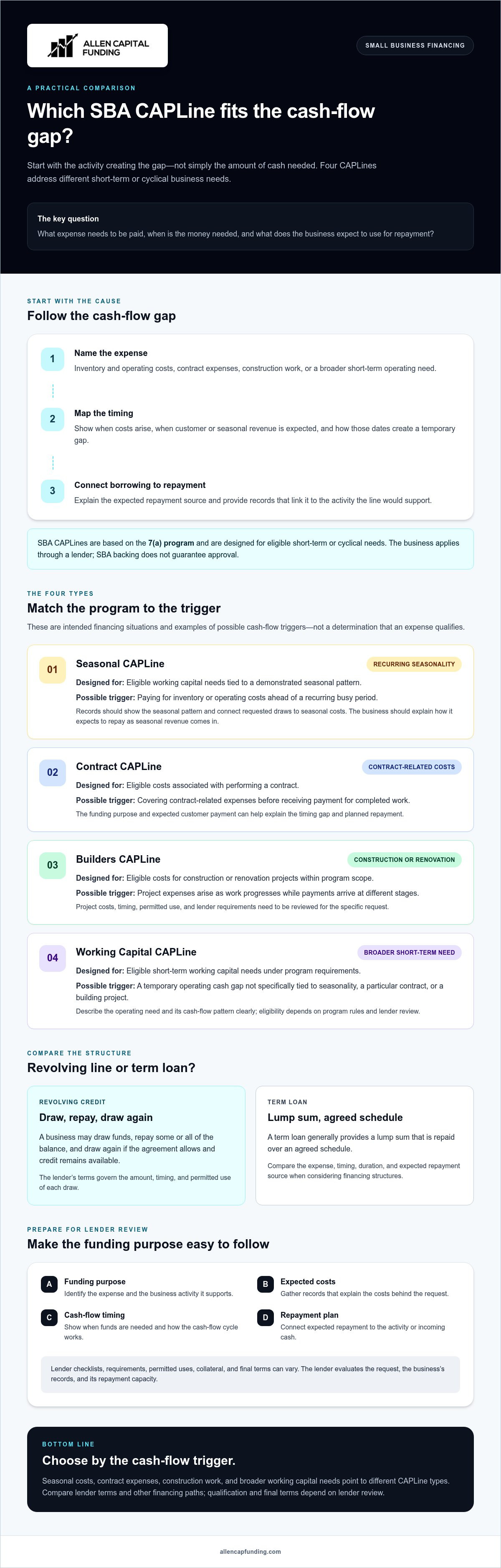
The right SBA CAPLines of credit program depends less on how much cash you need than on what creates the cash-flow gap. A seasonal inventory build, delayed contract payment, and construction costs can all put pressure on cash, but they may point to different programs.
The four SBA CAPLines of credit can seem interchangeable because each is designed to help eligible small businesses manage working capital needs. The key difference is the business activity the line is intended to support, and whether your records clearly show that need.
This guide explains how the Contract, Seasonal, Builders, and Working Capital CAPLines work, what need each is designed to address, and what to consider when comparing options. You’ll also find practical ways to prepare records about your funding purpose and cash-flow cycle for a lender’s review. Requirements and terms can vary, and SBA backing doesn’t guarantee approval. Start with the expense that creates the gap, then compare the program and financing structure that best fit your situation.
Table of Contents
What Are SBA CAPLines of Credit, and Which Cash-Flow Gaps Can They Address?
SBA CAPLines of credit are lines under the SBA 7(a) program, designed to finance eligible short-term or cyclical business needs. They can help address a timing mismatch, such as when a business must pay expenses before receiving customer payments or needs to cover costs ahead of a seasonal revenue cycle. The relevant program depends on the activity creating the gap, not simply on the fact that cash is tight.
A line of credit lets a business draw funds up to an approved limit, subject to the lender’s terms and permitted uses. SBA backing is part of the financing framework, not a promise of approval or direct funding from the government. The Small Business Administration (SBA) is the federal agency associated with the program, but a lender assesses the application and the borrower remains responsible for repayment.
To narrow your options, identify the expense, when funds are needed, and how the business expects to repay what it borrows. Then gather records that connect the funding purpose to the expected repayment source. This helps a lender assess whether the requested line fits the business’s actual cash-flow pattern. Program rules, lender requirements, and final terms can vary.
How does an SBA CAPLine differ from a standard business line of credit?
Both can provide access to credit as business needs arise, but a CAPLine operates within the SBA 7(a) program and is intended for eligible short-term or cyclical needs. A standard business line may follow a different lender framework. Neither label sets universal terms. The lender evaluates the business, its records, the requested use, and its repayment capacity. For a broader overview of conventional credit lines, consult a business line of credit guide.
What does revolving credit mean for a small business?
With revolving credit, a business may draw funds, repay some or all of the balance, and draw again if the agreement allows and credit remains available. The approved terms govern the amount, timing, and permitted use of each draw. That differs from a term loan, which generally provides a lump sum repaid over an agreed schedule.
Consider how the repayment plan connects to the activity the line supports. For example, if a business borrows to cover costs while waiting for customer payment, that expected payment may be part of its plan to repay the draw. A recurring or cyclical need may call for different timing than a single long-term purchase. Map the cash-flow cycle before applying, then have a lender assess whether a specific request fits.
Compare the Four SBA CAPLines of Credit by Business Need
The four SBA CAPLines of credit are designed around different cash-flow triggers. Use the comparison below to identify which type may be relevant, then confirm the proposed use against current SBA rules and a lender’s requirements. An example can help you frame a question, but it does not establish eligibility.
These distinctions help narrow the comparison, but they don’t establish that a particular expense qualifies. Permitted uses, line structure, collateral, and documentation depend on program rules and lender review.
When might a Seasonal CAPLine fit recurring seasonal demand?
A seasonal business may need to pay for inventory, staffing, or other operating costs before peak-period revenue arrives. A Seasonal CAPLine may be worth exploring when records show a recurring pattern and connect the requested draws to seasonal costs. The business should also be able to explain how it expects to repay the balance as seasonal revenue comes in. A busy season by itself doesn’t establish eligibility.
How do Contract, Builders, and Working Capital CAPLines differ?
A Contract CAPLine is associated with eligible costs of performing contract work. The contract and its payment schedule may help explain the funding need and expected repayment source. Builders financing focuses on eligible construction or renovation project costs. A Working Capital CAPLine addresses eligible working capital needs more broadly, subject to its specific rules. For each type, be ready to explain the expense, timing, and expected source of repayment.
Before comparing options, connect each anticipated draw to a cost and a likely repayment event. If your need doesn’t clearly fit one category, Allen Capital Funding can help you compare business financing paths based on your use case. A lender determines eligibility and final terms.
How to Decide Whether an SBA CAPLine Fits Better Than Other Financing
Choose financing by tracing the cash need from expense to repayment. Before comparing offers, write down what the funds will cover, when you’ll need them, how long the gap may last, and what revenue or other repayment source you expect. A line may suit costs that arise over time, while a single purchase with a longer useful life may call for a different structure.
Expense: What will each draw pay for?
Timing: When must the funds be available, and when is repayment expected?
Duration: Is this a recurring or short-term gap, or a long-term investment?
Repayment: What cash flow or business asset supports repayment?
CAPLine or standard business line of credit: what should you compare?
Compare the intended use, underwriting process, available structure, required records, and repayment expectations. SBA CAPLines of credit follow the 7(a) program framework and are designed for eligible short-term or cyclical needs. A conventional credit line may have different uses and lender criteria. SBA backing doesn’t guarantee lower rates or easier qualification. Review the actual terms and requirements side by side, using a business line of credit comparison guide as a reference.
Ask what documentation supports the requested use, how draws and repayments work, and whether the financing period matches the cash-flow cycle. Lender assessment and terms vary, so compare the complete financing arrangement rather than relying on the product label.
When could a term loan or asset-based option be more suitable?
A defined, long-term purchase, such as equipment needed for ongoing operations, may be worth comparing with a term loan that has scheduled repayment. If eligible business assets are central to the funding analysis, ask whether an asset-based option is relevant. Its availability and structure depend on the assets, business profile, and provider’s review. An asset-based lending overview can help explain what to evaluate.
There’s no universal winner. Compare total terms, repayment fit, documentation, and any collateral expectations for each path. A revolving credit line can provide access as needs arise, while a term loan addresses a specific funded purchase. Factoring may also be worth comparing when unpaid invoices are part of the cash-flow issue, but suitability depends on the business’s circumstances.
Allen Capital Funding helps businesses explore SBA loans, credit lines, and other commercial financing paths. Discussing your use case and funding profile can help clarify which options to compare. Lender review determines eligibility and final terms. Explore business financing options as you assess the next step.
What to Prepare Before Comparing SBA CAPLines with a Lender
A clear funding request makes it easier to discuss whether a CAPLine may fit. Start by defining the cash-flow gap, then organize records that show why funds are needed, when expenses will occur, and how the business expects to repay draws. Lender checklists and requirements vary, so use preparation to support a conversation, not as a guarantee of eligibility or approval.
Define the request: Describe the intended expenses, timing, expected costs, and repayment source.
Gather core business records: Organize available financial statements, tax records, and basic business and ownership information.
Connect records to the use: Include relevant contracts, invoices, project budgets, or records of seasonal activity, depending on the need.
Verify the checklist: Confirm current SBA program requirements and the lender’s requested documents before relying on a list.
Which business records can help explain the funding request?
Choose supporting records that make the cash-flow pattern easy to follow. For a contract-related request, the contract, related invoices, and a schedule of expected costs and payments may help explain the need. For a construction or renovation project, a project budget can clarify planned expenses. For a seasonal request, records showing recurring operating needs and revenue patterns may be useful. Lenders may also request business financials and ownership details. No document list is universally complete or sufficient for approval.
Keep figures and dates consistent across your explanation and records. If an expected payment is the proposed repayment source, show how it connects to the expense being financed. This gives a lender context for evaluating the request.
What questions should you ask a participating lender?
Ask which CAPLine type the lender is considering and why it matches the stated use. Then clarify the practical terms before moving forward:
What conditions apply to draws, and how does repayment work?
What collateral, fees, or ongoing reporting obligations may apply?
Which documents are needed for this specific request, and are any additional records required?
Where can you review the complete terms and written disclosures?
Confirm answers directly with the lender and review written disclosures before proceeding. SBA CAPLines of credit follow program rules, but the lender evaluates the application and determines available terms. Requirements may differ by CAPLine type, borrower profile, and lender.
Allen Capital Funding helps businesses explore SBA loans and credit lines. The team can help you consider financing paths as you prepare questions for lender review. Discuss your CAPLine funding needs as you prepare.
Explore SBA CAPLines and Other Funding Paths with a Clear Next Step
Use a practical sequence to narrow your options: identify the cash-flow need, match it to the CAPLine type designed for that use, prepare records that support the request, and compare lender terms. This approach helps you explain what the funds will cover and how repayment is expected to work. It also gives you a clearer basis for considering other business financing options.
Program availability, qualification, underwriting, and final terms are determined through lender review. SBA backing doesn’t guarantee approval. A financing discussion can help you assess possible paths, but the lender’s review determines whether a particular option fits your business and what terms may be available.
What happens during an initial financing discussion?
Be ready to explain the funding purpose, when cash is needed, your business profile, and the expected repayment source. For example, say whether the gap relates to seasonal operating costs, contract work, a construction project, or broader working capital needs. Bring relevant records if available, and note any questions you still need answered. Allen Capital Funding helps businesses explore SBA loans and other business financing options, but an initial conversation is not an approval or a guarantee of funding.
If you’re ready to discuss your use case and compare possible financing paths, Discuss your business financing options.
How can a business compare options without rushing the decision?
Review written terms against the need you identified. Check whether the proposed use is eligible, how draws and repayments work, what collateral may be required, and whether fees or ongoing reporting obligations apply. Compare those details with your expected cash-flow timing. If a proposed structure doesn’t clearly match the original need, ask the lender to explain the fit and clarify any conditions before proceeding. A general SBA loan broker funding guide may also help you understand the role a financing guide can play in comparing options.
Compare the full arrangement, not just the product name. A CAPLine, another credit line, a term loan, or another working capital option may each suit different circumstances. Allen Capital Funding can help business owners explore these paths and prepare questions for lender review. Base your decision on confirmed eligibility, written terms, and a repayment plan the business can support.
Take the Next Step Toward a Financing Fit
The right SBA CAPLine starts with a clear business need. Match the cash-flow trigger to the program designed for it, organize records that explain the expense and repayment source, then compare lender terms before deciding. Lender review determines availability, qualification, underwriting, and final terms.
Allen Capital Funding helps businesses explore SBA loans and credit lines, with guidance on tailored financing options. You can book an online consultation or contact the team directly to discuss your business profile and funding purpose. That conversation can help you consider possible paths, but it doesn’t guarantee approval.
Discuss your business financing options and take a considered next step toward a financing path that fits your plans.
Frequently Asked Questions
What is an SBA CAPLine of credit?
An SBA CAPLine is a line-of-credit financing program under the SBA 7(a) framework for eligible short-term or cyclical business needs. The program includes different line types for distinct uses. A participating lender reviews the business and proposed use, and current eligibility and terms depend on SBA guidance and lender underwriting. SBA involvement doesn’t mean automatic approval or direct funding from the SBA.
What are the four types of SBA CAPLines?
The four types are Seasonal, Contract, Builders, and Working Capital CAPLines. Each addresses a different financing situation, such as seasonal operating needs, eligible contract expenses, construction-related costs, or working capital requirements. Program descriptions and requirements may change. Before applying, check current SBA guidance and ask a participating lender which category may apply to your specific expense and cash-flow need.
Can an SBA CAPLine be used for any business expense?
No. A CAPLine doesn’t make every business expense eligible. Permitted uses depend on the specific line type, current program rules, and lender review. Before applying, identify what the funds will pay for, when you’ll need them, and how the business expects to repay any draws. Share that information with a participating lender and confirm whether the proposed expenses fit the program’s requirements.
How does an SBA CAPLine differ from an SBA 7(a) term loan?
An SBA CAPLine provides line-of-credit financing for eligible needs, while a term loan generally provides a defined amount that’s repaid over an agreed term. Both are associated with the SBA 7(a) framework, but their structures and suitable uses differ. Compare the purpose, draw process, repayment mechanics, lender requirements, and written terms. Ask the lender to confirm current program details for the options you’re considering.
Who may qualify for an SBA CAPLine?
Qualification depends on current SBA eligibility rules, the CAPLine category, your business’s financial profile, the proposed use, and lender underwriting. Meeting a general criterion doesn’t guarantee approval. To help a lender assess the request, prepare financial records and documents that explain the funding purpose and expected repayment source. Ask a participating lender to evaluate your specific business and use against current requirements.
What documents are needed to apply for an SBA CAPLine?
Document requirements vary by lender, CAPLine type, and business circumstances. A lender may request business financial statements, tax records, ownership details, and supporting records such as contracts, invoices, or seasonal operating history. Treat general checklists as a starting point, not as a complete or sufficient application package. Before applying, ask the lender for its current documentation checklist and confirm which records support your particular funding request.
Is an SBA CAPLine better than a business line of credit?
Neither option is automatically better for every business. Compare intended use, eligibility, draw conditions, repayment structure, lender requirements, collateral, fees, and complete written terms. SBA CAPLines of credit may suit a qualifying, program-specific need, while another business line may fit a different situation. Start with the business purpose, then ask lenders to explain available options and how each proposed structure aligns with your cash flow.


Comments