


Equipment Financing Broker: The Strategic Guide to Securing Business Assets in 2026
What if the key to your 2026 expansion isn't finding a bigger bank, but finding a better architect for your capital? Many entrepreneurs assume that a direct lender is the fastest path to growth, but rigid credit requirements and rising machinery costs often lead to a dead end. Working with an equipment financing broker changes the equation by turning a single application into a competitive marketplace of options. Instead of settling for whatever your local branch offers, you gain access to a tailored structure that prioritizes your cash flow and long term goals.
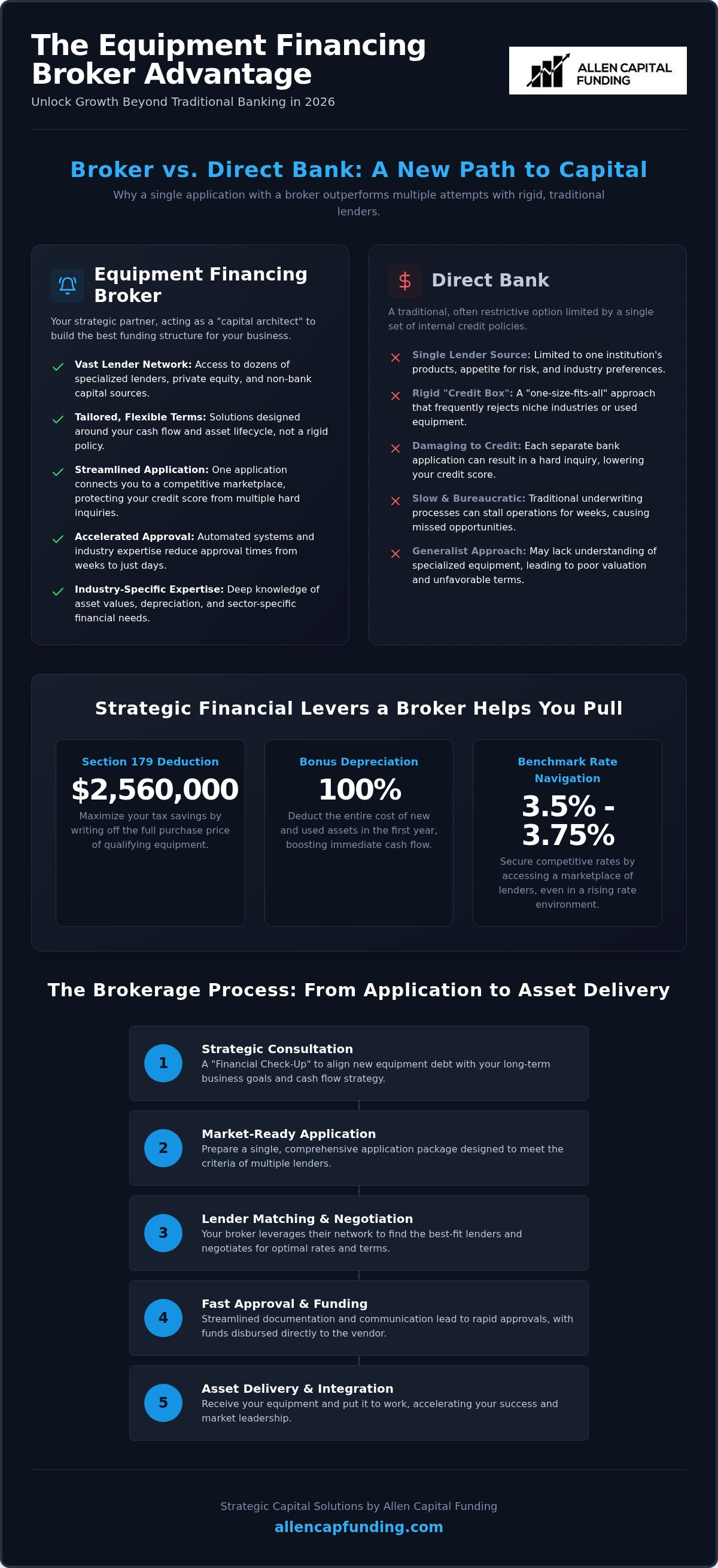
It's frustrating when time consuming applications stall your operations while market demand continues to climb. We understand that you need more than just a loan; you need a strategic partner who knows how to leverage 100% bonus depreciation and the $2,560,000 Section 179 deduction effectively. This guide will show you how to unlock better rates and faster approvals through expert brokerage. You'll learn the difference between buying and leasing, how to manage the current 3.5% to 3.75% benchmark rate environment, and the exact steps to secure the assets your business needs to lead the market.
Table of Contents
The Strategic Role of an Equipment Financing Broker in 2026
An equipment financing broker acts as a strategic intermediary between your business and a vast network of specialized lenders. In the current economic environment, relying on a single bank relationship often limits your growth potential. Traditional banks typically operate within narrow credit boxes that don't account for the unique depreciation scales of specialized machinery or technology. A broker removes these barriers by providing access to diversified capital sources, including private funds and non-bank lenders that understand specific industrial sectors. An equipment financing broker acts as a capital architect who matches asset life-cycles with optimal debt structures.
Asset specific expertise is no longer optional; it's a requirement for maintaining a healthy balance sheet. Whether you're acquiring medical imaging tools or heavy construction fleets, the financing must reflect the equipment's actual utility. Brokers analyze the secondary market value and useful life of your assets to ensure the debt doesn't outlast the equipment's productivity. This strategic alignment protects your cash flow and ensures you aren't overpaying for capital on assets that lose value quickly.
Navigating the 2026 Lending Landscape
Lending criteria have shifted significantly, making it harder for businesses to qualify through standard channels. A broker is essential for navigating modern credit requirements that now prioritize real-time data and industry-specific performance over simple credit scores. Technology plays a massive role here, allowing brokers to use automated documentation systems that accelerate the approval process from weeks to days. This speed is vital when you're trying to secure a competitive advantage. Additionally, a broker can help you find synergy between equipment loans and business lines of credit, ensuring your short term operational cash remains untouched while you fund long term growth.
Beyond Simple Loans: Strategic Asset Acquisition
Brokers help you manage balance sheet liquidity through sophisticated asset-based financing. Unlike "off-the-shelf" bank loans that offer rigid terms, brokerage solutions are tailored to your specific revenue cycles. This often involves choosing the right contractual arrangement to maximize tax benefits like the Section 179 deduction. At Allen Capital Funding, we advocate for a proactive approach. We utilize a Financial Check-Up to ensure any new equipment debt fits into your long term goals without over-leveraging your operations. This high-level consulting ensures that every piece of equipment you add becomes a catalyst for accelerated success rather than a financial burden.
Equipment Financing Broker vs. Direct Bank: A Comparison
Choosing between a direct bank and an equipment financing broker is a decision that impacts your capital structure for years. Most business owners start at their local bank, only to find a rigid credit policy that doesn't account for industry specific nuances. Direct banks typically have a single "credit box." If your asset type, business age, or credit profile falls outside those narrow lines, you'll face a quick rejection. This "one size fits all" approach often ignores the actual value of the equipment you're trying to acquire.
The advantage of a broker lies in their access to a diversified pool of funding sources. Instead of one policy, you gain access to dozens, including private equity firms and specialized non-bank lenders. This variety is crucial for "Credit Sensitivity." When you apply at multiple banks yourself, each hard inquiry can damage your credit score. A professional broker manages this process by using a single application to identify the lenders most likely to approve your specific deal. While brokers earn a commission, the lower interest rates and flexible terms they secure often outweigh the initial cost. If you want to explore how these options fit your current growth stage, a Financial Check-Up can help clarify your path.
Access to a National Network of Lenders
Local banks often lack the appetite for specialized machinery or used equipment. An equipment financing broker leverages a national network to find lenders that understand your niche. This reach is especially helpful when navigating complex SBA loan programs for major asset purchases. For those seeking government backed capital, our SBA loan brokers guide explains how to integrate these products into your equipment strategy. National lenders offer a depth of capital that local institutions simply can't match, ensuring your business stays competitive regardless of your location.
Speed, Flexibility, and Approval Rates
Time is a critical factor in equipment acquisition. A traditional bank approval can drag on for 30 days or more, stalling your operations. In contrast, the brokerage process often delivers a decision within a 24 to 48 hour window. This speed doesn't come at the expense of diligence; it's the result of streamlined technology and a focus on "Story Credit." Brokers look beyond the balance sheet to explain the context of your request. If your numbers don't tell the whole tale, a broker advocates for your business, highlighting your operational success and market potential to secure "outside the box" approvals that banks would otherwise ignore.
Identifying a High-Value Partner: Transparency and Expertise
Finding the right equipment financing broker is about more than just securing a low rate. It's about finding a partner who understands the operational realities of your specific industry. A high-value broker brings a combination of deep lender relationships and absolute transparency regarding their process. They shouldn't just act as a middleman; they should serve as a consultant who helps you avoid common pitfalls. To ensure you're working with a professional who prioritizes your growth, use this checklist before signing any engagement letter:
Does the broker have a documented track record in your specific industry?
Can they explain the residual value of the equipment you're acquiring?
Will they provide a comprehensive summary of all fees and lender terms in writing?
How many specialized lenders do they actually have active relationships with?
Fee Structures and Ethical Practices
Ethical brokerage practices are the foundation of a successful partnership. Most professional brokers are compensated through lender commissions or success fees paid at the time of funding. You should be cautious of any firm that requires significant upfront fees before they've secured a commitment. Transparency is the mark of a superior equipment financing broker. They'll provide you with a clear breakdown of the total cost of capital, ensuring you aren't surprised by hidden administrative charges. As noted in the SBA's guide to equipment financing and leasing, knowing the fine print of your agreement is vital for protecting your business's financial future.
Industry Specialization and Asset Knowledge
Asset knowledge is what separates a generalist from a strategic ally. A broker who understands the lifespan of a CNC machine is better equipped to structure your debt than someone who only handles office furniture. This expertise allows them to evaluate the equipment's residual value, which is a critical factor if you're considering leasing options. If you're looking for more specific details on how different assets impact your funding options, our Commercial Equipment Loans guide offers deeper insights. Choosing a specialized partner ensures that your financing structure matches the physical utility of the asset, keeping your capital efficient and your growth steady.
The Brokerage Process: From Application to Asset Delivery
The journey from identifying a business need to taking delivery of a new asset is a structured, methodical path. It starts with an initial consultation where your equipment financing broker acts as a strategic consultant. This meeting isn't just a credit check. It's an exploration of your business's current state and your future goals. The broker identifies potential hurdles early, ensuring the strategy aligns with your specific operational requirements. This proactive approach removes the guesswork and sets a clear trajectory for success.
Documentation and Financial Readiness
To move from consultation to approval, you must prepare a "market-ready" application. Lenders in 2026 require clarity and precision. You'll need to gather essential documents including your most recent tax returns, year to date financial statements, and specific equipment quotes from your chosen vendors. A broker helps you "package" these items to tell a compelling story, minimizing the back and forth questions that often stall bank approvals. This is the ideal time for a Financial Check-Up to ensure your balance sheet can support the new debt without compromising liquidity.
Negotiating Terms and Closing the Deal
Once your application is polished, the broker performs a "Market Sweep." They shop your deal to multiple specialized lenders simultaneously. This competition is what drives down interest rates and secures more favorable down payment requirements. Your equipment financing broker handles the heavy lifting of negotiation, advocating for longer term lengths or flexible payment structures that match your revenue cycles. Before you sign, the broker reviews the final documents to ensure no predatory clauses or hidden costs are included. After the final review, funds are disbursed directly to your equipment vendor, often within 24 to 48 hours of invoice approval. This streamlined approach allows you to focus on your operations while we secure your equipment funding.
Partnering with Allen Capital Funding for Accelerated Success
Allen Capital Funding stands as a national leader in strategic financial solutions, moving beyond the traditional role of a lender to act as your dedicated guide. We recognize that equipment is the engine of your growth, but it doesn't exist in a vacuum. Our team solves capital gaps by looking at your entire financial ecosystem rather than just a single transaction. As your equipment financing broker, we act as a proactive ally, identifying opportunities to strengthen your capital structure through a multi-product approach. We don't just fund a purchase; we build a foundation for your future goals. This philosophy ensures you have a steady, reliable hand navigating you through every stage of your business's evolution.
Tailored Funding Options for Every Business Stage
Established corporations and ambitious startups alike find a home with our team. We understand that a growing firm has different liquidity needs than a mature enterprise. Our national reach allows us to offer tailored funding options that traditional local banks often overlook. To provide broader liquidity, we often integrate asset-based lending into our equipment strategies. This allows you to leverage the value already present on your balance sheet to secure the technology or machinery you need today. Our expertise spans across industries, ensuring your funding is as specialized as the assets you're acquiring. Whether you're looking for SBA loans, Credit Lines, or Factoring, we have the depth to support your expansion.
Expert Guidance and Long-Term Support
Our commitment to professional confidence means we prioritize clarity and supportive empowerment above all else. You won't find high-pressure sales tactics here; instead, you'll find a partnership-driven approach focused on your long-term success. Working with a dedicated equipment financing broker ensures you have a strategic partner who understands your specific market demand. We invite you to experience a strategic consultation where we can map out your next acquisition together. We'll perform a Financial Check-Up to ensure your new debt aligns with your cash flow and growth projections. The speed of our process is designed to respect your time, delivering solutions when they matter most. Take the next step toward your business's future by booking a consultation with our expert team today. We're ready to help you unlock the capital you need for accelerated success.
Accelerating Your Vision with Strategic Capital
Securing the right business assets in 2026 requires a shift from passive bank applications to proactive capital architecture. We've explored how moving beyond a single bank relationship allows you to leverage specialized lender networks while protecting your credit profile. A professional equipment financing broker doesn't just find a loan; they act as a dedicated guide to ensure your debt structure supports long term liquidity. By focusing on asset specific expertise and transparent fee structures, you can avoid the common pitfalls of stagnant bank processes.
Allen Capital Funding is here to facilitate your next expansion through our national funding network. We provide expert guidance on SBA loans and working capital to ensure your financing is as dynamic as your business. Our team is committed to delivering tailored capital solutions for growth that move your company forward with speed and precision. Don't let rigid lending criteria stall your operations when specialized options are within reach.
Book a Strategic Consultation with Allen Capital Funding to map out your path to accelerated success. We're ready to help you build the future of your business.
Frequently Asked Questions
What exactly does an equipment financing broker do?
An equipment financing broker acts as a strategic intermediary between your business and a national network of specialized lenders. They analyze your financial profile and asset needs to match you with the most favorable terms available in the market. Unlike a single bank, a broker shops your application to multiple funding sources simultaneously. This ensures you receive a competitive capital structure tailored to your specific revenue cycles and long-term growth goals.
How much does it cost to use an equipment financing broker?
Brokers typically earn their revenue through commissions paid by lending partners or direct facilitation fees upon the successful closing of a loan. You don't usually pay an upfront fee just to explore your options. The value provided often offsets the cost, as a broker can negotiate lower interest rates and better terms than a business might secure alone. Always request a written summary of all fees before signing an engagement letter.
Can a broker help if I have a challenged credit history?
Yes, a broker is often the best resource for businesses with unique financial profiles or thin credit. While traditional banks have rigid credit boxes, brokers have access to non-bank lenders and private equity firms that focus on "Story Credit." They can package your application to highlight operational success and the asset's collateral value. This approach often leads to approvals that a standard bank would otherwise decline.
Is it better to get a loan through a broker or directly from the equipment dealer?
A broker typically offers a more strategic advantage than a dealer's captive financing. Dealer programs are often limited to a single lender and one specific asset. An equipment financing broker provides a broader view, allowing you to integrate the new debt with other products like credit lines or working capital. This holistic approach ensures your financing supports your entire balance sheet liquidity rather than just a single equipment purchase.
What types of equipment can a broker help me finance?
Brokers facilitate financing for a wide range of tangible assets across various industries. This includes heavy machinery, construction fleets, medical imaging tools, specialized manufacturing equipment, and even technology infrastructure. Whether you're acquiring new or used assets, a broker evaluates the equipment's useful life and residual value. This ensures the financing terms match the physical utility and depreciation schedule of the specific machinery you need for your operations.
How long does the process take from application to funding?
The brokerage process is significantly faster than traditional banking, often delivering a decision within a 24 to 48 hour window. Once you provide a market-ready application with tax returns and equipment quotes, a broker can sweep the market quickly. Funding typically occurs shortly after the vendor invoice is approved. This speed allows you to secure essential assets without stalling your daily operations or missing critical market opportunities.
Do brokers work with startups or only established businesses?
Professional brokers support businesses at every stage, including startups that hasn't yet built an extensive credit history. For newer firms, an equipment financing broker focuses on the founder's experience and the resale value of the equipment being financed. They can help startups navigate the higher down payment requirements often associated with early-stage growth. This expert guidance provides a bridge between a startup's current state and its future expansion goals.
What is the difference between an equipment loan and an equipment lease?
An equipment loan typically results in immediate ownership, with the asset serving as collateral for the debt. In contrast, an equipment lease is a contractual arrangement where you pay for the use of the asset over a set period. Leasing can offer lower monthly payments and easier equipment upgrades, while loans allow you to build equity. A broker helps you determine which structure maximizes tax benefits like the Section 179 deduction.


Comments