


Common SBA Loan Application Mistakes: A 2026 Checklist
A complete document folder doesn’t automatically make a strong SBA application. The common SBA loan application mistakes that create problems often involve gaps between the paperwork, the financing request, and the business’s ability to repay.
It’s understandable to be unsure which records to include, especially because lender requests can vary. Missing details, inconsistent financial figures, or an unclear explanation of how funds will be used can prompt follow-up questions and slow the review. A practical check before submitting can help you catch these issues early.
This checklist shows you how to organize requested documents, compare figures across your application, and explain the loan’s purpose and repayment plan with supporting evidence. It also covers how to prepare for lender-specific requests and when to ask a lender or financing professional for guidance. The aim is an internally consistent application that gives reviewers a clear picture of your business and its financing needs.
Table of Contents
Common SBA Loan Application Mistakes That Can Undermine a Strong Request
This section helps you catch preventable problems before submitting. It can’t predict whether a lender will approve your request. A strong application presents a coherent business case: the documents support the financial information, the requested funding has a clear purpose, and the request fits the criteria for the relevant SBA program.
Requirements vary by program, lender, applicant circumstances, and intended use of funds. Confirm current forms and eligibility criteria with your lender and official SBA guidance before applying. For general background on the SBA 7(a) loan program, this overview may help explain its role, but it doesn’t replace current program guidance.
The checklist covers five areas: eligibility, document completeness, financial consistency, use of proceeds, and lender follow-up. Reviewing each area can help you prepare a clearer request and identify questions to raise before submission.
Why small application inconsistencies deserve attention
A difference between figures in an application and its supporting records may prompt a lender to ask for clarification. For example, if the revenue stated in the application doesn’t match the financial statements, explain the difference and provide relevant context. Don’t leave the reviewer to guess which figure is correct.
Not every issue has the same significance. A missing attachment or unclear explanation may be correctable, while a confirmed eligibility issue may mean reassessing the program or financing plan. Don’t assume one mistake automatically leads to denial. Address questions directly and ask the lender what documentation or explanation it needs.
Which SBA loan application mistakes the checklist covers
An application mistake is an error or omission that makes it harder for a lender to assess a request. Common SBA loan application mistakes include missing or mismatched documents, assumptions about eligibility, financial information without enough context, an unclear explanation of how funds will be used, and incomplete responses to lender follow-up.
This article focuses on application preparation, not a complete eligibility ruling for every SBA program or business. Use the checklist to organize your materials and identify possible gaps. Then verify program-specific requirements with the lender and current SBA guidance, particularly if your ownership, business structure, financing purpose, or other circumstances raise questions.
SBA Eligibility and Document Mistakes to Check Before Applying
One of the common SBA loan application mistakes is assuming that a business or proposed use of funds qualifies simply because it seems like a fit. Eligibility and permitted uses depend on the program and the applicant’s circumstances. Confirm current criteria with your lender and official SBA guidance before preparing a final submission.
Check program fit before preparing the package
Start with the purpose of the financing. A request for working capital and a project involving owner-occupied real estate may be evaluated under different program rules. Don’t assume the requirements for SBA 7(a) and 504 loans are interchangeable. Review the official SBA 7(a) eligibility requirements, then verify with the lender which details apply to your business, ownership, and intended use.
Business type, ownership structure, and other eligibility details can affect program fit. If anything is unclear, ask the lender which criteria apply rather than relying on a general checklist. You can also compare available capital options, but confirm each program’s current requirements before proceeding.
Build a document checklist around lender requests
There isn’t one universal document package for every SBA application. Ask the lender for a tailored list, then organize the materials it requests. Depending on your financing request, these may include tax returns, financial statements, a debt schedule, and records supporting the planned use of funds.
Before submitting, review each item for issues that could lead to avoidable follow-up:
Completeness: Include every requested page, attachment, and supporting record.
Currency: Confirm that documents cover the periods the lender requested and haven’t been superseded by newer versions.
Signatures: Check forms for required signatures and completed fields.
Consistency: Compare business names, entity details, ownership information, and financial figures across forms, tax records, and statements.
A mismatch doesn’t always indicate a substantive problem, but it should be explained. For instance, if the legal entity name differs from the name used in day-to-day business, make sure the records show how the names relate. Don’t alter source documents to force a match. Ask what explanation or additional record would clarify the difference.
If you need help organizing a financing request, a financing professional can help you identify questions to raise and prepare materials for lender review. Confirm program fit and document requirements with the lender and current SBA guidance.
Financial and Repayment Mistakes That Make an SBA Request Harder to Assess
Projections can help explain a business’s plans, but they don’t replace supportable historical records. Lenders need to understand how the business has performed and how the requested financing could fit its cash flow. A forecast that assumes a sharp increase in sales without explaining the basis may raise questions.
Look for unexplained revenue swings, figures that differ between the application and financial statements, and existing debt that hasn’t been disclosed. These gaps can make the request harder to assess and may prompt follow-up. Scotsman Guide also discusses common application mistakes, including misrepresenting figures or minimizing risks. Address discrepancies with accurate records and a factual explanation, not revised numbers that obscure what happened.
Present financial records and projections consistently
Compare the figures in your application with tax filings, financial statements, and supporting schedules. If a number differs because the documents cover different periods or use different accounting treatments, state that clearly and provide records to support the explanation. For projections, label key assumptions, such as expected sales growth or planned expenses, and be prepared to explain why they’re plausible.
Explain the funding purpose and repayment plan
A request that says only “business growth” leaves key details unclear. Describe the intended uses, such as specific equipment or operating needs, and give a realistic timeline for using the funds. Then explain the expected source of repayment, such as ongoing business cash flow, without presenting projected results as guaranteed.
Lenders need a clear link between the loan purpose, business cash flow, and the company’s capacity to repay. That connection helps reviewers understand what you’re requesting and how the financing fits the business case. These financial details are among the common SBA loan application mistakes to check before submission. If you’d like help organizing your financing request, explore financing guidance for businesses.
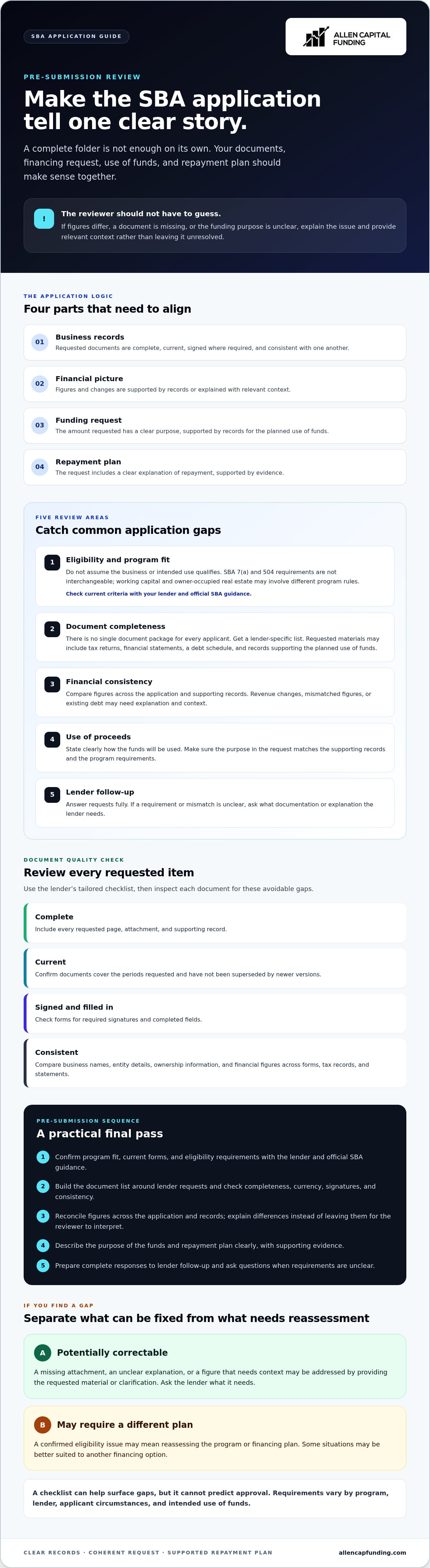
A Pre-Submission SBA Loan Application Checklist for Catching Mistakes
Use this five-step review to catch avoidable gaps before your application reaches the lender. First, confirm the current document list, preferred file format, and submission channel. Requirements vary, so don’t rely on an old checklist or assume every lender wants materials organized in the same way.
Use a five-step review before submitting
Confirm program fit. Check that the financing purpose aligns with the program you’re pursuing. Raise lender-specific eligibility questions before finalizing your package.
Match the figures. Compare amounts in the application with tax filings, financial statements, and supporting schedules. Flag differences and prepare a clear explanation with relevant records.
Check every file. Make sure forms are complete, signed and dated where required, and paired with all requested attachments. Open each file to confirm it’s readable and the pages are in the correct order.
Review the business case. Read the use-of-proceeds explanation alongside the repayment plan. Confirm that the requested funds, business need, supporting documents, and expected repayment sources tell a consistent story.
Resolve open questions. Identify unclear details or missing information, then ask the lender what it needs before submitting. Follow its instructions for naming, formatting, and delivering files.
Finish with a side-by-side check of the application, attachments, and use-of-proceeds explanation. Confirm that business and ownership details align, financial figures are supported, and the requested funding has the same purpose throughout the package. This common SBA loan application mistakes checklist is most useful as a final review, not as a substitute for the lender’s document requests.
Correct an error instead of hiding it
If you discover a mistake after submission, contact the lender promptly. Explain what needs correcting and provide revised information or supporting evidence through the channel it specifies. Don’t quietly alter records, send multiple versions without context, or submit a duplicate application unless the lender advises you to do so.
Keep a complete copy of everything submitted, including attachments and later corrections. Track lender questions, your responses, and the dates you sent them. This record helps you respond consistently and see which items remain unresolved. If you want help organizing a financing request, discuss your SBA financing options with Allen Capital Funding. Guidance can help you prepare, but the lender determines its review requirements.
What to Do Next If Your SBA Application Has Gaps
A request for more information doesn’t automatically mean your application is in trouble. First, identify whether the lender needs a missing document, clarification about a figure, or information to address an eligibility question. Each issue calls for a different response. A document gap may be fixable with a complete, accurate submission; a concern about program fit may require a closer look at the financing plan.
Respond to follow-up questions with a clear record
Read each lender request carefully and answer every question directly. Attach the specific supporting evidence requested and briefly explain how it relates to your response. If a request is ambiguous, ask the lender to clarify before sending materials based on an assumption.
Keep a dated record of what you submit, including corrections, follow-up messages, and items still outstanding. Save copies of the documents and note how each version differs. This makes it easier to answer additional questions consistently and reduces the risk of conflicting information. If you find an error in a previously submitted figure or document, tell the lender rather than quietly replacing it or sending a duplicate application.
Compare next steps when SBA financing may not fit
Sometimes the issue isn’t a missing attachment. The intended purpose, eligibility details, or financing structure may not align with the SBA program being considered. Ask the lender which concern needs to be resolved and whether revised documentation could address it. If the program doesn’t appear to fit, review the business need before choosing another path.
A credit line, working capital, or equipment financing may be worth assessing, depending on what the business needs to fund. These options aren’t guaranteed substitutes, and each may involve different documentation, repayment structures, timing, and effects on cash flow. Compare them with the purpose of the request and your ability to manage repayment. A financing professional may help you organize the facts and prepare questions, but can’t guarantee an approval or outcome.
Reviewing common SBA loan application mistakes can help you distinguish a correctable package gap from a larger question about financing fit. Allen Capital Funding helps businesses explore SBA loans and other financing options. Business owners can book online consultations to discuss their request and potential paths. Book an online consultation to talk through your financing needs and suitable capital options.
Make Your Next Financing Step With Confidence
A well-prepared SBA application gives the lender a clearer view of your business, financing purpose, and repayment plan. Before submitting, verify program fit and lender-specific requirements, reconcile financial figures with supporting records, and check that each document is complete and consistent. These steps can help you catch common SBA loan application mistakes and respond clearly if the lender requests more information.
If you find a gap, address it directly. A missing document may be straightforward to correct, while a question about eligibility or financing fit may call for a closer review of your options. Either way, keep your records organized and ask the lender to clarify anything you’re unsure about.
Allen Capital Funding helps businesses explore SBA loans and other business financing categories. An online consultation gives you an opportunity to discuss your request and potential capital solutions with the team, without any guarantee of approval. Book an online consultation to discuss your business financing options, and take your next step with a clearer plan.
Frequently Asked Questions
What are the most common SBA loan application mistakes?
Common SBA loan application mistakes include missing or outdated documents, inconsistent financial figures, incomplete forms, and unclear explanations of how funds will be used. Applicants may also overlook lender-specific requests or assume their business and proposed use qualify without checking the relevant program criteria. Review the package as a whole so the application, supporting records, and repayment explanation present a consistent, evidence-backed request.
Can an SBA loan application mistake lead to denial?
An application mistake can lead to follow-up, delay review, or contribute to a denial, but one error doesn’t automatically determine the outcome. A missing attachment or unclear figure may be correctable, while an eligibility concern may require a different response. Contact the lender, clarify what’s needed, and provide accurate supporting information. The lender assesses the full request under applicable program requirements and its own review process.
What documents do I need for an SBA loan application?
Required documents depend on the SBA program, lender, financing purpose, and your business circumstances, so there isn’t one universal list. A lender may request tax returns, financial statements, debt schedules, application forms, or records supporting the use of funds. Ask for the current document checklist, then confirm each item is complete, readable, and signed where required. Check official SBA guidance for program-specific forms or criteria.
How can I make my SBA loan application stronger?
Make your request easier to assess by matching application figures to supporting records, explaining unusual changes, and clearly describing how the funds will support your business. Use realistic projections with explainable assumptions, disclose existing debt, and connect expected repayment to business cash flow. Before submitting, confirm program fit and lender-specific requests, then review the application and attachments for missing information or conflicting details.
What happens if I find an error after submitting my SBA application?
Contact the lender promptly and explain what needs correcting. Ask how it wants the updated information submitted, then provide the corrected document or figure with supporting evidence and a brief explanation. Keep a dated copy of your message and all revised materials. Don’t submit a duplicate application or quietly replace a file without guidance, since the lender needs to understand what changed and which information is current.
Does applying for an SBA 7(a) loan involve the same requirements as an SBA 504 loan?
No. SBA 7(a) and 504 loans serve different financing purposes and have program-specific requirements, so don’t assume the eligibility criteria, permitted uses, or documents are interchangeable. Confirm current requirements for the program you’re considering with the lender and official SBA guidance. If your intended use could fit more than one financing route, ask which distinctions matter for your business and application.
Can a financing professional help me avoid SBA application mistakes?
A financing professional can help you organize your request, identify missing information, and prepare questions for a lender. Allen Capital Funding helps businesses explore SBA loans and other business financing options, but it isn’t an SBA agency and cannot guarantee approval. A professional can also help you consider whether options such as a credit line or equipment financing may suit your needs. Confirm program rules and lender requirements directly with the lender and SBA guidance.


Comments