


Choosing the Right Small Business Lending Company for Strategic Growth in 2026
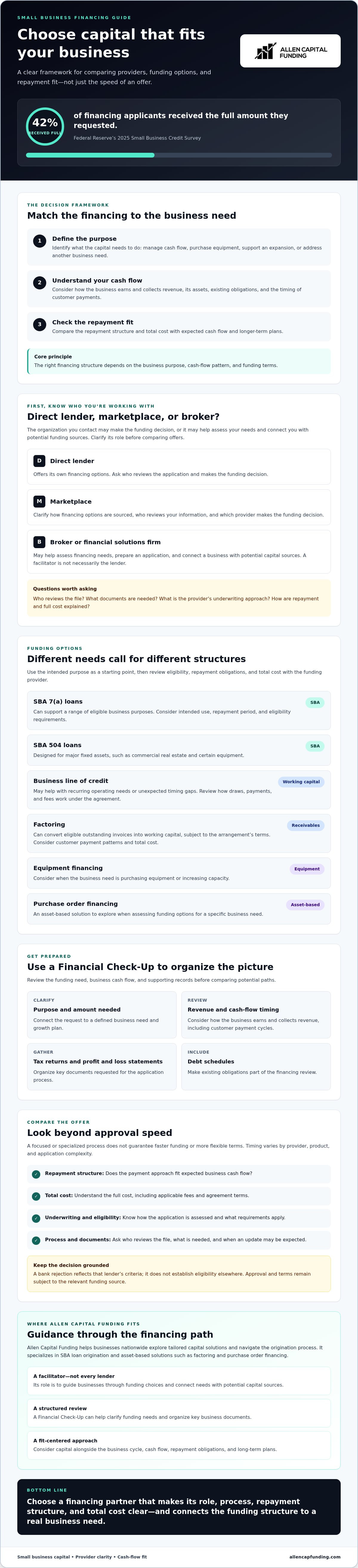
Only 42% of financing applicants received the full amount they requested, according to the Federal Reserve’s 2025 Small Business Credit Survey. Choosing a small business lending company is about more than finding a source of cash. The right partner should help match financing to your business cycle, cash flow, and growth plans, while making the process and total cost clear.
If rigid bank criteria, slow decisions, or confusing loan options are making it harder to move forward, you’re not alone. This guide explains how to evaluate lending companies and identify capital solutions that support long-term growth. You’ll learn the differences between direct lenders, marketplaces, and brokers, and how options such as SBA loans, credit lines, working capital, and factoring may fit different business needs. We’ll also cover what to compare in financing terms and how a Financial Check-Up can help clarify your next steps. With a clear framework, you can look beyond the speed of an offer and choose a financial partner that fits your goals.
Table of Contents
Defining the Modern Small Business Lending Company
A small business lending company may provide commercial capital directly or help businesses find and arrange financing through lenders. That distinction matters: the company you contact may make the funding decision itself, or it may help assess your needs, prepare an application, and connect you with potential funding sources. The goal is to match capital to a business purpose, whether that means managing cash flow, purchasing equipment, or supporting an expansion.
In 2026, businesses are considering non-depository lenders and finance specialists alongside banks. These providers may offer a focused application process or experience with particular industries and funding structures. That doesn’t mean every alternative is faster or more flexible. Before deciding, review the provider’s role, underwriting approach, repayment structure, and full cost. For a wider overview of financing a new or existing business, it also helps to understand how debt fits within the broader range of financing methods.
Lending Companies vs. Traditional Retail Banks
Traditional banks often use established underwriting requirements and review procedures. A specialized lender or broker may have a more focused process, but timing varies with the provider, product, and complexity of the application. Ask who reviews your file, what documents are needed, and when you can expect an update. Clear answers help you plan without relying on an assumed funding timeline.
Specialized credit analysis may also focus on how a business earns and collects revenue, its assets, and its existing obligations. For example, a company with long customer payment cycles may need a different structure from one seeking equipment for a planned capacity increase. A repayment approach that fits the business’s cash flow can make obligations easier to plan for, but it doesn’t guarantee approval or more favorable terms.
The Role of a Strategic Financial Facilitator
A direct lender offers its own financing options. A broker or financial solutions firm can help business owners understand which funding route may suit their circumstances and connect them with potential capital sources. Allen Capital Funding, for example, specializes in SBA loan origination and asset-based solutions such as factoring and purchase order financing. Its role is to guide businesses through funding choices, not to act as every lender in the process.
This support can be useful when a company has a complex balance sheet, uneven revenue, or a financing need that doesn’t fit a standard application. A bank rejection reflects that lender’s criteria, not necessarily the full range of possibilities. A facilitator can help clarify the reason for the decline and consider other appropriate options, while making clear that eligibility and approval remain subject to the relevant funding source.
A lending company can be a strategic growth ally when it helps connect a business’s capital needs, cash flow, and long-term plans with an appropriate funding path.
Strategic Capital Products: Navigating the 2026 Funding Landscape
Funding works best when the structure fits the need. A long-term property purchase, a short-term cash gap, and a large customer order place different demands on liquidity. Rather than relying on one financing source for every situation, assess a mix of term loans and asset-based solutions, then compare repayment obligations with expected cash flow. A small business lending company or financing specialist can help clarify which options may fit, but approval and terms depend on the funding provider.
SBA Loans and Long-Term Capital
SBA 7(a) loans can support a range of eligible business purposes, while 504 loans are designed for major fixed assets such as commercial real estate and certain equipment. The U.S. Small Business Administration outlines available SBA-guaranteed loans. Before choosing a program, consider the intended use, repayment period, and eligibility requirements. A lending broker may also help businesses explore SBA options and prepare for origination.
Working Capital: Credit Lines and Factoring
A business line of credit can provide access to funds for recurring operating needs or unexpected timing gaps, with borrowing and repayment governed by the agreement. Before relying on it as a liquidity reserve, review how draws, payments, and any fees work. Explore this business line of credit guide to understand the questions to ask.
Factoring is another option for businesses with outstanding invoices. It can convert eligible receivables into working capital, subject to the arrangement’s terms. Because factoring relies on invoices and customer payment patterns, compare its total cost and cash flow impact with other available funding structures.
Asset-Specific Funding and Strategic Combinations
Equipment financing can help fund machinery or other business assets while preserving cash for operating needs. Purchase order financing may help cover supplier costs tied to a large order when the business has confirmed demand but needs support fulfilling it. Each option is designed for a particular purpose, so review eligibility, repayment terms, and how the financing interacts with existing obligations.
Some businesses use more than one product for distinct needs, such as equipment financing for a planned upgrade and a credit line for routine liquidity. The combination should support growth without stretching repayment capacity. Map each funding source to a defined use, forecast incoming cash, and account for all obligations before proceeding. For tailored guidance on SBA loans, credit lines, and asset-based options, learn about Allen Capital Funding’s financing guidance.
Lending Brokerage vs. Direct Lenders: Choosing Your Path
A direct lender evaluates your application against its own products, criteria, and risk appetite. A brokerage or financial solutions firm helps assess your needs and may connect your business with appropriate funding sources. Neither route guarantees approval or better terms. The key difference is whether you’re considering one provider’s options or receiving guidance across potential channels.
A bank rejection can feel final, but it means only that one lender did not approve the application under its criteria. Another funding source may assess the business differently, depending on its eligibility requirements, industry focus, and financing structure. The U.S. Small Business Administration explains its SBA-guaranteed loan program and provides information to help businesses explore SBA lending. Treat a decline as a prompt to understand the reason, review your application, and consider suitable alternatives, not as a promise that another lender will approve you.
The Advantage of Multiple Funding Channels
A brokerage can offer one point of contact while helping a business explore more than one potential capital source. That may be useful if a company’s revenue cycles, assets, or financing purpose don’t fit a single lender’s standard approach. For example, a business with outstanding invoices may want to explore factoring, while a company seeking a long-term eligible project may consider an SBA loan.
Broader options can reduce dependence on one institution’s criteria, but they don’t remove repayment risk. Ask which providers may review your application, whether submissions go to multiple lenders, and how each inquiry may affect your credit profile. Compare proposed structures on their full terms, including repayment schedule, fees, collateral requirements, and total cost.
Expert Guidance and Origination Support
A specialist can help organize financial information, identify missing documents, and present the business’s funding purpose clearly. For an SBA application, ask what documentation the lender requires and who is responsible for each step. A well-prepared package can make review more straightforward, but it can’t guarantee approval or a faster decision.
Communication matters, too. Before proceeding, clarify who will be your primary contact, how status updates are shared, and what could delay the application. Ask the brokerage to explain its compensation and disclose any fees before you agree to move forward. Confirm which lender will make the credit decision and provide the final terms.
Allen Capital Funding works as a bridge between businesses and capital sources, with expertise in SBA loans and asset-based financing. A Financial Check-Up and funding guidance can help owners review their needs and prepare questions before choosing a path. A small business lending company should make the process clearer, not pressure you to accept an offer you don’t understand.
Preparation Framework: Securing the Best Funding Terms
Preparation helps a lender understand how much capital you need, how the business plans to use it, and how you expect to repay it. Before approaching a small business lending company, organize your financial records, review existing obligations, and identify the funding structure that fits your goal. A clear, consistent application can make it easier to assess options, though it can’t guarantee approval or particular terms.
Start with a Strategic Financial Check-Up
Review cash flow, existing debt payments, and the timing of customer receipts alongside upcoming expenses. Lenders may assess the business’s ability to cover obligations using measures such as cash flow coverage, so understand what your records show before applying. Take inventory of business assets, including equipment, property, and eligible receivables, and ask whether any could be relevant to a financing structure.
A financial check-up connects the requested capital to the business’s actual repayment capacity.
Prepare Documents and a Clear Use of Proceeds
Requirements vary by lender and financing type, but owners should be ready to provide core records such as tax returns, profit and loss statements, and a current debt schedule. Keep figures consistent across documents, and note unusual changes that may need explanation. A concise use-of-proceeds statement should specify what the funds will pay for, how that spending supports the business, and what revenue or operational outcome you expect.
For example, distinguish a request to purchase production equipment from one intended to cover supplier costs for a large order. Specificity helps a reviewer understand the purpose and assess whether the proposed financing fits it.
Build a Credible Growth Narrative
Support your plan with evidence. Explain the opportunity, expected costs, relevant management experience, and the company’s position in its market. Use realistic forecasts and be ready to describe the assumptions behind them. Before an initial discussion, prepare questions about eligibility, required documents, repayment structure, total borrowing costs, collateral, decision stages, and who will communicate updates.
Review your business credit profile for errors, monitor payment history, and understand how existing balances and new applications may affect a lender’s assessment. For an unsecured credit line or a larger capital request, be prepared to discuss both the business’s credit record and its capacity to manage additional payments. Don’t overstate projections or omit obligations.
Allen Capital Funding offers a Financial Check-Up to help business owners review their capital needs and prepare for funding conversations. Request a Financial Check-Up to discuss a more informed funding strategy.
Strategic Financial Solutions with Allen Capital Funding
Choosing a funding partner involves more than submitting an application. Allen Capital Funding serves businesses nationwide as a guide to commercial capital, helping owners consider financing options in light of their goals, assets, and financial position. Its team specializes in SBA 7(a) and 504 loans, credit lines, and asset-based solutions, including factoring and purchase order financing.
The firm’s “Accelerated Success” approach centers on efficient origination and tailored guidance. Funding is not guaranteed, and every application may follow a different timeline. The focus is on helping business owners clarify their needs, understand potential paths, and prepare to work with relevant capital sources. An informed partner can help make complex financing decisions easier to assess.
Tailored Capital for Different Business Stages
A newer business evaluating equipment financing and an established company considering commercial real estate have different objectives, financial histories, and funding needs. Allen Capital Funding helps businesses explore options suited to their circumstances, with eligibility and terms determined by the relevant funding provider. For companies with outstanding invoices or a large customer order, factoring and purchase order financing may also be worth evaluating. Learn how asset-based lending for small businesses can support liquidity planning.
This range can be useful when a business’s capital needs don’t fit neatly into one standard loan request. A small business lending company should connect each financing conversation to a defined business purpose and make responsibilities, costs, and terms clear before you proceed.
A Partnership Built Around Your Goals
Start with the priorities that matter most: what the business needs capital for, when it needs it, and how repayment could fit its cash flow. In an initial conversation with Allen Capital Funding’s team, owners can discuss those goals, their financial context, and relevant options such as SBA loans, credit lines, equipment financing, factoring, or purchase order financing. Bring questions about documentation, potential funding sources, fees, repayment structure, and next steps.
A partnership-driven process should leave you with a clearer view of your choices, not pressure to accept a particular offer. Allen Capital Funding also offers a Financial Check-Up to help businesses review their capital needs and consider a strategic path forward.
To explore the firm’s offerings and next steps, Explore our strategic capital solutions and book a consultation today.
Choose Capital That Moves Your Business Forward
The right funding decision starts with a clear purpose. Match the financing structure to your business need, whether it’s a long-term investment, working capital, or an asset-backed solution. Then prepare financial documents and a focused use-of-proceeds plan so potential funding partners can understand your goals and repayment capacity.
A small business lending company should offer more than an application path. Look for transparent terms, relevant expertise, and guidance that considers your business’s broader financial picture. Allen Capital Funding supports businesses nationwide with SBA, asset-based, and working capital solutions, backed by a dedicated team offering tailored financial guidance.
Build your next funding decision around strategic growth, not just immediate access to capital. Contact Allen Capital Funding today to explore a path aligned with your goals. With a thoughtful plan and the right partner, you can move toward your next stage of growth with greater confidence.
Frequently Asked Questions
What is the difference between a small business lending company and a bank?
A small business lending company may lend directly or help connect a business with funding sources, while a bank generally evaluates applications for its own products. A specialist may focus on commercial financing and offer guidance across options such as SBA loans, credit lines, and asset-based financing. Compare each provider’s role, eligibility criteria, repayment terms, costs, and application process rather than assuming one type is always faster or more flexible.
How long does it typically take to get funded by a lending company?
Funding timelines vary by lender, financing type, application completeness, and underwriting needs, so there isn’t one reliable timeline for every business. An application requiring additional financial records or review of complex assets may take a different path from a simpler request. Ask who makes the credit decision, what documents are outstanding, and what steps remain. Treat any timeline as an estimate, not a promise, until the funding source confirms it.
Can I get an SBA loan through a private lending company?
Yes. A private lender may originate an SBA loan, while the SBA provides a guarantee under the applicable program rather than directly lending to every business. A brokerage such as Allen Capital Funding can help businesses explore SBA financing and prepare for the origination process. Approval depends on the participating lender’s review and program eligibility. Confirm which lender will evaluate your application, what documentation it requires, and which SBA program may fit your use of funds.
What are the requirements for an unsecured business line of credit in 2026?
There is no single universal requirement for an unsecured business line of credit in 2026. Criteria vary by provider and the requested credit amount. A lender may review business credit history, revenue, cash flow, time in operation, existing debt, and the intended use of funds. Prepare recent financial statements and a debt schedule, then ask about minimum qualifications, personal guarantees, credit checks, repayment terms, and any fees before applying.
Is purchase order financing better than a traditional business loan?
Neither option is universally better. Purchase order financing may suit a business that needs help covering supplier costs for a confirmed customer order but lacks enough working capital to fulfill it. A traditional business loan may fit a broader or longer-term funding need. Compare eligibility, repayment timing, total cost, and how each structure affects cash flow. Make sure projected customer payments can support the obligations before choosing.
How does invoice factoring help with my company's cash flow?
Invoice factoring can help turn eligible unpaid invoices into working capital, bridging the gap between delivering a product or service and receiving customer payment. The business receives funds under the factoring agreement, and the receivables are handled according to its terms. Factoring can affect customer payment processes and has costs, so review the agreement, advance and settlement details, and total amount received before deciding if it fits your cash flow needs.
What should I look for when choosing a small business loan broker?
Look for a broker with relevant experience, clear communication, and a transparent explanation of its role and compensation. Ask which lenders or funding sources may review your application, whether you authorize submissions to multiple providers, and who makes the final credit decision. Request a clear comparison of repayment terms, fees, collateral requirements, and total cost. A responsible broker should explain options plainly and avoid promising approval or terms before underwriting.
What happens during a strategic financial check-up?
A strategic financial check-up reviews your business’s funding needs alongside its financial position. You may discuss cash flow, existing debt, assets, upcoming expenses, growth plans, and how you intend to use capital. Bring relevant records, such as financial statements and a debt schedule, to support the conversation. The review can help clarify which funding options to explore and what questions to raise with potential lenders, but it doesn’t guarantee approval.


Comments