


Cash Flow Solutions for Slow-Paying Clients: Practical Guide
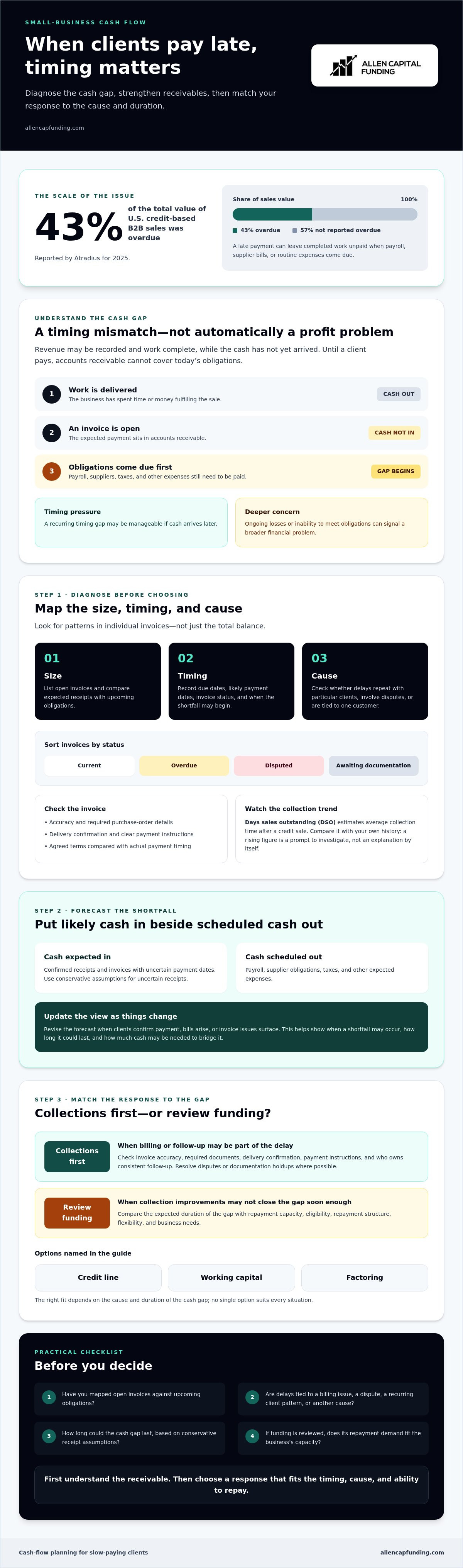
Atradius reported that 43% of the total value of credit-based B2B sales in the United States was overdue in 2025. For a small business, the time between completing work and collecting payment can put payroll, supplier bills, and routine expenses under pressure. The right cash flow solutions for slow paying clients depend on what’s causing the delay and how long the cash gap is likely to last.
Unpredictable payment timing makes it harder to plan, especially when you want to protect client relationships rather than create friction. Financing isn’t always the first or only answer. Clear invoice terms, consistent follow-up, and better visibility into receivables may help. A funding option may address a gap that collection improvements can’t solve quickly enough.
This guide explains how to identify patterns behind late payments, strengthen your receivables process, and compare options such as a credit line, working capital, or factoring. You’ll learn how to weigh repayment structure, eligibility, and business needs so you can cover near-term obligations and choose a practical response to your cash-flow situation.
Table of Contents
How Slow-Paying Clients Create a Cash-Flow Gap
A cash-flow gap is a timing mismatch: money the business expects to receive hasn’t arrived before payments come due. A company may have completed work and recorded revenue, yet still lack enough cash on hand for payroll, suppliers, taxes, or planned growth. Unpaid amounts sit in accounts receivable, but they can’t cover today’s obligations until clients pay.
Cash-flow pressure from overdue invoices occurs when operating bills arrive before cash earned from completed work. That pressure doesn’t automatically mean the business is unprofitable. Profitability reflects revenue and expenses over a period; cash availability reflects what has actually been collected and what must be paid now. A recurring timing gap may be manageable, while ongoing losses or an inability to meet obligations can signal a deeper financial problem. The distinction matters when weighing cash flow solutions for slow paying clients.
Which warning signs suggest a receivables timing problem?
Watch for repeated use of cash reserves to cover routine expenses while invoices remain unpaid. A profitable income statement won’t show whether cash from a recent sale has arrived in time for this week’s payroll or supplier bill. Review invoice aging alongside upcoming obligations. Note which invoices are overdue, whether delays recur with particular clients, and whether the shortfall eases when payments arrive.
How can late payments affect the cash conversion cycle?
The cash conversion cycle describes the time between spending cash to deliver goods or services and collecting payment from the resulting sale. The longer that interval, the longer business funds are tied up in operations instead of being available for other needs. If a client pays later than expected, the collection part of the cycle stretches, even if the work is complete and the sale is profitable.
Track how long it typically takes your business to pay for inputs, deliver work, and collect invoices. Compare those trends with your own past periods rather than a generic benchmark. If the time from delivery to payment is steadily lengthening, or a few late-paying clients regularly push collections past due dates, that pattern can help explain why working cash feels tight and where to investigate next.
Diagnose Late Receivables Before Choosing a Cash-Flow Solution
Before choosing among cash flow solutions for slow paying clients, identify the size, timing, and cause of the gap. Start with a clear snapshot: list each open invoice, its due date, expected payment date, and status. Then compare expected receipts with upcoming business obligations. The U.S. Small Business Administration’s guidance can help you diagnose late receivables as part of a broader review of business finances.
Look for patterns, not just a total balance. An occasional late payment differs from delays that recur with the same clients, invoices held up by disputes, or a large share of receivables tied to one customer. Each points to a different issue and may call for a different response. A disputed invoice may need documentation or correction, while recurring delays may call for a closer review of payment terms and follow-up practices.
How should a business review its accounts receivable?
Group invoices by status and age, such as current, overdue, disputed, or awaiting documentation. Check whether each invoice is accurate and includes any required purchase-order details, delivery confirmation, and clear payment instructions. Compare actual payment timing with the agreed terms and each client’s past behavior. This helps distinguish a processing holdup from a persistent pattern of late payment.
Days sales outstanding, or DSO, estimates the average time a business takes to collect payment after making a credit sale. It’s most useful as a trend to compare with your own history, alongside invoice-level details. A rising figure can prompt a closer look, but it doesn’t explain the cause on its own.
What should a short-term cash forecast include?
Build a rolling forecast that maps likely cash in against scheduled cash out. Include confirmed receipts, payroll, supplier obligations, taxes, and other expected expenses. For invoices with uncertain payment dates, use conservative assumptions rather than counting on the earliest possible arrival. Update the forecast as clients confirm payment, new bills arise, or invoice issues surface.
This view helps you identify when a shortfall may occur, how long it could last, and how much cash may be needed to bridge it. With that information, you can address collection or billing problems first where possible, then assess whether a funding option fits the remaining gap and the business’s ability to repay. If financing merits review, you can discuss funding options in light of your receivables and obligations.
Compare Cash-Flow Solutions for Slow-Paying Clients
Choose a response based on the cause of the shortfall, how soon cash is needed, and how repayment would work. Operational steps, such as resolving invoice disputes or improving follow-up, can reduce future delays without adding a financing obligation. But collection improvements may not provide cash in time for an immediate bill. Financing may bridge a timing gap, though access, terms, and suitability depend on the business, provider, and agreement.
Different options address different needs. A business line of credit may let a business draw funds as working-capital needs arise, subject to its agreement. Factoring is connected to eligible invoices, while working capital financing is a broad category rather than one standardized product. Purchase order financing typically addresses qualifying costs tied to fulfilling an order. It is not designed to turn an already overdue invoice into collected cash.
When might a business line of credit fit?
A credit line may suit a business with changing short-term cash needs, such as recurring gaps between paying operating costs and collecting client revenue. It differs from financing tied to specific receivables because use and repayment are governed by the credit agreement, not necessarily by one invoice. Review how draws, repayments, available credit, and other terms work in the specific agreement before relying on it.
When might invoice factoring or working capital fit?
Factoring connects financing to eligible business invoices. The provider’s requirements, any customer requirements, fees, and whether the arrangement is with or without recourse vary by provider and agreement. Working capital financing can address general operating needs, but the category covers different structures. Compare the proposed repayment source and obligations with expected collections rather than assuming either option will match every receivables gap.
What trade-offs should owners compare?
Review how soon funds may be available, when repayment is due, and what cash flow will support it. Check total contractual obligations, any collateral or receivables requirements, and how much flexibility the arrangement allows. Read the full documentation, including provisions that affect repayment if a client pays late or an invoice is disputed. Consider getting qualified advice if a term or obligation is unclear.
Use collections first when an invoice issue or follow-up gap is the main problem and there’s time to address it.
Review financing options when the cash shortfall is time-sensitive and the business can assess repayment against realistic receipts.
Match the structure to the need: a recurring working-capital gap, eligible receivables, and order-related costs are different situations.
These distinctions help narrow cash flow solutions for slow paying clients without treating every late payment as a reason to borrow. Compare the options with the diagnosed gap, business obligations, and terms available for review.
Build a Practical Plan to Reduce Payment Delays and Protect Cash
Use a consistent process to address overdue invoices and reduce the chance of future gaps. Start with invoices that could affect near-term obligations, then fix preventable billing and follow-up issues. These practical steps can strengthen cash flow solutions for slow paying clients without making every late payment a financing problem.
What can a business do about currently overdue invoices?
Before contacting a client, confirm the invoice was sent to the right person and check that the amount, terms, purchase-order details, and supporting documents are accurate. Include delivery confirmation if it’s relevant. A calm, specific follow-up can clarify what’s holding up payment while keeping the relationship constructive.
Ask whether the client has a dispute, needs missing documentation, or must complete an internal approval step. Request a realistic payment date and agree on who will take the next action. Record the response, follow-up date, and any promised documents. If payment still doesn’t arrive, use the escalation steps in your established policies and agreements consistently. Don’t introduce new terms or penalties without checking what the existing agreement allows.
How can businesses prevent future cash-flow surprises?
Make payment expectations clear before work begins, and ensure invoices state the agreed terms and provide accurate payment instructions. Confirm delivery or completion, send invoices promptly, and assign someone to track due dates and follow-ups. Use a consistent reminder schedule before and after an invoice comes due, adapting the message to the client’s history and any open questions.
Set a regular time to review receivables and refresh a rolling forecast of expected inflows and scheduled obligations. Separate confirmed receipts from uncertain ones, and avoid relying on a single client payment to cover essential expenses. Review client concentration as well. If a large share of expected cash depends on one customer, consider how a delay would affect operations and plan accordingly.
Prioritize: Confirm the invoice is accurate and received, then identify the reason for delay.
Assign: Give follow-up ownership to a specific person and document each next step.
Prevent: Standardize invoice details, delivery records, payment instructions, and reminders.
Protect: Keep forecasts current and account for uncertain receipts conservatively.
If collection improvements won’t address the timing gap on their own, financing may be worth reviewing alongside these process changes. Explore tailored business funding options and compare potential fit with your receivables, obligations, and repayment capacity. Eligibility and terms depend on the business and lender review.
Choose a Funding Path That Matches Your Cash-Flow Gap
The right next step depends on what’s driving the shortfall, when cash is needed, and how the business could meet repayment obligations. Use this checklist to decide whether to focus on collections or review financing options:
Check the timing: Is the gap caused by a specific invoice expected soon, or does it recur across operating cycles?
Check invoice status: Are receivables accurate, undisputed, and likely to be collected, or are delays unresolved?
Check repayment capacity: Could the business meet the proposed obligations if a client pays later than expected?
Check the alternative: Could improved follow-up or corrected billing address the problem in time to cover upcoming obligations?
Address collections first when a fixable invoice issue or a client’s confirmed payment date may resolve the gap. Financing may merit a closer review if obligations come due before a realistic collection date, the shortfall is recurring, or collection improvements won’t provide cash soon enough. Any option should fit the gap’s timing and the business’s capacity to repay, not just the amount of cash requested.
What information should owners prepare before exploring funding?
Gather a current receivables aging report, cash forecast, schedule of upcoming obligations, and relevant business records. Estimate the shortfall and how long it may last, using conservative collection assumptions. These details help explain the situation, but don’t assume they represent a provider’s application requirements.
Bring questions about repayment timing, fees, collateral, invoice eligibility, and agreement terms. Ask how the arrangement would work if a client pays late or a projected receipt doesn’t arrive. Clear answers make it easier to compare options and understand the commitments before proceeding.
How can an advisor help compare possible solutions?
Allen Capital Funding helps small businesses explore funding categories such as credit lines, working capital, and factoring. An advisor can help compare which options may warrant further review in light of receivables, upcoming obligations, and business circumstances. The relevant provider determines availability, eligibility, terms, and approval through its own process.
Cash flow solutions for slow paying clients should support a practical plan, not add obligations the business can’t manage. If you’d like to discuss your cash-flow situation and possible funding options, schedule an online consultation. A conversation can help clarify which paths may merit further consideration, without guaranteeing a particular outcome.
Take Control of Your Cash-Flow Plan
Late client payments don’t always point to a lack of profitability, but they can leave cash unavailable when obligations come due. Start by identifying the size and timing of the gap, checking why invoices are delayed, and improving collection steps where possible. Then compare cash flow solutions for slow paying clients with the business’s repayment capacity and the specific terms available.
Collection improvements can help prevent future delays, while financing may merit review when a shortfall is time-sensitive or recurring. Allen Capital Funding helps businesses explore debt-based and asset-based funding categories, including credit lines, working capital, and factoring. Business owners can book an online consultation to discuss tailored options. Availability, eligibility, and terms depend on the business and the relevant provider’s review.
Build your next step around the facts, not guesswork.Discuss your business’s cash-flow needs with Allen Capital Funding and explore options that may fit your circumstances. A clear plan can help you protect operating cash and move forward with greater confidence.
Frequently Asked Questions
How can a small business manage cash flow when clients pay late?
Start by checking which invoices are overdue, confirming they’re accurate, and contacting clients to clarify payment status and any outstanding requirements. Compare realistic collection dates with upcoming payroll, supplier bills, taxes, and other obligations. A rolling cash forecast can show when a shortfall may arise. Improve invoicing and follow-up processes to reduce future delays, then consider cash flow solutions for slow paying clients if collections alone won’t cover a time-sensitive gap.
Is invoice factoring a good solution for slow-paying clients?
Invoice factoring may be worth reviewing if a business has eligible invoices and needs to address a cash-flow gap before clients pay. It connects financing to receivables, so it differs from funding that supports broader operating needs. Requirements, customer conditions, fees, and recourse terms vary by provider and agreement. Compare the obligations and how the arrangement works if an invoice is disputed or paid late before deciding whether factoring fits your situation.
Can a business line of credit help with late customer payments?
A business line of credit may help cover working-capital needs while customer payments are delayed, particularly when cash needs vary over time. It isn’t automatically linked to a specific invoice, and the draw process, repayment schedule, availability, and other terms depend on the agreement. Review how repayment would affect cash flow if clients pay later than expected. Compare the credit line’s terms with the timing and duration of your projected shortfall.
How do I calculate how much working capital my business needs?
Estimate the gap by mapping expected cash receipts against expenses due during the same period. Include payroll, supplier obligations, taxes, and other scheduled outflows, then use conservative payment dates for uncertain invoices. Account for the timing and duration of the shortfall, not just the total value of overdue receivables. Update the calculation as payment dates change. The result is a planning estimate, not a promise of how much financing a provider may offer.
What should I do if a client repeatedly pays invoices late?
First, confirm the invoice is correct, has reached the right contact, and includes required documentation and payment instructions. Ask whether a dispute or approval process is delaying payment, and record the client’s response and expected payment date. Review the pattern against your written terms and existing agreements. Set a consistent follow-up and escalation process, and consider whether client concentration makes repeated delays a wider cash-planning risk.
Should I use financing or wait for a slow-paying client to pay?
Base the choice on the client’s confirmed payment timing, your upcoming obligations, and your ability to manage any financing repayments. If a billing issue can be corrected or payment is expected before bills come due, collections may be the practical first step. If the shortfall is urgent or recurring, compare possible financing terms with realistic cash inflows. Don’t rely on an uncertain payment date or assume financing will be available on particular terms.
What information do lenders or funding providers review for business financing?
Requirements vary by provider and funding option, so there’s no single document list that applies to every business. Be prepared to discuss your receivables, cash forecast, upcoming obligations, and relevant business records. For invoice-related financing, ask which invoices may qualify and whether customer requirements apply. Clarify repayment, fees, collateral, and agreement terms. A funding advisor can help compare categories, while the relevant provider determines eligibility and terms through its own review.


Comments