


2026 Guide: Commercial Construction Loan Process
What if the biggest construction-loan challenge isn’t submitting an application, but keeping funding aligned with the build? The commercial construction loan process unfolds through project milestones, and each one can affect when funds are available to pay contractors and keep work moving.
It’s reasonable to have questions about the documents lenders expect, how they assess a project, and what happens after you request a draw. Funding usually isn’t released all at once. Lenders review project costs and progress, and may require payment applications, site inspections, and other checks before approving each draw. Understanding those steps early can help you plan ahead and reduce surprises.
This guide covers the process from preparation and application to underwriting, closing, construction draws, and project completion. You’ll learn what lenders commonly evaluate, how to organize project, financial, and contractor information, and what to clarify about inspections and interest during construction. We’ll also explain how to plan for the transition from construction financing to longer-term financing, so you can approach each decision with a clearer path forward.
Table of Contents
Commercial Construction Loan Process: Who Is Involved?
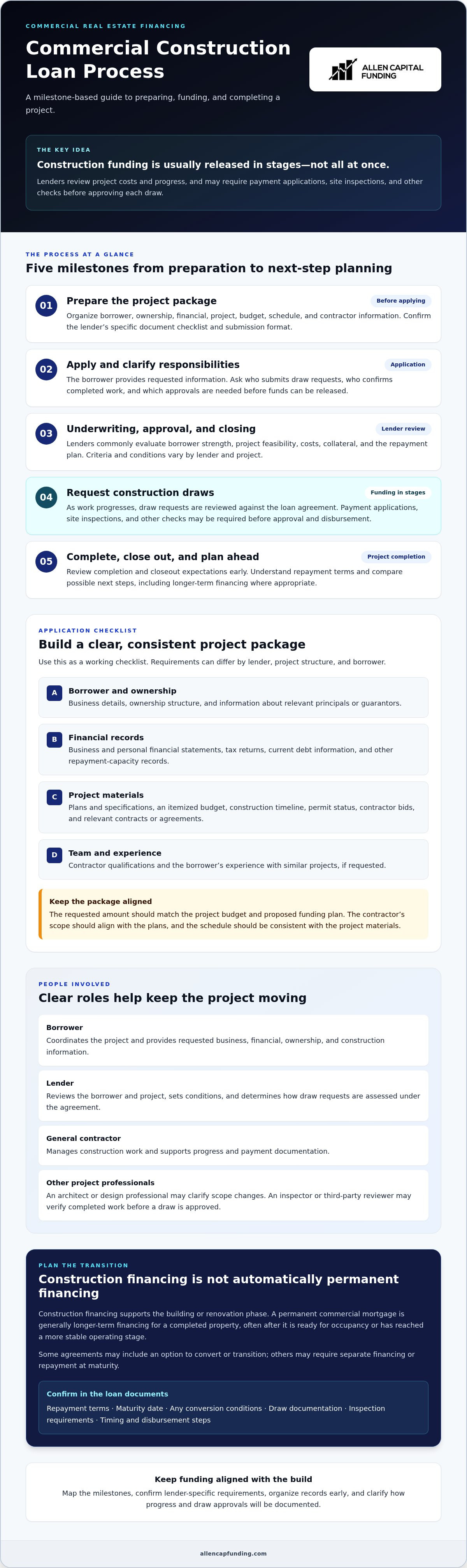
A commercial construction loan provides project financing to build a commercial property or complete a substantial renovation. Rather than providing all approved funds at once, a lender commonly releases money in stages as work progresses and specified conditions are met. The commercial construction loan process is therefore a series of decisions and project checks, not a single funding event.
Staged advances connect financing to construction progress. Loan documents set the rules for when funds may be requested and what must be reviewed first. For background on phased funding concepts and construction loan milestones, see the discussion of floor loans.
How does construction financing differ from a permanent commercial mortgage?
Construction financing supports the building or renovation phase, when a property may not yet be complete or producing income. A permanent commercial mortgage is generally longer-term financing for a completed property, often after it is ready for occupancy or has reached a more stable operating stage. Repayment structures can differ between the two phases.
Some agreements may include an option to convert or transition to longer-term financing, while others require a separate financing arrangement or repayment at maturity. Don’t assume a construction loan automatically converts. Confirm the repayment terms, maturity date, and any conversion conditions in the loan documents.
Who may participate in the loan and construction process?
The borrower coordinates the project and provides requested business, financial, ownership, and construction information. The lender reviews the borrower and project, sets conditions, and determines how draw requests are assessed under the agreement. The general contractor manages construction work and supports progress and payment documentation.
Other participants may include:
Architect or design professional: Develops plans and may help clarify changes to the project scope.
Inspector or third-party reviewer: May verify completed work before a draw is approved.
Other project professionals: May provide documentation or review items required by the lender.
Responsibilities vary by project. One lender may require inspections at particular stages, while another may set different documentation or approval steps. Before construction begins, ask who submits each draw request, who confirms completed work, and what approvals are needed before funds are released. Clear roles help the borrower, lender, and contractor work from the same schedule and reduce avoidable confusion as the project advances.
How to Prepare a Commercial Construction Loan Application
Preparation starts with a clear, consistent picture of the borrower and the project. During the commercial construction loan process, lenders may assess repayment capacity, project feasibility, the borrower’s relevant experience, and available collateral. Criteria and document lists vary, so treat the items below as a working checklist, not a universal submission requirement.
Which project and borrower documents may lenders request?
The Consumer Financial Protection Bureau explains what a construction loan is and describes staged funding. For a commercial project, ask the lender to confirm its current requirements before sending sensitive records. It may request:
Borrower and ownership information: Business details, ownership structure, and information about relevant principals or guarantors.
Financial records: Business and personal financial statements, tax returns, current debt information, and other records used to evaluate repayment capacity.
Project materials: Plans and specifications, an itemized budget, a construction timeline, permit status, contractor bids, and relevant contracts or agreements.
Team and experience details: Contractor qualifications and information about the borrower’s experience with similar projects, if requested.
Requirements can differ by lender, project structure, and borrower. Confirm which documents are needed, what format to use, and how to submit them securely before sharing confidential financial or ownership information.
How can borrowers strengthen the project package?
Make the application internally consistent. The amount requested should match the project budget and proposed funding plan. The contractor’s scope should align with the plans, and the schedule should reflect the work described in the bids. If those materials conflict, explain why and identify which version is current.
Then show how the project supports the business and how the loan is expected to be repaid. Repayment may depend on factors such as business cash flow, property income, a sale, or another documented source. Explain the assumptions behind projections rather than presenting them as guaranteed outcomes.
Separate confirmed costs and approvals from estimates or items still under review.
Identify contingencies for potential changes in scope, timing, or project requirements.
Flag unresolved permits, agreements, or other approvals, and explain the expected next step.
Construction-loan qualification depends on the lender and the borrower’s complete project profile. A well-organized package won’t guarantee approval, but it can make questions and missing information easier to identify. To clarify commercial real estate financing needs and compare possible capital paths, explore financing guidance.
What Happens During Underwriting, Approval, and Loan Closing?
Once an application is assembled, the lender moves from an initial screen to a closer review of the borrower and project. In the commercial construction loan process, these milestones help the lender judge whether the plan is supportable and define what must happen before funds can be accessed. Approval isn’t always the final step. Conditions may need to be met before closing, before the first advance, or before later draws.
What do lenders assess during commercial construction loan underwriting?
Underwriting connects the borrower’s financial position to the project’s ability to move forward and support repayment. A lender may review financial records, relevant development or ownership experience, contractor qualifications, project plans, and whether the budget matches the proposed scope. It may also assess collateral, borrower equity, guarantees, and repayment sources. Requirements vary by lender and project, so no single credit score, contribution, or document threshold applies universally.
What should borrowers expect before loan closing?
Before closing, compare the final loan documents with the approved project plans, budget, and conditions. Confirm required insurance, how advances are requested, and which requirements must be completed before the first disbursement or later draws. Ask the lender to explain fees, covenants, reporting duties, repayment terms, and any conversion options. A construction loan doesn’t automatically become permanent financing, so make sure the written agreement matches your plan.
Keep a written record of open conditions, who is responsible for each item, and when it must be satisfied. If the lender’s final budget or approved scope differs from the version your contractor is using, resolve the discrepancy before signing. This helps keep the closing terms, project expectations, and funding procedures aligned.
How Do Construction Loan Draws, Inspections, and Delays Work?
A draw is a documented request for an approved construction advance. In the commercial construction loan process, the usual sequence is to complete an agreed portion of work, submit the draw request and supporting records, wait for lender review, complete an inspection if required, and then receive the approved disbursement. The lender’s procedures and loan documents determine the timing, required paperwork, inspection steps, and whether any amount is held back.
Plan around the lender’s review window, not just the contractor’s invoice date. A construction-loan draw may take 7 to 14 business days to fund after submission, but actual timing depends on the lender, project, and completeness of the request. Confirm the expected schedule directly with the lender and include it in contractor payment planning.
What information may a borrower need for a draw request?
Requirements vary, so ask for the lender’s draw checklist and approved forms before the first request. Supporting records may include:
Contractor invoices or payment applications that detail completed work.
Lien waivers or releases, where requested under the lender’s process.
Progress evidence, such as inspection reports, photographs, or other documentation.
An updated budget showing prior draws, current spending, and remaining funds.
Keep one organized record set that the borrower, contractor, and relevant project professionals can access. A draw calendar can track submission deadlines, inspection arrangements, missing documents, review status, and expected payment dates. This shared view makes it easier to spot a documentation gap before it holds up a request.
How should borrowers plan for construction changes or delays?
Compare budget-to-actual spending regularly. If work falls behind, a contractor changes, or costs move beyond the approved plan, document the issue and notify the lender promptly. Incomplete work or a mismatch between the payment application and verified progress may affect how much can be approved for that draw.
Before committing to a scope change, check whether contingency funds can cover it and whether lender approval is needed. Don’t assume the lender will automatically increase the loan or extend its term. Ask what revised estimates, approvals, or schedule updates are required, then record the lender’s response and any agreed changes. This helps align contractor expectations with the funds available under the loan terms.
If you’re reviewing financing options for a commercial property project, discuss your commercial real estate financing needs with Allen Capital Funding. A conversation can help clarify project requirements and explore potential capital paths, without promising approval or specific loan terms.
How to Complete the Project and Plan the Next Financing Step
As construction wraps up, confirm what the lender needs to verify completion and release any remaining funds. This final stage of the commercial construction loan process is also the time to check upcoming repayment obligations and avoid leaving the next financing decision until the loan is near maturity.
What should borrowers confirm as construction approaches completion?
Ask the lender for its closeout checklist and confirm who is responsible for each item. Depending on the loan documents and project, requirements may include a final inspection, evidence that the approved work is complete, final invoices, lien waivers, and reconciliation of any holdbacks.
Compare the final project budget with the approved budget. Account for every draw, remaining balance, outstanding contractor obligation, and approved change. If actual spending or the completed scope differs from the plan, document the variance and ask the lender how it affects final reconciliation.
Confirm whether a final inspection or other completion evidence is required.
Collect final invoices, payment records, and requested lien waivers.
Reconcile prior advances, remaining funds, holdbacks, and unpaid obligations.
Ask when interest, principal, reporting, or other requirements change, if applicable.
Get key dates and responsibilities in writing. Don’t assume that the final construction milestone automatically changes the loan’s payment structure.
When should a business explore permanent financing options?
Review the maturity date, repayment expectations, and any conversion provisions well before construction ends. A construction loan may require repayment under its existing terms, an extension approved by the lender, or separate permanent financing. Conversion or refinancing isn’t automatic. It depends on the contract, the project’s status, and lender approval.
Before comparing options, establish whether the work is complete, what documentation remains outstanding, and whether the property meets the criteria a prospective lender may apply. An extension is also subject to approval, so ask about the process and timing rather than assuming the term can be extended.
For broader context, review a guide to commercial real estate loans and consider how its information applies to your project and financing terms.
If you’re weighing the next step, a conversation with Allen Capital Funding can help clarify your commercial real estate financing needs and explore potential capital paths. It’s an opportunity to discuss options, not a promise of approval or specific terms.
Move Forward With a Clear Financing Plan
The commercial construction loan process is a sequence of decisions, reviews, and funding milestones. A well-prepared application helps lenders assess the borrower and project, while a clear draw plan can help keep documentation and contractor payments aligned. Before construction wraps, review closeout requirements and the loan’s maturity, repayment, and conversion terms so you can plan the next financing step.
Every project and lender has different requirements. Confirm the conditions that apply to your financing rather than relying on assumptions about approvals, draw timing, or automatic conversion. Allen Capital Funding offers real estate financing and guidance to help owners explore capital options.
Ready to discuss your commercial real estate financing needs? Explore commercial real estate financing options with Allen Capital Funding. You can book an online consultation to discuss your project and consider potential paths forward. With the right information and a clear plan, you can approach your next financing decision with greater confidence.
Frequently Asked Questions
What are the steps in the commercial construction loan process?
The commercial construction loan process typically moves from project preparation and application to preliminary review, underwriting, approval, closing, construction draws, and project closeout. The borrower provides financial and project information, while the lender assesses the applicant, project feasibility, budget, collateral, and repayment plan. After closing, the borrower requests advances as work progresses and meets the lender’s requirements. The final steps include reconciling project costs and addressing repayment or longer-term financing.
How long does it take to get a commercial construction loan?
There’s no universal approval timeline for a commercial construction loan. The time can depend on the lender’s review process, project complexity, and how quickly the borrower supplies complete information and satisfies conditions. Draw timing is separate from application and approval. A construction-loan draw may take 7 to 14 business days to fund after submission, but actual timing varies. Confirm both timelines and potential delays with the lender.
What documents are needed for a commercial construction loan?
Document requirements vary by lender and project, but applicants may be asked for business and personal financial statements, tax returns, ownership details, and information about existing obligations. Project materials may include plans, an itemized budget, a construction schedule, permit status, contractor bids, and relevant agreements. Ask the lender for its current checklist and secure submission process before sending sensitive records. Keep documents consistent so the project scope, budget, and timeline align.
How do commercial construction loan draws work?
Draws are requests for approved advances, usually submitted as construction work is completed. The borrower sends the lender required forms and supporting records, such as contractor payment applications, invoices, progress evidence, or lien waivers. The lender reviews the request and may require an inspection before disbursing funds. Loan documents define eligible costs, documentation, retainage, inspection procedures, and timing. A draw may take 7 to 14 business days to fund after submission, but timing varies.
Do commercial construction loans automatically convert to permanent financing?
No. A construction loan doesn’t automatically convert to permanent financing unless the loan agreement provides for that option and its conditions are met. Some borrowers may need to repay under the existing terms, seek an extension, or arrange separate permanent financing. Review the maturity date, repayment structure, and any conversion provisions early. Confirm what approvals and project-completion evidence are required, since any conversion or extension depends on the contract and lender approval.
What happens if a commercial construction project goes over budget?
If a project goes over budget, update the cost forecast, identify the cause, and notify the lender promptly. Check whether available contingency funds can cover the difference and whether the lender must approve a scope or budget change before you commit. An overrun may affect the remaining draw balance and project plan. Don’t assume the lender will increase the loan or extend its term. Discuss possible next steps and document any decisions.


Comments