
SBA Loan Application Checklist: Documents to Prepare in 2026
A strong SBA loan application starts with a clear story, not just a stack of forms. If you’re unsure which records to gather, how to keep details consistent, or how your funding purpose affects the paperwork, you’re not alone. Preparing an SBA loan application checklist before approaching a lender helps you organize the process and spot information that may need attention.
This guide covers business, owner, financial, and project records commonly included in an application. It explains how tax returns, financial statements, ownership records, and details about your planned use of funds can support different parts of the request. Requirements vary by SBA program and lender, so use this checklist to prepare and follow the current instructions for your application.
A well-organized file helps you present your business and financing needs clearly. Allen Capital Funding offers SBA Loans and tailored guidance to help you clarify your funding request and plan next steps.
Table of Contents
What an SBA Loan Application Checklist Should Help You Prepare
Business and Owner Documents to Gather for an SBA Loan Application
Financial and Use-of-Funds Records That Support Your SBA Loan Request
Review Your SBA Loan Application Checklist for Gaps Before Submission
Move from Your SBA Loan Application Checklist to a Funding Plan
What an SBA Loan Application Checklist Should Help You Prepare
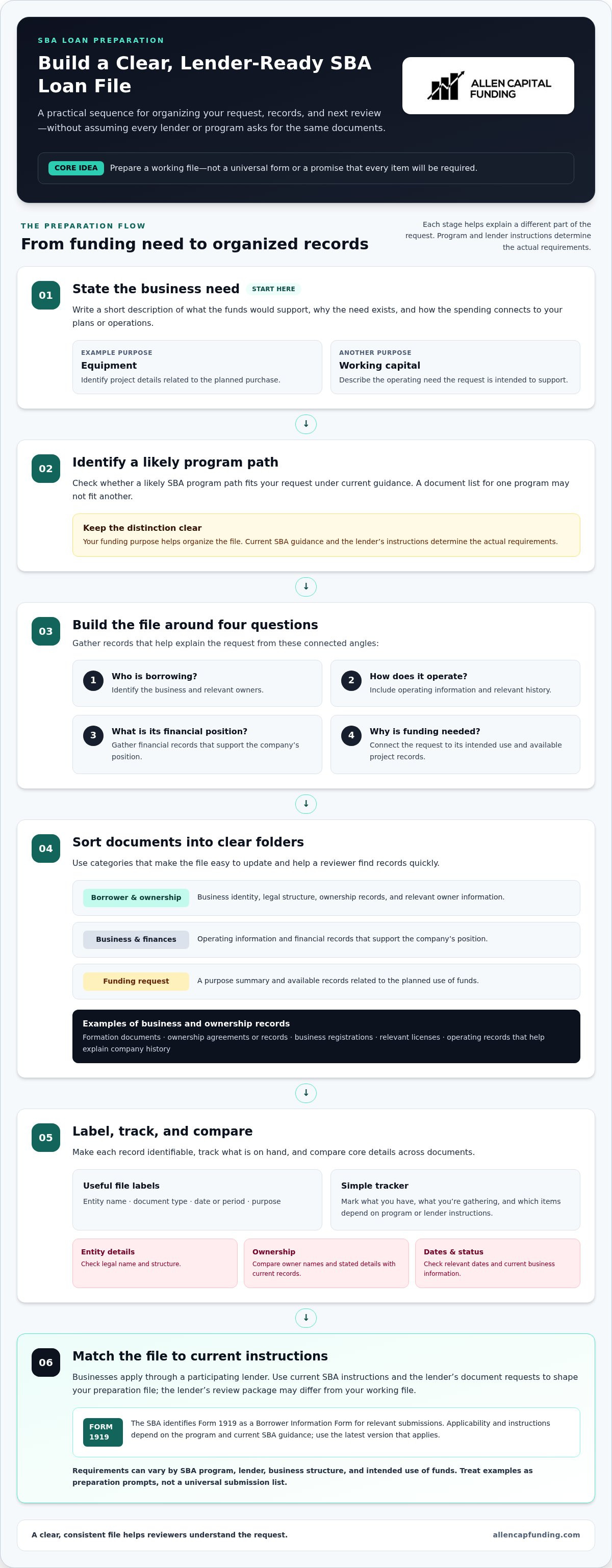
An SBA loan application checklist is a working file, not a universal form or a promise that every lender will request the same documents. Use it to gather records that explain four parts of the request: who is borrowing, how the business operates, what its financial position looks like, and why it needs funding. This gives you a practical starting point before you begin the lender’s application process.
Document requests can vary by SBA program, lender, business structure, and intended use of funds. A sole proprietorship, for example, may have different ownership records from a corporation. Financing equipment may also call for project details that differ from a request for operating needs. Build a flexible file, then match it to the current instructions for your situation.
How the SBA loan application process shapes your checklist
Businesses apply through a participating lender and follow current SBA program guidance. Your preparation file supports the lender’s review, but it may not be identical to the complete submission package. The lender may collect, organize, or prepare materials as part of its process, and responsibilities can vary.
Use current SBA instructions and the lender’s document requests to shape your file. A checklist written for a different program may not fit your application, and a lender-facing submission checklist may not cover every task you need to complete. A complete, consistent file helps reviewers understand the request without having to reconcile conflicting details.
Start with the loan purpose and likely program path
Before gathering paperwork, write a short description of the business need. State what the funds would support, why the need exists, and how the spending connects to your plans or operations. For example, distinguish a request for equipment from one intended to support working capital. This summary helps you identify which project records may be relevant.
Then identify a likely SBA program path by checking whether it fits your request under current guidance. Don’t assume that one document list applies across programs. Your funding purpose helps you organize the file, while program and lender instructions determine the actual requirements.
To make the file easy to update, create folders with clear categories:
Borrower and ownership: records that identify the business and relevant owners.
Business and finances: operating information and financial records that support the company’s position.
Funding request: a summary of the purpose and available records related to the planned use of funds.
Keep a simple tracker beside the folders. Record what you have, what you’re gathering, and which items depend on program or lender instructions. This turns preparation into manageable steps instead of a search for one all-purpose checklist. Once your request and likely program path are clear, compare the file with current requirements and begin a more detailed document review.
Business and Owner Documents to Gather for an SBA Loan Application
Build this part of your SBA loan application checklist around records that establish the business’s identity, legal structure, ownership, and operating history. These documents help show which entity is applying and who is connected to it. The exact items depend on your business and the lender’s current requirements, so use the examples below as preparation prompts rather than a universal submission list.
Business identity, ownership, and operating records
Start with records showing how the business is organized and who owns it. Depending on the entity and request, useful examples may include formation documents, ownership agreements or records, business registrations, and relevant licenses. Gather operating records that help explain the company’s history when they apply. Match your file to current program and lender instructions rather than assuming every example is required.
Organize the documents so a reviewer can quickly identify each one. Label files with the entity name, document type, date or period, and purpose. For example, distinguish a current ownership record from an older formation document. If you operate more than one entity, identify which business each record belongs to.
Owner and borrower information forms
The SBA identifies Form 1919 as a Borrower Information Form for relevant submissions. Its applicability and instructions depend on the program and current SBA guidance, so use the latest version that applies. A lender may also request personal financial statements and other owner information. Don’t assume that every owner completes the same forms in every application.
Use a separate folder for each owner or guarantor whose information is requested. Keep sensitive records organized and share them through the lender’s specified process. Allen Capital Funding provides tailored guidance to help you clarify how borrower and business records support your financing request.
As you assemble records, compare core details across documents. A different legal name, outdated address, or inconsistent ownership percentage can prompt questions and require clarification. Check the following details wherever they appear:
Entity name and structure: Use the correct legal business name and identify the entity consistently.
Ownership information: Compare owner names and stated ownership details with current records.
Dates and status: Make sure registrations, licenses, and agreements reflect relevant dates and current business information.
Document purpose: Label records clearly so the reviewer can tell what they support.
Keep original documents and completed application forms together in your organized file. Before sharing them, confirm that each form is current and that you’ve followed its completion instructions. SBA Form 1919 is one named example. Check the applicability and current version of any additional form rather than relying on an old checklist. For guidance on connecting these records to your financing request, explore SBA loan guidance from Allen Capital Funding.
Financial and Use-of-Funds Records That Support Your SBA Loan Request
Financial records help explain how the business has performed, where it stands now, and how the requested funding fits its plans. For your SBA loan application checklist, organize documents by historical performance, current position, cash flow, and projections if requested. The records and time periods vary by lender and program. Use current instructions to shape the final package rather than assuming one set of documents applies to every borrower.
Financial records that help explain business performance
Potential lender requests may include business tax returns, income statements, balance sheets, cash flow information, and bank records. Treat these as examples to prepare, not a universal list. The lender’s current requirements determine which records, periods, and formats apply.
Make the figures easy to follow across documents. If a financial statement shows revenue that differs from a tax return or bank activity, note the reason and gather context that explains the difference. Label each record with its reporting period and entity. Clear organization helps reviewers see which numbers belong together and understand the business’s financial position.
Use-of-funds and project documentation
Write a concise explanation of how the requested amount would support the business. Connect each planned expense to a specific need, then gather records that show the cost or scope. For an asset or project, relevant examples may include quotes, contracts, invoices, or plans, depending on the request and lender instructions.
If projections are requested, make the assumptions visible. Show how expected revenue, costs, and cash flow relate to the planned use of funds and the business’s ability to manage repayment. Projections support the discussion but don’t guarantee approval. Keep them aligned with your written funding purpose and the financial records you provide.
These examples can help you consider what evidence may fit your request. They don’t replace program or lender instructions.
Keep a brief reconciliation note for unusual changes or differences across financial records. A concise explanation, supported by relevant documentation when available, makes the file easier to review. Before finalizing your package, follow current SBA program guidance and lender instructions, including which financial records and projections apply to your request.
Review Your SBA Loan Application Checklist for Gaps Before Submission
A final review can help you catch missing records and unclear details before sharing your file. Work through one category at a time and mark each item complete, pending, or not applicable. Your SBA loan application checklist is a preparation tool, not a guarantee of approval or a particular decision timeline.
A practical final review before sharing your file
Use this sequence to compare your package with the lender’s current requests and applicable SBA instructions:
Check completeness. Compare your folder with the requested document list. Note missing periods and items you’re still gathering.
Confirm consistency. Compare names, dates, entity details, ownership information, and financial figures across forms and supporting records.
Review legibility. Open each file and make sure the pages are readable, complete, correctly oriented, and associated with the right business or owner.
Add explanations. Flag unusual changes, one-time events, or differences between records. Include a brief explanation and relevant supporting documents where appropriate.
Verify current versions. Check that forms and document requirements match current SBA program guidance and the lender’s instructions.
Eligibility and underwriting are related but distinct considerations. SBA eligibility rules address whether a business and request meet the applicable program requirements. A lender’s underwriting review assesses the request under its current process. Meeting an eligibility requirement doesn’t by itself determine the lender’s decision, so review both current program rules and requested application materials.
Common application gaps and how to address them
Paperwork can feel like a lot, especially when records come from different people or systems. Use a labeled digital or physical folder and a tracker with columns for the document, reporting period, entity or owner, status, and notes. This gives you a clear view of what’s ready and what needs attention without having to sort the full package repeatedly.
Look for gaps such as a missing reporting period, figures that don’t match across statements, ownership records that don’t explain the current structure, or a funding purpose without supporting evidence. If there’s a fluctuation or one-time event, write a short factual explanation and attach relevant records if available. Don’t leave a reviewer to guess why numbers changed or how a document connects to the request.
Once the file is organized, use it to prepare for a focused discussion about your financing strategy and next steps. Allen Capital Funding’s team provides tailored guidance to help businesses clarify funding needs. You can discuss your SBA funding request with the team as you turn your records into a clear funding plan.
Move from Your SBA Loan Application Checklist to a Funding Plan
A well-organized SBA loan application checklist gives you a foundation for a funding conversation. Bring together a clear business overview, ownership information, a summary of your financial picture, the purpose of the request, and the records that support it. You don’t need to have every question answered in advance. The goal is to make your needs and available information easier to discuss.
Allen Capital Funding offers SBA Loans and tailored guidance for businesses seeking financing. A consultation gives you an opportunity to talk through your goals, funding needs, and prepared records, then clarify practical next steps. It’s a discussion, not a promise of eligibility, approval, loan terms, or a specific funding timeline.
What to bring to a funding conversation
Bring your organized checklist or document tracker, even if some items are still in progress. Add a short description of how you expect to use the funds and what business outcome the financing is intended to support. For example, explain the operational need behind a purchase or project instead of relying on a folder of estimates to tell the story on its own.
Note any timing considerations, questions about the application path, and records you’re still working to obtain. This preparation keeps the conversation focused on your priorities and helps identify what information may be useful next. You don’t need to turn your notes into a polished presentation.
How tailored guidance can clarify your next steps
Each business has its own goals, financial context, and funding needs. Allen Capital Funding’s dedicated team provides expert guidance and tailored funding options, helping business owners discuss those factors and consider a path forward. Bring questions about how your funding purpose connects to the application process and which next steps fit your situation.
If you’re exploring the role of a broker in a financing process, the SBA loan broker guide offers related information. Use it alongside your prepared file to identify what you want to discuss.
Your records don’t need to be perfect before you begin a conversation. A clear summary of your business, ownership, finances, and intended use of funds gives the discussion direction. Allen Capital Funding can help you review your funding needs and organize next steps. Book an online consultation to discuss your business goals and prepared information with the team.
Turn Your Preparation into a Confident Next Step
Use the SBA loan application checklist as the foundation for a focused conversation, not as a test you must pass before seeking guidance. Bring forward the questions your preparation raised. Which details need clarification? What business goal matters most? What information would help explain the request clearly? These questions can shift your attention from collecting paperwork to making a thoughtful funding plan.
You don’t need to have every detail settled to discuss your business’s financing needs. A clear sense of your priorities and the records you’ve organized can give the conversation a useful starting point. Allen Capital Funding offers SBA Loans and tailored funding guidance to help business owners consider their next steps.
Book an online consultation to discuss your business funding needs. Take the process one step at a time and move forward with greater clarity about the opportunity you’re working toward.
Frequently Asked Questions
What documents do I need for an SBA loan application?
Common categories include business and ownership records, financial information, and documents that support the funding purpose. For example, a request to purchase equipment may involve project-specific records, while owner information may be relevant under the lender’s process. These are examples, not universal requirements. Use the current lender checklist and SBA instructions to identify applicable forms, reporting periods, and records for your program and business structure.
Is an SBA loan application checklist the same for every lender?
No. A general SBA loan application checklist is a starting point, but document requests can differ by program, lender, business structure, and intended use of funds. SBA resources may describe materials for a particular submission path, while a lender’s application process can include additional instructions. Keep a flexible master file, then compare it with the current requirements for your application before sharing documents.
How do I apply for an SBA loan?
Start by defining the business need, then identify an SBA-backed program that may fit and organize supporting information. The business applies through a participating lender, which guides the application process under current program instructions. For example, explain whether the financing would support an asset purchase or another business need before assembling related records. Submission steps depend on the program and lender, and approval, terms, and timing aren’t guaranteed.
Can a startup apply for an SBA loan?
A startup may apply, but eligibility and documentation depend on the program, lender review, business plan, ownership, and ability to support the request. A new business might use projections and a clearly defined funding purpose to explain its plan, if requested. Don’t assume that every startup qualifies or that operating history is always required or waived. Review current program rules and lender instructions to understand the applicable criteria.
What happens if my SBA loan application is missing documents?
A lender may request additional records or clarification if information is missing, which can add steps to the review. Before submitting, compare your file with current instructions and use clear labels so each document’s owner, entity, and period are easy to identify. If one record differs from another, include a concise explanation and relevant support where appropriate. A missing item doesn’t automatically mean denial, and a complete file can’t guarantee approval.
Do I need a business plan for an SBA loan application?
A business plan may be relevant, but whether it’s requested depends on the business, funding purpose, SBA program, and lender requirements. If asked to provide one, connect the company’s goals to the planned use of funds and explain the assumptions behind any financial projections. A plan can help make the business case easier to understand. Follow current lender instructions rather than assuming one format or plan is mandatory for every application.



Comments