
Commercial Equipment Financing: A Strategic Guide for 2026
The lowest monthly payment may not be the best fit for your business. With commercial equipment financing, a repayment schedule that extends beyond the equipment’s useful life or takes too much cash from operations can undermine the reason for buying it.
Affordability matters, but the payment alone doesn’t show the full picture. The financing structure should fit how long you expect to use the equipment, the cash flow it may support, and the other investments your business needs to make.
This guide explains how to assess financing options against the purchase, operating cash, and long-term plans. You’ll learn what to compare across proposals, including payment structure and total contractual obligations, and how to spot a mismatch before committing. With those priorities clear, you can approach a funding conversation with practical questions and a stronger sense of which tailored option may support your business.
Table of Contents
When Commercial Equipment Financing Makes Sense for a Business
Commercial equipment financing is funding used to acquire business equipment, with repayment obligations set by the financing agreement. It can help a company put an operational asset to work while keeping more cash available for other priorities. Whether it fits depends on the equipment’s purpose, purchase timing, expected use, and the business’s financial position.
Start with the business need, not the financing offer. A manufacturer may need machinery to meet production demands; a construction company may require a vehicle or specialized tool for upcoming work; a transport business may need equipment to maintain operations; or an office may be considering technology for its staff. In each case, ask whether the asset supports a clear business objective and whether its expected use justifies the payment commitment.
What counts as commercial equipment?
Commercial equipment generally means operational assets a business uses to produce goods or deliver services. Examples include production machinery, commercial vehicles, computers and other technology, and specialized tools. These assets are distinct from real estate, such as land or a building, and general operating expenses, such as payroll, utilities, or routine supplies. Defining the purchase helps clarify what the financing is intended to cover.
A purchase may include equipment and related items or services. Review the purchase details so the asset, its purpose, and any associated costs are clear. The equipment, agreement, and business circumstances can all affect the financing structure and its obligations. The broader category of commercial finance includes funding approaches for business assets, but the specific agreement sets the commitment for a particular purchase.
When can financing support a purchase?
Financing may be worth considering when an asset is needed for operations, waiting to buy could disrupt a project or planned capacity, and paying the full purchase amount upfront could leave too little cash for competing needs. Preserving cash may matter if the business is also planning for inventory, staffing, maintenance, or other known obligations. Financing is not automatically preferable, though: scheduled payments need to fit expected cash flow, including periods when revenue may fluctuate.
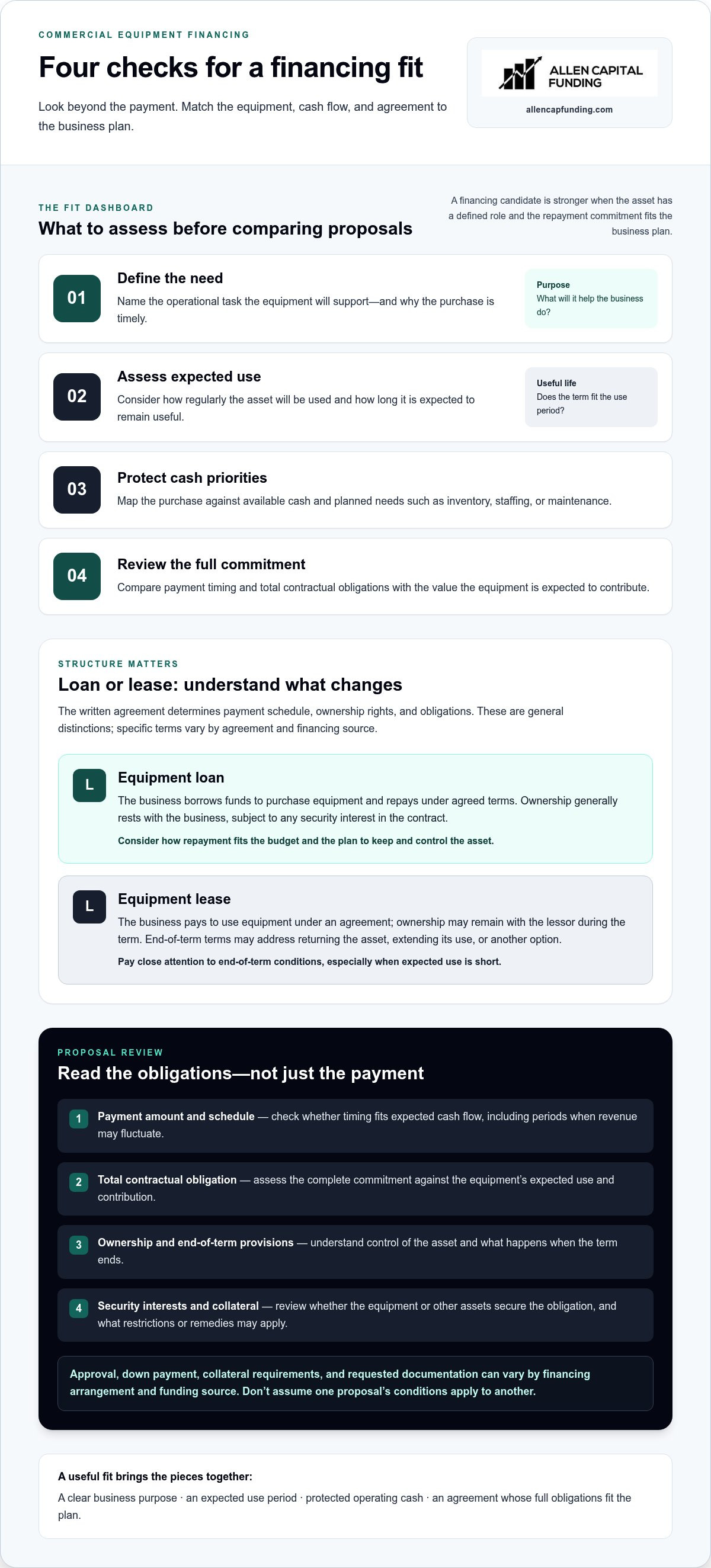
Use this decision check before moving forward:
Define the need: Identify the operational task the equipment will support and why the purchase is timely.
Assess its use: Consider how regularly the asset will be used and how long it is expected to remain useful.
Protect priorities: Map the purchase against available cash and other planned obligations.
Review the commitment: Compare the agreement’s payments and total obligations with the value the equipment is expected to contribute.
A purchase is a stronger financing candidate when the asset has a defined role and the repayment commitment fits the business plan. If either point is unclear, refine the purchase case first. That groundwork makes it easier to compare financing structures based on the business’s needs, rather than focusing only on acquiring the equipment.
How Commercial Equipment Financing Works: Structures and Trade-Offs
Commercial equipment financing can be structured in different ways. The agreement determines the payment schedule, ownership rights, and obligations. Assess a proposal by matching its structure to how the business expects to use the asset. Equipment expected to remain useful for years may call for different planning than technology likely to be replaced sooner. The goal is to understand the full commitment, not just the initial payment.
Research on financing equipment for commercial and industrial enterprise reflects the long-standing role of financing in acquiring productive assets. For an individual business, however, the written agreement matters most. Approval, any down payment, collateral requirements, and requested documentation can vary by financing arrangement and funding source. Don’t assume one proposal’s conditions apply to another.
Equipment loan versus lease: what changes?
With a loan, the business borrows funds to purchase equipment and repays the amount under agreed terms. Ownership generally rests with the business, subject to any security interest described in the contract. This may suit a company planning to keep and control an asset over its useful life, provided the repayment obligation fits its budget and asset plan.
A lease is different: the business pays to use equipment under an agreement, and ownership may remain with the lessor during the term. End-of-term arrangements vary. The agreement may address returning the asset, extending its use, or another option. These are general distinctions, not universal rules. The specific written terms and financing source determine rights, flexibility, and responsibilities. If the expected use period is short, pay close attention to end-of-term conditions. If the business expects to use the asset long term, consider how ownership and ongoing control are handled.
Which agreement terms deserve close attention?
Read the complete agreement and compare its obligations with the equipment’s expected use. Focus on the payment amount and schedule, the total contractual obligation, ownership provisions, and conditions that apply when the term ends. A payment that seems manageable on its own may still be difficult to sustain if its timing conflicts with revenue or other planned commitments.
Review security interests and collateral provisions as well. They explain whether the equipment or other assets secure the obligation and what restrictions or remedies may apply under the agreement. If the equipment is essential to daily operations, understand how those provisions relate to the business’s ability to keep using it. Approval and documentation requirements also vary, so organize the information requested for the specific proposal instead of relying on assumptions about a standard process.
Asset life: Does the repayment or use period make sense for how long the equipment is expected to serve the business?
Control: Does the agreement provide the ownership or use rights the business needs?
Full obligation: Are payment timing, collateral provisions, and end-of-term conditions clear?
Allen Capital Funding offers Equipment Financing with expert guidance and tailored funding options. A tailored Equipment Financing discussion can help connect the agreement details to the asset’s role and your business priorities.
How to Compare Commercial Equipment Financing Options
A proposal can look affordable at first and still put pressure on cash flow once you account for its full obligations. Compare each written offer with the equipment’s expected use, operating needs, and planned investments. If scheduled payments leave too little room for ordinary expenses or reduce cash available for important plans, the structure may not fit, even if the asset is valuable.
Compare the financing against the asset
Consider how essential the equipment is to operations and how long the business expects to use it. A machine intended to support production for years raises different ownership and repayment questions from technology the business may replace sooner. A mismatch between the asset’s expected useful life and repayment structure deserves closer review: the business could still be paying for equipment it no longer uses, or face end-of-term decisions sooner than expected. No financing type is right for every purchase.
Use this grid to compare proposals on the same points:
Compare cash-flow impact and flexibility
Look beyond the payment amount. Map the schedule against expected receipts, payroll, inventory, maintenance, and planned investment. A payment that fits in a strong month may become burdensome during a slower period. Check whether the written proposal describes conditions for changing or ending the agreement, and include any stated fees or other obligations in your comparison. Use the terms in the proposal rather than assuming flexibility from a headline or verbal description.
Proposals are comparable only when you assess the same asset, ownership rights, payment schedule, flexibility, and total contractual obligations. The Equipment Leasing and Finance Association (ELFA) offers broader industry resources, while a commercial equipment loans guide provides additional context on asset financing.
Flag pressure points: Note any payment timing that could compete with essential operating costs.
Compare like with like: Review ownership, flexibility, and total obligations across every written proposal.
Test the fit: Check whether the agreement still makes sense alongside the asset’s expected use and business plans.
This approach turns commercial equipment financing proposals into a practical comparison, rather than a choice based on the most attractive headline.
Prepare Your Business Before Applying for Equipment Financing
A clear preparation process keeps the funding discussion centered on the asset and the business’s priorities. Before pursuing commercial equipment financing, define the purchase, organize relevant records, and decide how you’ll evaluate a written proposal. Requested documents and qualification criteria vary by financing arrangement. Preparation can make the conversation more focused, but it can’t guarantee approval.
Define the equipment need and purchase plan
Start with the operational need, then document the purchase. A strategic business equipment financing guide can help you consider how an asset supports business plans. Use this sequence to turn that planning into application-ready details:
Describe the job the asset will do. Note which process, service, or operational requirement it supports. Explain why current equipment or capacity doesn’t meet that need, using facts about your operations rather than unsupported projections.
Set the purchase scope. Record the equipment type, supplier information, quote or purchase details, and relevant delivery or installation information. Separate essential requirements from optional features or additions so the core purchase stays clear.
Clarify timing and use. State when the equipment is needed, how it will be used, and how long the business expects to rely on it. Consider whether the asset is central to ongoing operations or tied to a specific project. This helps frame the purchase without assuming a particular financing structure.
Map the business context. Summarize the obligations and investments that compete for cash, along with the asset’s place in the operating plan. Keep expected benefits grounded in a practical explanation of its role, not a promised revenue increase or return.
Review proposals against your priorities. Compare each written proposal with the purchase plan. Record questions about payment schedules, total contractual obligations, ownership, collateral, and end-of-term conditions. Note where a term supports or conflicts with the asset’s expected use.
Organize financial information and compare proposals
Bring together current business financial information that may help explain the company’s position, such as recent financial statements, cash-flow information, and relevant tax or bank records. Keep the documents organized and consistent, and be ready to provide additional information if requested. Documentation depends on the financing arrangement and review process, so don’t assume one checklist applies in every case.
Before reviewing terms, write down the questions that matter most: Can the payment schedule fit alongside ordinary operating needs? What assets or collateral are covered? Who owns or controls the equipment under the agreement? What obligations apply at the end? Comparing proposals against the same questions makes differences easier to identify and keeps the decision tied to business priorities.
Once your equipment details and financial priorities are organized, discuss tailored Equipment Financing with Allen Capital Funding. Expert guidance can help frame the funding conversation around the purchase and your business needs.
Explore Equipment Financing with Allen Capital Funding
A useful funding discussion starts with the equipment and the business plan, not a payment figure in isolation. The asset’s purpose, expected use, and place in operations help shape which financing considerations matter. So do business priorities: cash needed for routine commitments, other planned investments, and the timing of the purchase. Bringing these points together gives the conversation a practical focus.
Allen Capital Funding offers Equipment Financing among its business funding solutions. Its approach centers on strategic solutions, a dedicated team, expert guidance, and tailored funding options. That guidance can help frame the discussion around your purchase and financial priorities without assuming one structure suits every business or guaranteeing a particular outcome.
What to bring to a funding conversation
Prepare a concise summary of the purchase and what you need the equipment to do. Include its intended use, why it matters to operations, and when the business expects to need it. If you have a quote or other purchase details, organize them with relevant business financial information. Clear records make it easier to explain the request and discuss the business context.
Bring questions that help you assess the full commitment. For example, ask how the proposed payment schedule fits your cash-flow priorities, what ownership or use rights the agreement sets out, whether it describes collateral or a security interest, and what obligations apply at the end of the term. These questions connect commercial equipment financing to the asset’s role and the company’s actual plans.
Equipment purpose: What operational need does the asset address?
Timing and use: When is it needed, and how does the business expect to use it?
Financial priorities: Which ongoing obligations or planned investments also need cash?
Agreement questions: Which payment, ownership, collateral, and end-of-term details need explanation?
Be direct about constraints as well as goals. If preserving cash for seasonal needs or a planned investment is important, explain that priority. If the asset supports a particular operation, clarify how it fits into the broader business plan. This context helps focus the conversation on options that can be considered in light of your needs. It doesn’t determine approval or replace a review of the written terms.
Choose a strategic next step
Before moving forward, return to the basics: does the asset have a clear business purpose, does its expected use align with the agreement under consideration, and can you assess the obligations alongside other financial priorities? A sound decision depends on comparing the actual terms with those answers, not relying on a headline or assumption.
Allen Capital Funding’s dedicated team provides expert guidance and tailored funding options for businesses exploring Equipment Financing. With your purchase details and priorities in hand, you can have a focused discussion about the financing considerations that matter to your business.
Make Your Next Equipment Decision with Confidence
Before committing, turn your equipment plan into a clear decision brief: what the asset needs to do, how it fits your operations, and what payment commitment your business can responsibly carry. That gives you a practical reference point as you consider commercial equipment financing and helps keep the decision connected to your priorities, not just the purchase deadline.
Allen Capital Funding offers Equipment Financing, supported by expert guidance and tailored funding options. Bring your questions and business priorities into the discussion to explore an approach suited to the purchase. The next step should give you clarity on the commitment and how it aligns with your plans.
Explore Equipment Financing with Allen Capital Funding and take a confident step toward putting the right equipment plan in motion.
Frequently Asked Questions
Can a business finance used equipment?
Used equipment may be financeable, depending on the financing arrangement, the asset, and the funding source’s criteria. If you’re considering a pre-owned production machine, gather details such as its age, condition, maintenance history, and purchase information. Review how the proposed commercial equipment financing agreement treats the asset and its condition. Don’t assume a particular item will qualify without reviewing the proposal.
How much money do you need to put down for equipment financing?
Any upfront contribution depends on the financing arrangement and application terms. There isn’t one down-payment amount that applies to every business or equipment purchase. Review the proposal to see what is due at the start and whether other obligations apply over the agreement’s term. Compare the total written commitment, payment schedule, and stated collateral terms rather than judging affordability by the upfront amount alone.
Does equipment financing affect business credit?
It can, but credit inquiries and later account reporting are separate considerations, and practices depend on the funding source and agreement. An inquiry may occur as part of a credit review; the terms for reporting an opened account can differ. Before proceeding, understand what the application authorizes and what the agreement says about reporting. If the effect on your business credit profile matters to a future funding plan, raise that concern before accepting terms.
Can equipment financing cover delivery or installation?
Whether delivery or installation can be included depends on the agreement and funding source. For example, a business buying a machine may have freight or setup charges listed separately from the equipment price. Make related purchase requirements clear during proposal discussions, and review how each item appears in the written terms. This helps you understand what the proposed financing covers and which costs the business may need to plan for separately.
What happens if a business can no longer make equipment financing payments?
The consequences depend on the signed agreement and applicable law, and may involve contractual remedies. The response depends on the circumstances and written terms. Before signing, read provisions covering default, notice, and collateral, including what steps the agreement describes if a payment is missed. If repayment becomes difficult, seek qualified legal or financial advice promptly to understand your obligations and available options.
Is equipment financing tax-deductible?
Tax treatment depends on the transaction, the asset, the business’s circumstances, and current tax rules, so equipment financing doesn’t guarantee a particular deduction. A business purchasing machinery should distinguish the financing arrangement from the tax treatment of the asset and related payments. Ask a qualified tax professional how the specific transaction applies to your business, and verify current guidance from the Internal Revenue Service before making tax decisions.



Comments