
What Happens If You Default on a Business Loan? Consequences and Next Steps
Updated: Oct 23
What happens if you default on a business loan? The answer depends on the loan agreement: default is a contract-defined process, not a single event with the same consequences for every borrower. A missed payment may lead to notices and collection efforts. Continued nonpayment could trigger acceleration, meaning the lender demands the remaining balance. If you’re concerned about collateral, personal guarantees, or credit effects, start by reviewing the terms of your loan.
What a lender can do, and whether you could be personally responsible, depends on the loan terms, type of financing, and applicable requirements. This guide explains potential effects on your business, personal finances, pledged assets, and credit, and points out what may vary from one loan to another.
You’ll also learn which parts of your agreement and notices to review, why prompt communication matters, and what questions to address as you consider next steps. This is general information, not legal advice. An attorney, such as Ronald A. Davidson Attorney at Law, can explain how the terms and law apply to your situation.
Table of Contents
What Does It Mean to Default on a Business Loan?
Default occurs when a borrower fails to meet an obligation in a loan agreement. Missing a required payment is one possible trigger, but a default may also involve breaking another contractual promise. The agreement defines which events count as default and what may follow. A missed payment, delinquency, contractual default, and acceleration are related but distinct: acceleration is a possible remedy that can make the remaining balance due sooner.
In brief: If you’re asking what happens if you default on a business loan, the lender may be able to use remedies set out in your agreement, which could include demanding payment or pursuing collateral. The specific triggers, required notices, and available remedies depend on your contract and applicable law, so there is no single timeline or outcome for every borrower.
When can a business loan enter default?
A missed installment is one possible trigger, but the agreement may identify others. For example, some contracts treat a breach of a financial covenant or certain insolvency-related events as a default. These are examples, not universal rules. A breach may have its own notice or cure requirements, and the lender’s options may depend on whether those conditions are met.
Review sections titled Events of Default, Notice, Cure Period, and Remedies, or similar headings. Check whether the terms differ for payment defaults and other breaches. The general overview of Default (finance) describes how financial default can include payment failures and other contractual breaches, but your loan documents determine your obligations.
Is delinquency the same as default?
Delinquency generally means an obligation is overdue. Default is a breach defined by the loan agreement, which may specify when an overdue payment becomes a default. Some lenders may provide notice or an opportunity to cure a breach, but the terms and timing vary. Don’t assume a standard grace period applies. Check your contract and any notices you receive.
Delinquency describes an overdue obligation; default occurs when the circumstances meet the breach conditions in the loan agreement. The distinction matters because an overdue payment alone doesn’t tell you whether the lender can accelerate the balance or use another remedy. Look for language explaining what happens after a default and whether the lender must first send notice or allow time to cure.
If the lender accelerates the loan, it may demand the unpaid balance rather than just the overdue installment, if the agreement allows that remedy. Acceleration is not the same as default. It is one possible consequence, alongside other remedies described in the contract. If a clause or notice is unclear, keep a copy and consult qualified legal counsel, such as Szekely Law, before assuming which deadlines or obligations apply.
What Happens After a Business Loan Default?
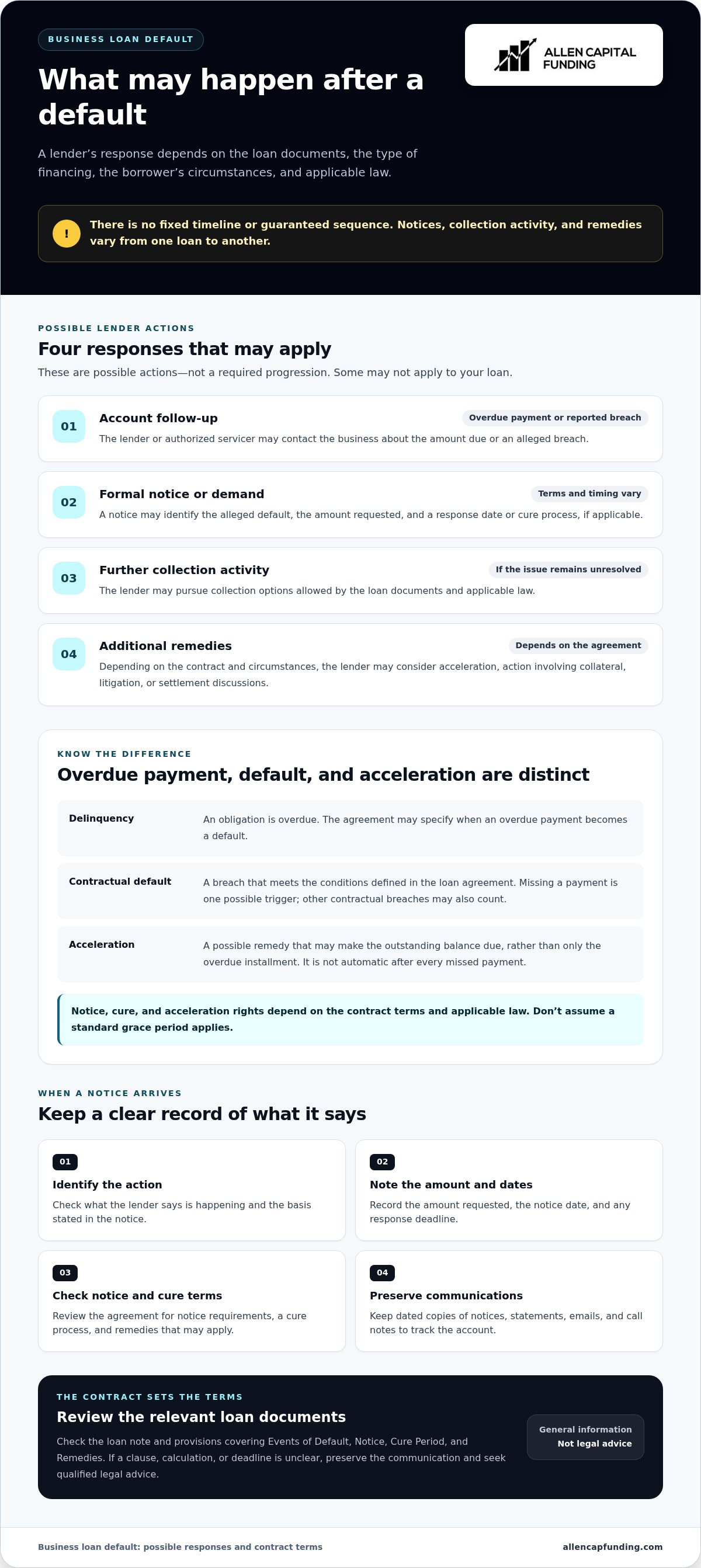
There is no fixed sequence after default. A lender’s response may depend on the loan documents, type of financing, borrower’s circumstances, and applicable law. Notices, late charges, payment demands, and collection activity do not happen in the same way for every loan. If you’re asking what happens if you default on a business loan, take each communication seriously and use the agreement and notice to identify the action being taken and any deadline.
How may a lender respond to missed payments?
A lender or its authorized servicer may send account notices or contact the business about an overdue payment. Depending on the agreement and circumstances, the lender may request payment, assess charges allowed by the contract, or refer the account for collection. These steps do not necessarily happen in a set order or on a standard schedule. Keep dated copies of notices, statements, emails, and call notes so you can track the account and respond accurately.
Possible steps may include:
Account follow-up: The lender or servicer contacts the borrower about the amount due or a reported breach.
Formal notice or demand: A notice may identify the alleged default, amount requested, and response date or cure process, if applicable.
Further collection activity: If the issue remains unresolved, the lender may pursue collection options allowed by the documents and applicable law.
Additional remedies: Depending on the agreement and situation, the lender may consider acceleration, action involving collateral, litigation, or settlement discussions.
This list describes possible outcomes, not a guaranteed progression. A lender may take different steps, and some actions may not apply to your loan.
Can a lender demand the full balance?
Acceleration means the lender demands that the outstanding loan balance become due, rather than seeking only an overdue installment. It is a potential remedy, not an automatic result of every missed payment. The loan documents may specify which default events permit acceleration and whether notice or an opportunity to cure is required first.
Acceleration rights depend on the contract terms and applicable law. Read the remedies clause alongside any notice you receive. If a letter says the loan has been accelerated, note the date, amount demanded, stated deadline, and instructions for responding. If the calculation or basis is unclear, preserve the communication and seek qualified legal advice promptly.
Litigation is also possible, but a lender filing a lawsuit or obtaining a judgment is not inevitable. Settlement discussions may occur, but neither a settlement nor a particular outcome is assured. Take legal papers seriously and don’t miss response deadlines. For future financing, Allen Capital Funding offers guidance on tailored capital options. Planning for future needs does not resolve an existing default.
How Default Can Affect Business Credit, Personal Guarantees, and Collateral
A business-loan default can affect different people and assets, depending on the contract. A lender may report account information, enforce a personal guarantee, or pursue specifically pledged assets. None of these consequences applies automatically in every case. To understand what happens if you default on a business loan, distinguish the agreement’s terms from assumptions about how business debt works.
A business default doesn’t automatically put an owner’s personal assets at risk. Personal exposure may depend on whether the owner signed a guarantee, what it covers, and applicable law. Collateral is different: it is property specifically pledged to secure the debt. An unsecured claim does not, by itself, give a creditor rights in every business or personal asset.
What does a personal guarantee change?
A personal guarantee is an individual’s promise to answer for specified business debt if the conditions in the guarantee are met. Its scope can vary: it may cover particular obligations or define liability in other terms. Read the signed document for the triggering events, covered amounts, and any stated limits. Don’t assume that forming an LLC or corporation overrides a separate personal guarantee.
Check who signed, whether the guarantee applies to the entire obligation or a defined portion, and which events allow the lender to seek payment from the guarantor. The wording matters. If you’re unsure what a clause means or whether it applies, get legal advice based on the complete documents and circumstances.
What can happen to pledged collateral?
A security agreement identifies property pledged to secure a loan. If the borrower defaults, the creditor may have rights in that specified collateral under the agreement and governing law. Article 9 of the Uniform Commercial Code provides a general framework for security interests in personal property, but state enactments and procedures can differ. A security interest does not mean immediate repossession; the documents and applicable rules shape enforcement.
Read the collateral description carefully. It may identify particular equipment, inventory, or other business property rather than every asset the company owns. Keep copies of the security agreement and any notices about collateral, and seek legal guidance before transferring or disposing of property subject to a security interest. This is general information, not legal advice.
What Should You Do If Your Business May Default?
If a payment is at risk, focus first on the facts, deadlines, and clear communication. Acting promptly won’t guarantee a change to the loan terms, but it can help you understand your obligations and make informed decisions. Your specific documents determine what happens if you default on a business loan, so gather them before drawing conclusions or making repayment promises.
Use this prioritized checklist before or soon after a missed payment:
Confirm the payment status. Compare your bank records with the lender’s statements and payment history. Note any amount or transaction that appears disputed.
Check upcoming dates. Review due dates, notice response deadlines, and any stated opportunity to cure a breach.
Read the loan documents. Find the payment terms, default provisions, notice requirements, and remedies that apply to your situation.
Assess available cash. Update a short-term cash-flow forecast using realistic revenue, expenses, and expected payment dates.
Contact the lender promptly. Explain the issue accurately, ask what contractual processes may apply, and keep a record of the discussion.
Get professional guidance if needed. Consult a qualified attorney or accountant if you’re unsure about liability, enforcement, or financial reporting.
Which loan documents and records should you gather?
Build one organized file so you can refer to the same information during conversations and planning. Include the loan agreement or note, payment schedule, signed personal guarantee, security or collateral agreements, lender notices, current financial statements, cash-flow forecasts, and records of payments already made. After each conversation, record the date, contact’s name, what was discussed, and any promised follow-up.
How should you communicate with the lender?
Be direct and factual. State which payment is affected, what has changed in cash flow, and what you can reliably pay, if anything. Avoid guessing when revenue will arrive or agreeing to a commitment you may not meet. Ask which steps or options may apply under your contract, and request key instructions or decisions in writing.
A lender may explain a process or discuss possible next steps, but it is not required to grant a delay, modify terms, or offer a concession simply because you ask. Keep copies of your messages and follow up if a promised response doesn’t arrive. If you receive a formal demand, legal papers, or a notice involving collateral or a guarantee, note the deadline and seek qualified legal advice promptly. An accountant can help clarify financial records or reporting questions.
Once you understand the immediate issue, a financial check-up can help with future planning by reviewing cash flow, obligations, and financing needs. It is not default relief and won’t resolve an existing dispute. Learn about a business financial check-up as a way to make more informed financial decisions.
How to Reduce the Risk of Another Business Loan Default
Once an immediate payment issue is addressed, use it to improve future borrowing decisions. Identify why repayment became difficult. Was revenue seasonal? Did customers pay later than expected? Did the loan fund a need that lasted longer than the repayment schedule? Understanding the cause can help you plan more carefully. Taking on new financing does not automatically resolve an existing default, and adding another payment without a clear repayment plan could put more pressure on cash flow.
How can a business assess repayment capacity?
Compare scheduled loan payments with realistic operating cash flow, not best-case sales projections. Account for payroll, taxes, suppliers, existing debt, and seasonal revenue changes. Then stress-test the forecast: What if receivables arrive late, sales fall, or an unexpected expense comes up? Sustainable borrowing depends on repayment capacity, not approval alone.
Review the forecast regularly and use assumptions you can explain. If your business earns most of its revenue during part of the year, check whether payments remain manageable during slower months. Compare customer payment cycles with loan due dates, and leave room for operating expenses rather than counting the same cash toward multiple obligations. This can reveal when the timing or size of a proposed payment may strain the business.
Which financing structure may fit a future need?
Start with the purpose of the funds. A revolving credit line may suit recurring working-capital needs, such as covering a temporary gap between paying suppliers and collecting receivables. See the business line of credit guide for more information. A line of credit is still debt, so consider how borrowing and repayment fit your cash cycle.
Asset-based financing may be relevant when a business is assessing liquidity connected to assets. The asset-based lending guide explains this approach. Available collateral alone does not make a financing structure appropriate. Product fit depends on the funding purpose, repayment ability, collateral, and agreement terms.
Compare the payment schedule with when the funds are expected to support revenue or operations. For example, consider equipment financing in light of the equipment’s business purpose and the cash flow available for repayment. A financing choice should reflect the business’s needs and eligibility, not simply the amount offered. Review the full obligations and how payments would fit alongside existing commitments.
A thoughtful review can help clarify future capital needs. If you’re considering financing for a future business purpose, learn about Allen Capital Funding’s capital options. Any financing decision depends on your circumstances and eligibility, and planning for future needs is separate from resolving an existing default.
Build a More Confident Path Forward
Financial pressure can make every decision feel urgent. Give yourself room to make the next one strategically: set clearer borrowing priorities, plan for uneven cash flow, and distinguish future capital needs from resolving an existing loan issue. What happens if you default on a business loan depends on the agreement, but you can begin planning with a clearer view of your business’s needs and repayment capacity.
For future financing decisions, Allen Capital Funding offers guidance across business financing categories, including credit lines, SBA loans, working capital, equipment financing, factoring, and purchase order financing. The company also provides financial check-ups to support planning. A check-up is for future planning, not default relief, and financing decisions depend on your circumstances and eligibility.
Discuss your business’s capital needs with Allen Capital Funding to explore a thoughtful next step for your business. Clear information and a plan grounded in your finances can help you move forward with greater confidence.
Frequently Asked Questions
Can a lender take money from my business bank account after a default?
Possibly, but a default alone doesn’t always authorize a lender to withdraw funds directly. Check your loan documents and any ACH or debit authorization for terms allowing scheduled payments or other withdrawals. A lender may also need legal process to reach funds, depending on the circumstances and applicable law. If you see an unexpected debit, contact the bank and lender promptly, preserve the transaction record, and review your account and loan documents.
Can I be personally liable for a business loan if I signed a personal guarantee?
Yes, signing a personal guarantee may make you personally responsible for some or all of a business debt, depending on its wording and applicable law. For example, it may cover a defined obligation or specify when the lender can seek payment from you. Review the signed version, not just a loan summary, and note whether other owners also guaranteed the debt. Get legal advice if you’re unsure about its scope.
Does defaulting on a business loan automatically close my business?
No, a loan default doesn’t automatically shut down a business. The company may continue operating, though collection activity, a payment demand, or action involving pledged assets could affect its ability to function. For example, a dispute over equipment pledged as collateral may disrupt operations even if the business remains open. Assess which assets and cash flows are essential, and get legal or accounting advice before making major operational decisions.
How long can a business loan default stay on a credit report?
There isn’t one universal reporting period for every business loan or credit file. Business credit reporting practices vary by lender and reporting agency. If an owner’s personal credit report is involved, federal rules generally limit how long many types of negative consumer credit information can be reported, often to seven years, with exceptions. Check the specific report for the item, date, and reporting agency, then dispute information you believe is inaccurate.
What happens if I cannot pay an SBA loan?
If you can’t pay an SBA-backed loan, the private lender generally handles servicing and collection steps first, which may include pursuing business collateral under the loan documents. The SBA may become involved in recovering the guaranteed portion. If the federal debt remains unresolved, it may be referred for federal collection. The process depends on the loan and circumstances. Review official notices carefully and seek legal or accounting guidance about your situation.
Can a lender seize business assets without going to court?
Sometimes a secured lender may enforce rights in specifically pledged business property without first obtaining a court judgment, but the documents and applicable state law matter. Under UCC Article 9, certain repossession may be possible without court process if it can occur without a breach of the peace. That doesn’t mean a lender can take any asset at will. If property is at risk, get prompt legal advice before resisting or transferring it.
Should I stop paying other business bills if I default on one loan?
Don’t automatically stop paying other bills because one loan is in default. Missing payroll, taxes, rent, insurance, or supplier payments can create separate financial and legal problems, while available cash may not cover every obligation. Map due dates, essential operating costs, and consequences of nonpayment before deciding how to allocate funds. A qualified accountant or attorney can help assess priorities based on your company’s finances, contracts, and applicable requirements.



Comments