
Ways to get a business loan without a personal guarantee
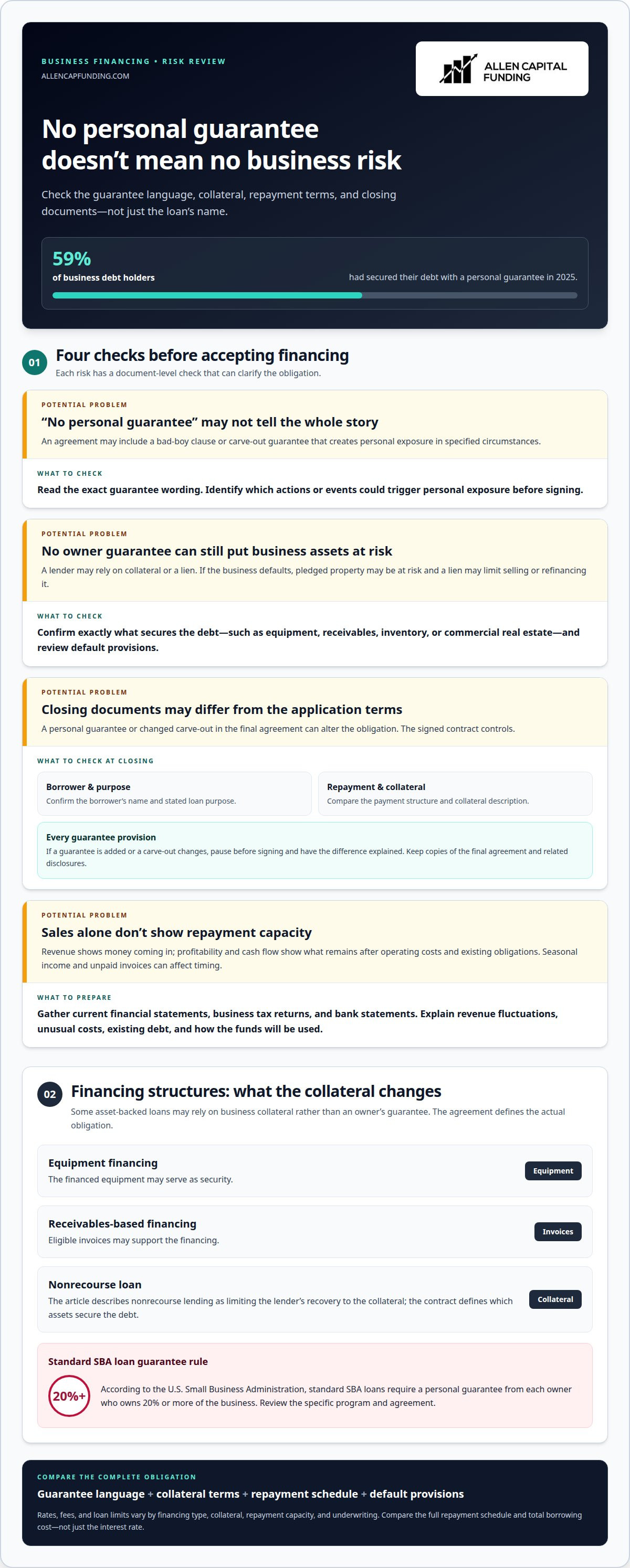
In 2025, 59% of business debt holders had secured their debt with a personal guarantee. Still, how to get a business loan without a personal guarantee depends on the financing structure and how a lender assesses your business. Some loan types may not require one, while according to the U.S. Small Business Administration, standard SBA loans require a personal guarantee from each owner who owns 20% or more of the business.
It’s understandable to want business financing without putting personal assets on the line. This guide explains what a personal guarantee means, what lenders consider when reviewing a business, and which financing structures may be available without one. You’ll also learn what to review during the application and closing process, including why the agreement’s terms matter as much as the loan’s name.
Table of Contents
1. Application and closing process
A lender can compare financing options by reviewing your funding purpose, business finances, available collateral, and guarantee requirements. Before you apply, compare how each option handles repayment, security, and potential personal liability. This helps focus your application on structures that fit your business needs and risk priorities.
Start by defining how you’ll use the funds and what your business can repay from operating cash flow. Equipment financing, for example, serves a different purpose from funding seasonal expenses. Gather current financial statements, business tax returns, bank statements, and a clear summary of how you’ll use the funds. These records help a lender assess revenue patterns, existing debt, and repayment capacity.
During underwriting, look beyond the phrase “no personal guarantee.” Check whether the lender requires business collateral, a lien, or other security, and compare the payment schedule and consequences of missed payments. Some arrangements include a bad-boy clause or carve-out guarantee, which may create personal exposure in specified circumstances. Review the exact wording and understand what actions or events could trigger it before signing.
At closing, compare the final documents with the terms presented during your application. Confirm the borrower’s name, loan purpose, repayment structure, collateral description, and every guarantee provision. If the closing agreement adds a personal guarantee or changes a carve-out, pause before signing and have the difference explained. A written term sheet can help you organize this review, but the signed contract controls the obligation. Keep copies of the final agreement and related disclosures with your business records. Reviewing each document in sequence helps you identify personal-liability terms before accepting funds.
Borrower revenue and profitability profile
A lender evaluates whether your business income can support repayment without relying on your personal finances. Revenue shows how much money comes into the company; profitability and cash flow show what remains after operating costs and existing obligations. Strong sales with thin margins can present a different risk profile from steadier earnings.
Consistency matters. A seasonal company, for example, may earn most of its revenue during a short selling period. A lender can assess that pattern alongside expenses and payment obligations to understand whether cash will be available throughout repayment. Clear financial records help explain fluctuations, one-time costs, and changes in customer demand.
Profitability is only one part of the assessment. Lenders may also review bank activity, outstanding debts, customer concentration, and how you plan to use the funds. If you need financing to cover a temporary cash-flow gap, the lender will consider how it arose and how repayment fits expected receipts. If revenue is growing but cash is tied up in unpaid invoices, the timing of collections may also affect the assessment.
Reviewing your existing credit activity can help identify gaps in your business credit history. Payment records, current obligations, and available credit may affect underwriting. A lender can explain how these factors relate to your business’s revenue profile and discuss financing structures that may fit.
Prepare accurate financial statements and explain unusual changes before an application moves forward. For instance, a large expense may have reduced profit while supporting a business expansion. Context helps distinguish a one-time investment from an ongoing cash-flow problem. A lender can also assess whether business credit line options align with the company’s operating cycle, expected receipts, and repayment capacity.
3. Business loan types that may not require a personal guarantee
Some asset-backed loans rely on business collateral rather than an owner’s guarantee. For example, equipment financing may use the financed equipment as security, while receivables-based financing may rely on eligible invoices. These structures can reduce reliance on personal assets, but the agreement defines the actual obligation. A business loan without a personal guarantee can still put company property at risk if the business defaults.
Rates, fees, and loan limits vary by financing type, collateral, repayment capacity, and underwriting. Compare the full repayment schedule and total borrowing cost, not just the interest rate. An asset-backed loan may have different terms from unsecured financing. Your business’s financial profile and available collateral help shape the offer.
Standard SBA loans require a personal guarantee from each owner who owns 20% or more of the business, according to the U.S. Small Business Administration. That standard rule should not be mistaken for a guarantee-free option. SBA loan terms depend on the specific program and agreement, so review guarantee requirements before proceeding.
Instead of a personal guarantee, a lender may require business assets as collateral. Depending on the loan structure, these could include equipment, receivables, inventory, or commercial real estate. The Internal Revenue Service explains that a nonrecourse loan limits the lender’s recovery to the collateral. The contract defines which assets secure the debt and what happens after default.
Financing without a personal guarantee may protect an owner from a direct guarantee obligation, but it doesn’t eliminate business risk. A lien may restrict the company’s ability to sell or refinance pledged assets. Missed payments can put collateral at risk or disrupt operations. Before signing, compare the guarantee language, collateral terms, repayment schedule, and default provisions.
4. Which lenders offer business loans with no personal guarantee?
Banks, credit unions, online lenders, and asset-based lenders may offer financing without a personal guarantee, but requirements vary by loan type and underwriting approach. A bank may focus on established financial records, while an asset-based lender may place more weight on eligible business collateral. These are lender categories, not promises about specific terms. Review each agreement to see whether an owner must sign personally.
Choose a financing structure that matches your business purpose. A company buying equipment, for example, can consider financing secured by that equipment. A business with commercial property may explore real estate financing. Match the financing to the asset, repayment source, and amount of capital needed to focus your search on options that address the funding need.
Compare written offers using the same criteria: guarantee language, collateral, repayment schedule, fees, and default provisions. A low stated rate doesn’t reveal the full commitment. Check whether a business lien covers one asset or a broader group of assets. Review any carve-out clause, too, because specified actions may create personal exposure even when the main agreement avoids a standard guarantee.
Before submitting a full application, ask the lender to explain its underwriting process and required documents. It may assess business revenue, profitability, time in operation, outstanding debt, and collateral value. Clear answers help you understand how risk is assessed and which financing structure may fit. Compare the actual terms, not just a “no personal guarantee” label in marketing materials.
Before accepting an offer, have the lender explain every guarantee and security clause in plain language. Confirm who signs, which business assets secure repayment, and what happens after missed payments. If the final agreement differs from the offer, resolve the difference before signing. This review helps you choose financing based on obligations your business can manage.
Allen Capital Funding: SBA Loans
Allen Capital Funding helps businesses assess financing options, including SBA Loans, in light of their funding goals and financial profile. SBA financing may suit a business seeking structured funding, but standard SBA loans require personal guarantees from certain owners. If avoiding a personal guarantee is essential, make that requirement clear at the start of the options discussion.
If another structure better fits your funding need, Allen Capital Funding also offers Credit Lines, Real Estate financing, and Working Capital. The right fit depends on what your business needs to fund, its repayment capacity, and the financing terms. Clear guidance can help you weigh these factors before choosing a path.
Contact Allen Capital Funding to discuss your business financing needs.
Make your next financing move with clarity
Choosing how to get a business loan without a personal guarantee starts with deciding which risks your business can responsibly carry. Identify the terms that matter most, such as keeping personal assets separate, preserving access to key business property, or matching payments to expected cash flow. These priorities can guide a focused financing conversation.
Allen Capital Funding can help you consider whether SBA Loans, Credit Lines, or Real Estate financing align with your business goals. Start with your funding purpose and the obligations you’re prepared to accept, not just the amount you hope to borrow. A clear view of your priorities makes it easier to evaluate your options.
Discuss your financing goals with Allen Capital Funding and take the next step with a clearer strategy.
Frequently Asked Questions
What is a personal guarantee on a business loan?
A personal guarantee makes an owner personally responsible for a business debt if the business doesn’t repay it, as defined in the agreement. If a company can’t make scheduled payments, for example, the lender may pursue the guarantor for the unpaid obligation. The guarantee’s scope depends on its wording, including which owners sign and which liabilities it covers.
How fast can funding happen?
Funding speed depends on the financing structure, the lender’s review process, and how quickly your business supplies complete records. A straightforward application with consistent financial statements may move differently from one involving property valuation, complex ownership, or missing documents. Underwriting, approval, final agreement review, and closing all affect timing. Ask about the expected milestones and what could delay each stage.
What are the consequences of signing a personal guarantee?
Signing a personal guarantee makes you personally responsible for the debt, as defined by the agreement. If the business defaults, the guarantor could face a claim for the amount covered by the guarantee. This may affect personal finances and assets. Before signing, understand whether liability is limited or shared, which events trigger it, and how the obligation ends.
What term lengths are typical?
Business financing doesn’t have one standard term length. Repayment periods depend on the financing structure, the asset or business purpose, projected cash flow, and the lender’s agreement. Financing tied to a long-lived business asset, for example, may have a different schedule from short-term working capital. Compare payment frequency and total repayment obligations alongside the term.
Why do lenders require a personal guarantee?
Lenders may require a personal guarantee to add a repayment commitment beyond the business itself. This may matter when a company has limited operating history, inconsistent cash flow, or few business assets to secure financing. Lenders assess repayment capacity and available security when setting terms. Understand the guarantee’s scope before signing.
Can you get a business loan without a personal guarantee?
Yes, some financing structures may let an eligible business borrow without an owner’s personal guarantee. If you’re exploring how to get a business loan without a personal guarantee, state this requirement before applying and ask which options meet it. Screening for this early helps focus your application on financing that fits your priorities.



Comments