
SBA Loan Specialist: How Expert Guidance Helps Your Business in 2026
What should your business’s next financing step accomplish? An sba loan specialist can help connect your funding purpose, business profile, and potential SBA-backed options. That guidance can be useful when program differences, eligibility criteria, and paperwork make it difficult to know where to begin.
It also helps to understand who is guiding you. An SBA loan specialist may work for a lender or provide independent funding guidance. Those roles differ: a lender reviews the application and makes the credit decision, while a specialist may help explain options and prepare for that discussion.
This article explains what specialist guidance can cover, how to present a clear funding request, and what information to organize before discussing an application. It also outlines common SBA loan options and alternatives to consider when SBA financing may not match your needs. Allen Capital Funding helps businesses explore SBA loans alongside other business financing paths, so you can discuss your goals and consider a suitable next step.
Table of Contents
What Does an SBA Loan Specialist Do for a Small Business?
An SBA loan specialist helps a business clarify its financing needs, consider which SBA program may fit, and prepare for discussions with lenders. The specialist can help turn a broad goal, such as buying equipment or supporting operations, into a specific funding request. This is guidance for planning and preparation, not a promise of approval or funding.
An SBA loan specialist can clarify the path to a financing decision, but does not make the lender’s credit decision. The role varies. A specialist may be employed by a lender or provide independent financing guidance. The SBA sets program rules, while participating lenders and other program participants have their own responsibilities in reviewing and processing applications. The Small Business Administration (SBA) oversees programs designed to support small businesses’ access to capital through participating lenders.
Which parts of the SBA financing process can a specialist help clarify?
Begin with the purpose of the funds. A business seeking working capital should be ready to explain which expenses it would support. A business planning an equipment purchase should be able to describe the asset and its role in operations. A clear use of funds helps focus the questions to resolve before choosing a financing path.
A specialist can explain broad program differences. The 7(a) program supports a range of business financing purposes, 504 financing is associated with major fixed assets, and microloans address smaller-scale needs. These descriptions are a starting point, not an eligibility decision. Program details and criteria can change, so review current SBA resources and the lender’s requirements.
Preparation is another practical part of the process. A specialist can help sort available records, identify information a lender may ask about, and turn uncertainties into specific questions. For example, if projected cash flow depends on a new contract, be prepared to explain that connection and provide relevant supporting information during the lender discussion.
What an SBA loan specialist cannot promise
Guidance can help you understand options, but it cannot determine whether your business qualifies or guarantee an application outcome. Eligibility depends on the applicable program criteria, and the lender makes its decision after reviewing the request. A specialist cannot assure particular terms, funding, or a decision date.
Keep the roles clear as you prepare. A specialist can help organize your request and clarify questions to raise. The lender evaluates the application and makes the credit decision, while the SBA and other program participants act within their respective roles. A well-prepared discussion can make your needs easier to explain, but it does not replace formal review.
Use specialist guidance to build an organized starting point: define the funding purpose, explain the business context, and ask what information the next financing conversation should address. The lender and relevant program participants remain responsible for their decisions.
How an SBA Loan Specialist Connects Your Goal to a Funding Path
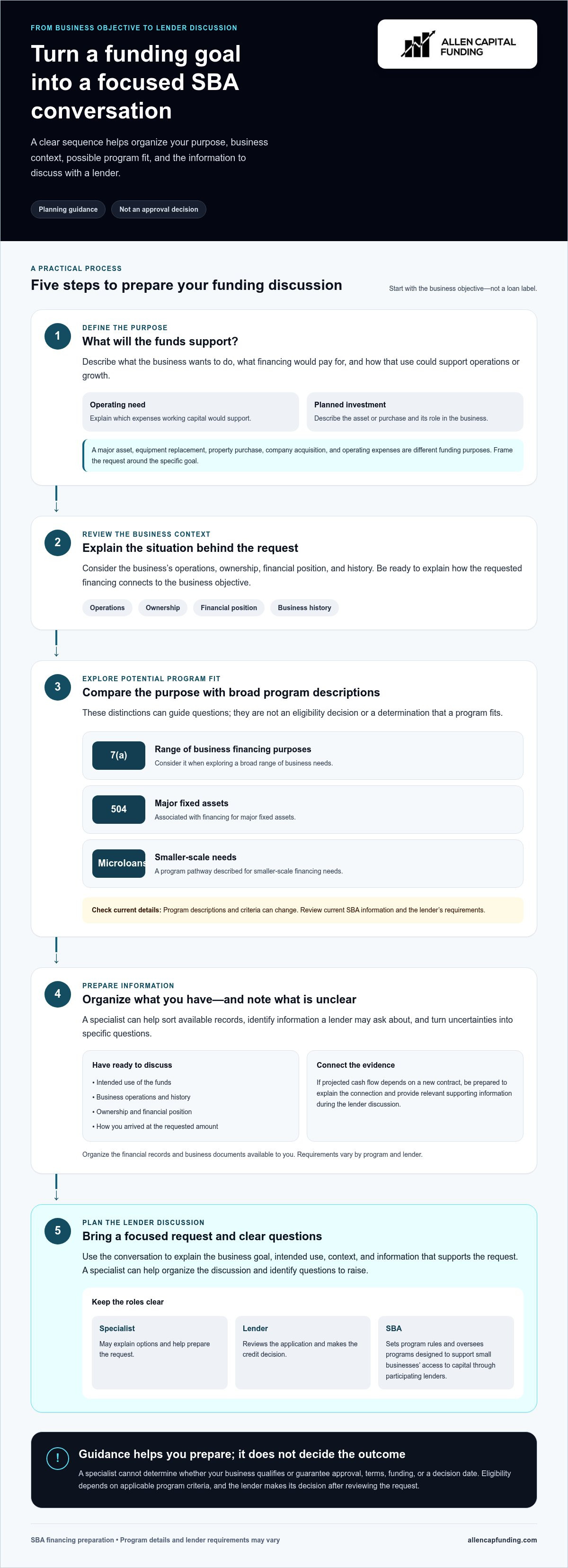
A useful funding conversation starts with the business objective, not a loan label. An sba loan specialist can help move from a broad goal to a focused plan by clarifying the intended use, reviewing business context, considering potential program fit, and organizing information for lender discussions. Each step helps identify what needs to be understood before you choose a path.
Define the purpose: What will the funds support, and what business benefit do you expect?
Review the context: Consider the business’s operations, ownership, financial position, and history.
Explore program fit: Compare your purpose with current program descriptions and criteria.
Prepare information: Organize available records and identify gaps or questions.
Plan the discussion: Decide what to raise with a prospective lender.
Start with the business goal and intended use of funds
Describe the objective in practical terms: what the business wants to do, what the financing would pay for, and how that use could support operations or growth. Distinguish a long-term investment, such as acquiring a major asset, from a shorter-term operating need. That difference does not determine the loan, but it gives the program discussion a useful starting point.
A business planning to acquire another company has a different funding purpose from one replacing production equipment or purchasing commercial property. Frame your questions around the specific goal rather than treating these requests as interchangeable. The SBA Loan Programs page provides current program information to review when considering possible pathways.
Move from program fit to lender-ready preparation
SBA pathways serve different purposes. The 7(a) program can support a range of business needs, 504 financing is oriented toward major fixed assets, and microloans address smaller-scale needs. These are broad distinctions, not a fit determination. Program requirements and descriptions can change, so review current SBA guidance and discuss how the details apply with the lender.
Financing fit depends on the use of funds, applicable eligibility criteria, and lender review. A specialist can help identify questions to resolve before the lender discussion, such as how the financing supports your business objective and what information helps explain repayment capacity. Preparation may include organizing business, ownership, financial, and use-of-funds information. Since there is no universal document list for every program and lender, start by making your available records easy to understand.
A financing guide’s role can differ from a lender’s role, and some guides may act as brokers. Allen Capital Funding helps businesses explore SBA loans and other commercial financing. For a tailored discussion of your funding purpose and potential capital paths, explore business funding guidance.
SBA Loan Specialist, Lender, or Broker: How Their Roles Differ
A professional’s title alone does not tell you whom they represent or what authority they have. A lender reviews applications and makes credit decisions. A lender-employed specialist supports that lender’s process, while an independent financing guide may help a business understand options and prepare for lender conversations. The scope of support depends on the person’s role and relationships with the parties involved.
These roles can involve similar guidance, but they are not interchangeable. An independent guide does not become the lender by helping prepare a request, and a lender-employed specialist does not make a decision separately from the lender’s review. The SBA sets program requirements and may guarantee a portion of qualifying loans made by participating lenders. It is not the direct lender in this process.
Who evaluates the application and makes the lending decision?
The lender evaluates the application and decides whether to extend credit under its review process and applicable SBA program requirements. An SBA loan specialist can help explain the process and organize information, but cannot override eligibility criteria, underwriting, or the lender’s decision. SBA participation does not mean a loan is automatically approved or that the SBA itself issues the funds.
How to assess the value of specialist guidance
Useful guidance should leave you with a clearer understanding of the process, your options, and the questions still to resolve. Notice whether the professional asks about your funding purpose and business context before discussing possible paths. Clear explanations are especially important when you discuss who will review your application and what happens next.
It is also reasonable to ask how the person is compensated and what lender relationships may shape the options presented. The answer helps you understand the professional’s role. A specialist should be able to explain their involvement plainly, without promising approval, terms, or timing.
Allen Capital Funding provides tailored guidance to help businesses consider SBA financing alongside other funding needs. If flexible operating capital is also part of your planning, the business line of credit guide can help you explore that question. You can also discuss your business funding needs as you weigh your next step.
How to Prepare for a Conversation with an SBA Loan Specialist
A focused conversation starts with a clear picture of your business and what you want financing to accomplish. You do not need a complete application package before you talk. Organizing the information you have can help identify useful questions, clarify what may be needed next, and make the discussion more productive.
Information to organize before the discussion
Prepare a short overview of your business: what it does, how long it has operated, who owns it, and why it needs capital. Explain the intended use and expected business benefit. If the need relates to a specific plan, such as expanding operations or purchasing equipment, describe the steps involved and any important timing considerations.
Gather current financial information and relevant business records you already have. Requirements vary by program and lender, so treat this as preparation rather than a universal document checklist. Note existing loans, payment obligations, pending commitments, or other constraints that could affect the funding discussion. If revenue or expenses have changed unusually, be ready to explain the circumstances instead of leaving the figures without context.
Before the meeting, use this checklist to shape your notes:
Funding purpose: What will the capital support, and how does it connect to a business objective?
Amount rationale: How did you estimate the request? Explain the costs or needs behind it.
Timing: When do you need to make a decision or use the funds, and what drives that schedule?
Ownership and history: Who owns the business, and what should a financing guide understand about its operating history?
Financial picture: Which records show current performance, obligations, and capacity to take on financing?
Clear notes are enough to get started. If you do not know an answer, flag it as a question rather than filling the gap with an assumption.
Questions that make the next steps clearer
Bring questions that help you understand the process and the professional’s role. Ask what information would be useful next, which party reviews the request, and what stages typically follow an initial discussion. You can also ask how the specialist is compensated and how lender relationships may shape the options discussed. Clear answers help you understand the guidance you receive.
Ask how your funding purpose may relate to SBA financing and which alternatives could be relevant if that path does not fit. This keeps the conversation focused on your business need, rather than just one financing label. A productive discussion should leave you with a clearer picture of open questions and practical next steps, not a promise of approval or funding.
Once you have gathered your notes and records, schedule an online consultation with Allen Capital Funding to discuss your business funding goals and explore potential capital paths.
Explore Your SBA Financing Next Step with Allen Capital Funding
Turn your financing question into a focused conversation. Allen Capital Funding helps businesses explore SBA loans and other commercial financing based on their goals and funding needs. Bring notes about the purpose of the funds, your business context, and the questions you still need answered. That gives the discussion a practical starting point without requiring you to have every detail settled in advance.
Discuss SBA financing in the context of your business goals
A useful conversation starts with the business need, then considers which capital paths may be relevant. Share what you are trying to accomplish, how the funds would support that objective, and any factors that could shape your next steps. Allen Capital Funding provides tailored funding guidance to help businesses explore SBA financing in the context of broader business plans.
Keep the roles clear. A consultation can help you understand potential options and organize questions, but it does not determine program eligibility or guarantee an outcome. Eligibility depends on applicable SBA requirements, and a participating lender reviews an application and makes its credit decision. Use the discussion to clarify your direction and prepare for the appropriate next conversation.
You do not need to select a program before speaking with an SBA loan specialist. If you are weighing more than one goal, explain how they relate. For instance, an equipment purchase may be part of a larger expansion, while an operating need may call for a separate discussion about working capital. Sharing that context keeps the conversation aligned with what the business needs.
Consider another capital path when the need calls for it
An SBA option is not automatically the right fit for every funding purpose. The type of need can point to a different discussion. A business managing day-to-day cash flow may want to explore working capital or a line of credit. A planned asset purchase may make equipment financing relevant, while unpaid invoices or a large customer order could lead to a discussion about factoring or purchase order financing. These options serve different needs, and their fit depends on the business circumstances.
If your plans involve acquiring business equipment, the commercial equipment financing guide offers more context for considering that type of asset purchase. You can raise those questions in a broader discussion of your financing goals rather than treating every capital need as an SBA loan question.
Before the conversation, write down the outcome you want, the information you have ready, and the decisions you need to make next. Allen Capital Funding can help you discuss those goals and consider relevant business funding options. Discuss your business financing goals by booking an online consultation.
Take the Next Step with a Clear Funding Goal
Your next financing decision can start with one focused question: what change should capital make possible for your business? Use your answer to guide the next conversation, whether you are weighing an SBA path or considering another type of business financing. An sba loan specialist can help frame the discussion, while the lender remains responsible for its review and decisions.
Allen Capital Funding offers tailored funding guidance for businesses exploring SBA loans and other financing categories. An online consultation gives you an opportunity to discuss your goals and consider which direction may warrant further exploration, without assuming one option fits every situation.
Bring your notes, share what you are working toward, and take a thoughtful next step. Discuss your business financing goals with Allen Capital Funding.
Frequently Asked Questions
Do I need an SBA loan specialist to apply for an SBA loan?
No. You can pursue an SBA loan without working with a specialist. Guidance can be useful if you are unsure how to describe your funding purpose, compare program options, or prepare for lender questions. For a straightforward request, you may prefer to begin with a participating lender’s process. Either way, review current SBA program information and follow the lender’s application instructions.
Can an SBA loan specialist guarantee approval?
No. A specialist cannot guarantee approval, funding, specific terms, or a decision timeline. Guidance may help you identify missing information before applying, but it cannot ensure that a lender will view your repayment capacity or application favorably. Treat promises of guaranteed approval with caution. The lender reviews the request and makes the credit decision under its process and applicable program requirements.
What documents should I prepare before speaking with an SBA loan specialist?
Start with records that help explain your business’s financial position, such as recent tax returns, income statements, balance sheets, and existing debt details, if available. A business plan, purchase information, or contract records may also help explain a particular funding purpose. Requirements vary, so do not assume every item applies. Bring what you have and note which records still need updating or gathering.
How long does it take to get an SBA loan?
There is no single reliable timeline for every SBA loan. The process can depend on the program, lender review, transaction details, and how quickly requested information is provided. A request involving a business purchase, for example, may require different review materials from a request for an established business need. Ask the lender what stages apply to your request and what could affect progress. No specialist can guarantee a decision date.
Is an SBA loan specialist the same as an SBA lender?
No. An SBA loan specialist provides guidance or support, while a lender evaluates the financing request and makes the credit decision. Allen Capital Funding is a private business financing firm, not the SBA or a direct lender. Its team helps businesses explore SBA loans and other commercial financing. Ask how the specialist is involved, who reviews your application, and how compensation and lender relationships are explained.
Can an SBA loan specialist help if an SBA loan is not the right fit?
Yes. A financing discussion can consider other business capital options when the need points elsewhere. A business managing uneven cash flow might explore a line of credit or working capital, while a purchase tied to a specific asset may prompt a discussion about equipment financing. Businesses with eligible invoices or customer orders may also consider factoring or purchase order financing. The appropriate path depends on the business and its financing need.