
How to Establish Business Credit: 2026 Step-by-Step Guide
What if your business is building a reputation with lenders and suppliers under the wrong name? Learning how to establish business credit starts with creating a distinct, verifiable business identity and connecting payment activity to it. If you’re unsure how to separate business and personal credit, which vendors report payments, or whether a thin file could narrow future financing options, a practical process can help.
This guide explains how to set up your business profile, choose accounts that fit your operations, and build a consistent record of on-time payments. You’ll also learn how to review business credit reports, identify information that needs attention, and track progress. The goal is a stronger financial foundation, not a guaranteed score or financing approval. Follow the steps in order to establish your business identity, develop a reliable payment history, and understand how credit records may fit into future financing plans.
Table of Contents
What business credit is and why establishing it matters
Start with a practical goal: build a business credit file that reflects your company’s own financial activity. A distinct file can help lenders, suppliers, and other businesses assess the company as an entity, rather than relying only on information associated with its owner. Learning how to establish business credit means creating a consistent identity and a record of activity that can be reported and matched to it.
Business credit is a record of a company’s credit-related identity and reported financial activity. There is no single score or universal scoring method across all reporting agencies. Agencies can collect different information and assess it in different ways, so a business may not have the same profile or score everywhere. A file may also be limited if few accounts or payment experiences have been reported.
Business credit is separate from an owner’s personal credit, but the two aren’t always considered independently. Depending on the financing product and lender’s policies, an owner’s personal credit or a personal guarantee may also be part of a financing review. A business profile can inform financing discussions and supplier relationships, but it doesn’t guarantee approval, access to credit, or particular terms.
What appears in a business credit profile?
A business credit file may contain identity details, such as the company’s name and address, as well as account and payment experiences reported by lenders, suppliers, or other businesses. Dun & Bradstreet, Experian, and Equifax are among the agencies that maintain business credit information. Their records may differ because information can be reported to one agency but not another, or matched differently to a company. They may also use different scoring approaches, so one score doesn’t tell the whole story.
Accurate identity details matter. If a company’s name, address, or other identifying information is inconsistent across applications and accounts, records may be harder to associate with the right business. Use the same details when setting up accounts and updating records to create a clearer foundation for the payment history you build over time.
Why separate business and personal finances?
Separate accounts and records make it easier to see which transactions belong to the company, maintain orderly bookkeeping, and document business activity. They also simplify financial reviews and preparation for financing discussions. Separation supports clear records, but it doesn’t remove a personal guarantee or override a lender’s credit policies.
For example, paying a supplier invoice from a business account and recording it in the company’s books creates a straightforward paper trail. If you pay the invoice from a personal account that also covers household bills, you may need to untangle mixed transactions later. Clear records make the business’s activity easier to understand, even though reporting and lender decisions remain separate considerations.
How to establish business credit: build the company’s foundation
Before an account can contribute to a business credit file, the company needs a consistent identity and organized financial records. These steps establish the foundation, but they don’t create a score on their own. Business structure and registration requirements depend on your circumstances and applicable rules, so use guidance relevant to your situation.
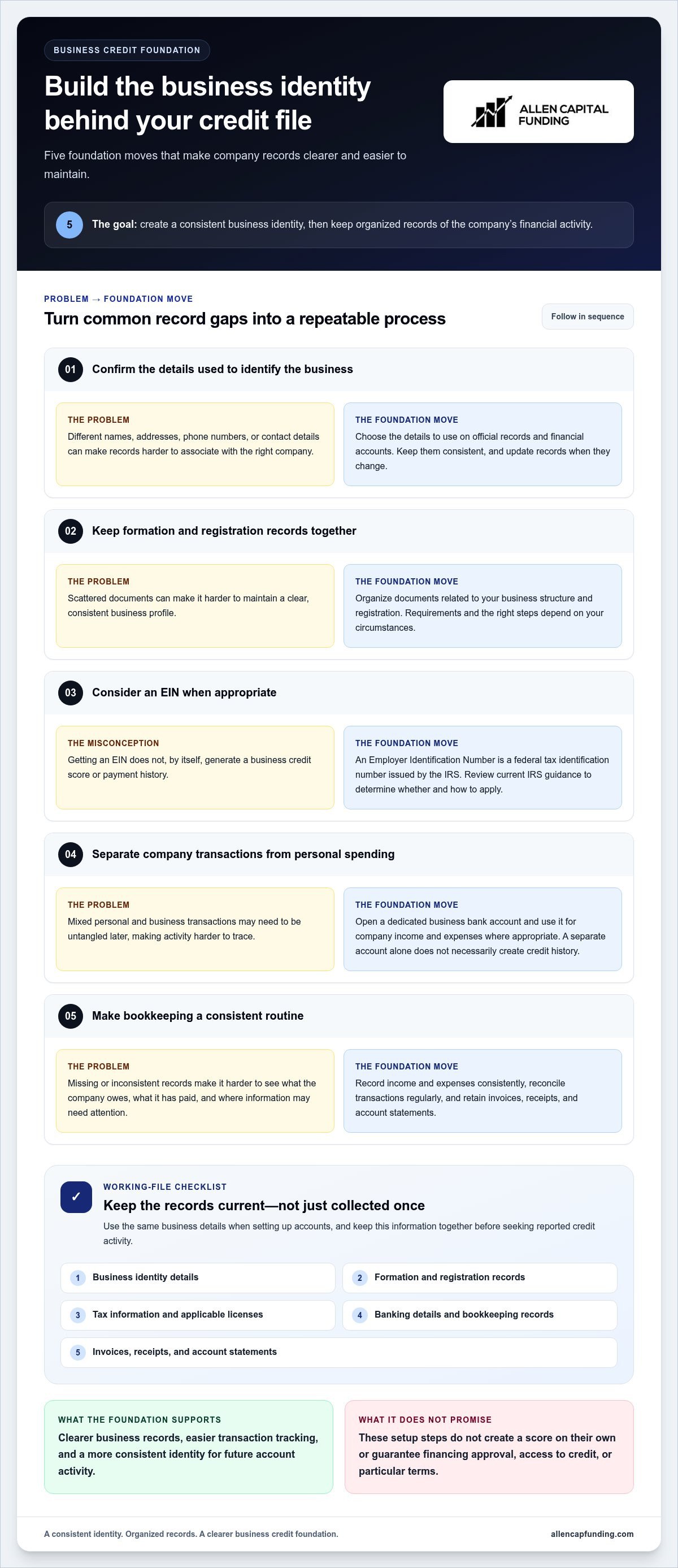
Build that foundation in sequence:
Confirm your business details. Decide which legal business name, address, phone number, and contact information you’ll use on official records and financial accounts. Use the same details consistently, and update them when they change.
Organize formation and registration records. Keep documents related to your business structure and registration together. The right structure and steps vary by owner and applicable requirements, so don’t assume another company’s process automatically fits yours.
Obtain an EIN if appropriate. An Employer Identification Number is a federal tax identification number issued by the IRS. Review current IRS guidance to determine whether and how to apply for your business. An EIN can help identify a company on relevant records, but getting one doesn’t generate a business credit score or payment history.
Open a dedicated business bank account. Use it for company income and expenses where appropriate. A separate account makes business transactions easier to identify and document, but opening one alone doesn’t necessarily create a credit history.
Set up reliable bookkeeping. Record income and expenses consistently, reconcile transactions regularly, and retain invoices, receipts, and account statements. Organized records help you track what the company owes and has paid, and make it easier to spot missing or inconsistent information.
Before seeking reported credit activity, organize your business identity, formation and registration records, tax information, licenses where applicable, banking details, bookkeeping records, invoices, receipts, and account statements. Treat this as a working file, not a one-time task. Keep records current and use the same business details when setting up accounts so future activity has a better chance of being associated with the right company.
A clean paper trail also helps distinguish the company’s finances from the owner’s. A business purchase recorded in the company’s books and paid through its dedicated account is easier to trace than the same purchase mixed into a personal account with household spending. Clear records support bookkeeping and financial review, but they don’t replace lender policies or remove any personal guarantee that may apply.
Once the foundation is in place, focus on building reported payment activity. If you’re assessing possible capital needs at the same time, review potential business financing options as one part of your planning, not as a guaranteed result of establishing credit.
How to build business credit through reported accounts and payments
A business account can help build a credit file only if relevant activity is reported and correctly matched to the company. Paying on time still matters, but a payment that isn’t sent to a reporting agency or attached to the right business identity may not appear in its file. Consistent, reported payments matter more than simply opening accounts.
Use accounts the business genuinely needs and can manage. Opening several accounts just to pursue a score can add costs and payment obligations without ensuring that a credit profile will be created or improved. Follow each agreement’s due dates and terms, and choose obligations that fit your cash flow.
Use vendor accounts and business credit products thoughtfully
Trade credit is an arrangement in which a supplier lets a business receive goods or services and pay later, often by an invoice due date. That differs from a formal loan, which involves borrowing under a separate financing agreement. Either type of account may provide reportable payment activity, but reporting practices vary. Review the terms and potential costs, and understand the repayment duties before relying on an account to build credit.
Before using a vendor account, business credit card, or financing product, consider:
Whether the account supports normal business operations, not just credit-building.
What payment schedule, fees, interest, or other obligations apply under the agreement.
Whether the account’s activity is reported to business credit agencies, and which ones.
How the provider identifies the business, so its activity can be matched to the correct file.
Business credit cards and financing can be useful tools, but they aren’t automatic shortcuts. Don’t carry a balance or take on repayment commitments the business can’t comfortably manage. A missed or late payment can create financial strain, and responsible use doesn’t guarantee that an account will produce a score.
Confirm that activity is reaching the right business file
Reporting isn’t uniform. An account might appear in one agency’s records but not another’s, or may not be reported at all. Review business credit files periodically and compare the company’s legal name and identifying details with the information attached to its accounts. If an account is absent, that alone doesn’t mean a payment was late or mishandled. The provider’s reporting practices or a file-matching issue may explain the gap.
Keep a simple record of account openings, payment dates, and the agencies where activity appears. When reviewing reports, check whether each listed account belongs to the business and whether its payment status looks accurate. If details don’t match your own records, save relevant statements or confirmations and document the discrepancy so you can follow up through the appropriate reporting or account channel.
This verification step helps you see whether reported activity is actually visible, rather than assuming a credit history is growing. As you learn how to establish business credit, focus on useful accounts, manageable obligations, accurate matching, and consistent payment habits. Over time, these practices can help create a clearer record of the company’s credit activity, though no particular score or financing outcome is assured.
How to monitor business credit and address gaps or errors
Registering a company or opening one vendor account doesn’t instantly create a complete business credit profile. A file develops as relevant information is reported and associated with the correct business, and each reporting agency may hold different records. Monitoring helps you see what’s present, catch identity mismatches, and document issues. It’s a useful part of learning how to establish business credit, but it can’t guarantee a particular score or financing result.
Set a recurring reminder to review the business credit files you can access. A consistent process makes it easier to compare records over time and follow up with clear evidence if something looks wrong.
What to check when reviewing a business credit file
Start with the company’s identity details, including its legal name and address. Then review listed accounts, account status, payment information, and any unfamiliar entries. Compare reports across agencies, but don’t expect them to be identical. Different reporting practices can result in different accounts or details appearing in each file.
Save a dated copy of each report you review.
Compare listed accounts with your statements, invoices, and payment records.
Note unfamiliar accounts, incorrect statuses, missing information, or identity details that don’t match your records.
Keep each report with the supporting account documents. Dated records help you explain what you found and show what information you relied on when requesting a correction.
What to do about missing or inaccurate information
First, identify the agency holding the entry and the information provider connected to it, such as the account provider that supplied the data. A missing account may reflect reporting practices or file matching, rather than a late or mishandled payment. For an inaccurate entry, follow the agency’s current dispute process and provide a concise explanation with relevant supporting documents.
Identify the specific entry and describe what appears incorrect or incomplete.
Gather relevant evidence, such as account statements, invoices, payment confirmations, or business identity records.
Submit the information through the reporting agency’s current process. If the issue concerns information supplied by an account provider, follow its process for addressing account records as well.
Record submission dates, reference details, correspondence, and the correction requested.
Review the file again after the stated review process and save the updated report or any follow-up instructions.
Keep the tone factual and the request specific. Point to the account and payment entry in question, then identify the record that supports the correction. If the issue remains, use the agency’s or provider’s stated follow-up process. Monitoring and disputes don’t guarantee a change, but organized documentation gives you a clear record of the steps taken.
If you’re reviewing credit records as part of capital planning, learn about business financing options with Allen Capital Funding. Credit history is one consideration in financing discussions, alongside the broader details of your business and funding goals.
How established business credit supports your next financing decisions
A business credit profile can inform a financing discussion, but it’s only one part of the picture. Lenders and financing programs may also consider cash flow, time in business, financial records, and what the funds will support. Review criteria differ, so a strong credit history doesn’t guarantee approval or specific terms. Prepare to explain how the business manages obligations and how additional capital fits its plans.
Credit profile versus overall financing readiness
Think of credit history as one piece of a broader readiness file. Credit records can show reported account activity, while cash-flow records describe the business’s income and expenses. Business documents establish how the company operates, and a clear funding purpose connects the request to a business need. Keeping these materials organized can help you present a complete picture, even though each financing review may weigh information differently.
These efforts complement each other, but they aren’t interchangeable. A payment record doesn’t explain how funds will be repaid, just as strong revenue records don’t replace a credit review when one is part of the process.
Connect financing choices to the business need
Start by describing the purpose of the funds. A business managing recurring or flexible capital needs might explore a credit line, while a specific equipment purchase, operating expense, or growth opportunity may call for a different financing category. The right fit depends on the business’s situation and the financing terms, not credit history alone. Allen Capital Funding helps small businesses assess capital options, including credit lines, SBA loans, working capital, equipment financing, factoring, and purchase order financing.
If flexible access to capital is part of your planning, read this business line of credit guide to understand how this financing category may fit a business need. For companies considering how business assets relate to liquidity, learn about asset-based lending for small businesses.
Put your business credit file to work alongside clear financial records and a defined funding purpose. When you’re ready to assess potential capital solutions, book an online consultation with Allen Capital Funding to discuss options tailored to your business needs. Credit history can support the conversation, but it doesn’t determine the outcome on its own.
Put your business credit foundation to work
Credit-building is a long-term business practice, not a box to check before seeking capital. Use the information you maintain to shape a forward-looking plan: identify the next business need, consider when funds may be needed, and prepare to explain how capital fits your goals. This gives financing conversations a practical starting point at any stage of learning how to establish business credit.
As you assess your next step, Allen Capital Funding offers guidance across credit lines, SBA loans, working capital, equipment financing, and asset-based options. An online consultation can help you discuss your business’s capital needs and consider potential paths forward. Credit history is one factor in financing discussions, not a promise of approval or specific terms.
Explore business funding options with Allen Capital Funding and discuss a thoughtful next step for your company’s goals. Your business can build its financial foundation one informed decision at a time.
Frequently Asked Questions
How long does it take to establish business credit?
There’s no fixed timeline. A business file may take time to develop because reporting depends on when account providers send information, whether agencies can match it to your company, and how much credit activity is available. A newly opened account may not appear immediately, and a thin file can remain limited even after you’ve made payments. Focus on accurate records and steady, manageable activity rather than expecting a particular score by a set date.
Can I build business credit with an EIN?
An EIN can identify your business on tax and financial records, but it doesn’t build credit by itself. Credit-related account information still needs to be reported and associated with the company. Applying for an account with your EIN may help identify the business, but it won’t create payment history unless the provider reports relevant activity. Use current IRS guidance for EIN matters, and treat the number as an identity tool, not a score shortcut.
Does a business credit card build business credit?
It can contribute if the card issuer reports account activity to business credit agencies and the account is linked to your company. Reporting policies differ, so don’t assume every card appears in every business file. Before applying, review the card’s fees, interest, and repayment terms, and use it for planned expenses the business can repay. A card may support a credit record, but opening one doesn’t guarantee a score or financing outcome.
Do vendors report payments to business credit bureaus?
Some vendors report payment activity, while others may not, and reporting can vary by agency. A supplier invoice paid on time won’t necessarily show up in a business credit file. Before relying on a vendor account for credit-building, review its reporting practices and check your reports afterward. If the account doesn’t appear, that doesn’t prove your payment was late. Keep the invoice and payment confirmation so you can verify the transaction if questions arise.
Can I establish business credit without using personal credit?
It may be possible to build business credit through accounts held in the company’s name, but access to financing can still involve an owner’s personal credit or a personal guarantee. Requirements depend on the lender, product, and business circumstances. A company might maintain business accounts while a lender separately evaluates its owner during a financing application. Read agreements carefully to understand how an application or guarantee could affect your responsibilities before signing.
What is the difference between business credit and personal credit?
Business credit relates to a company’s credit identity and reported account activity; personal credit relates to an individual’s borrowing history. They’re maintained and assessed through different types of records, and business credit scoring approaches can vary by agency. The distinction doesn’t mean lenders always review them separately. If an owner guarantees a business obligation or applies for certain financing, personal credit may also be part of the review.
How can I check my business credit report?
Contact business credit reporting agencies such as Dun & Bradstreet, Experian, and Equifax to find their current options for accessing company records. Have your legal business name and identifying details ready, since agencies need to locate the correct file. Check more than one agency for a broader view, because their records may not match. Save dated copies so you can compare account details during your next review.
What should I do if my business credit report has an error?
Identify which agency displays the error and which account provider supplied the information. Then follow the agency’s current dispute process, describing the specific entry and providing relevant evidence, such as a statement or payment confirmation. Keep copies of what you submit and note dates, reference details, and responses. Check the file again after the stated review process. A dispute doesn’t guarantee a correction, so retain your records until the issue is resolved or clarified.



Comments