
Commercial Bridge Loans Explained: Uses, Risks, and Exit Strategies
Updated: Oct 22
A bridge loan can help a commercial property deal reach closing, but it can’t guarantee that the next step will be ready when repayment is due. That’s why commercial bridge loans explained starts with more than speed: the exit plan matters just as much as the funding.
If you’re weighing a time-sensitive purchase, renovation, or refinance, consider what happens if the property takes longer than expected to stabilize or sell. Bridge financing provides short-term capital while a borrower works toward a sale or longer-term financing. Because the timeline is compressed and repayment risk remains, assess the full plan before moving ahead.
This guide explains how commercial bridge loans work, when they may fit a real estate project, and how they compare with longer-term commercial financing. It covers common uses, key risks, and practical exit strategies, including what to consider if a refinance or sale is delayed. With a clear view of the project, timeline, and repayment path, you can evaluate whether bridge financing supports your goals or another funding approach may be a better fit.
Table of Contents
What Is a Commercial Bridge Loan, and When Can It Help?
In practical terms, commercial bridge loans are short-term financing used to cover a temporary gap in capital or timing. A business might need funds to acquire a property before longer-term financing is ready, or to complete work before the property is positioned for sale or refinancing. The loan may provide a financing route during that interim period, but it doesn’t remove the project’s underlying risks. A bridge loan is financing used to span a gap between an immediate need and a planned longer-term solution.
There isn’t one fixed structure for every transaction. The loan’s purpose, collateral, duration, and repayment terms depend on the lender and the deal. Specialized private lenders such as Applewood Funding provide alternative financing and bridge solutions tailored to distinct project timelines. Collateral is property or another asset pledged to secure repayment, though requirements vary. Approval and closing speed aren’t guaranteed, so assess a tight purchase deadline alongside the time needed for review and closing.
How commercial bridge financing differs from permanent financing
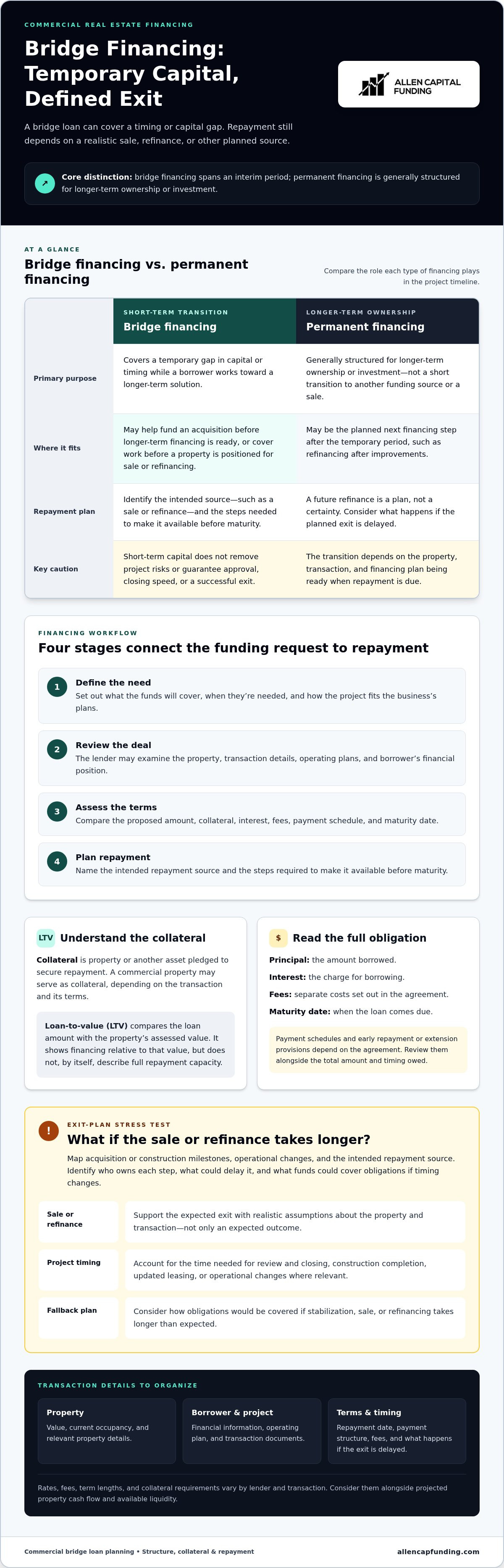
Bridge financing addresses a temporary need. Permanent financing is generally structured for longer-term ownership or investment, rather than a short transition to another funding source or a sale. For example, a buyer may use interim capital to acquire a property, then plan to refinance after completing improvements. That future financing is a plan, not a certainty.
Compare the full obligation, not just how quickly capital could address an immediate gap. Review the repayment date, payment structure, fees, and what happens if the planned exit is delayed. Rates, fees, term lengths, and collateral requirements vary by lender and transaction. Consider them alongside the property’s projected cash flow and your available liquidity.
Which commercial property situations may call for bridge capital?
A time-sensitive acquisition may be worth evaluating when the buyer has a defined near-term sale or refinance plan. The plan should explain what needs to happen before repayment, who is responsible for each step, and what funds could cover obligations if timing changes. Support the projected exit with realistic assumptions about the property and transaction, rather than relying only on an expected outcome.
Renovation or repositioning can also create a financing gap. A property may need improvements, updated leasing, or operational changes before it can support the borrower’s longer-term financing plan. For investors undertaking rehabilitation or repositioning projects, private lenders like Level 4 Funding offer short-term financing structured around property acquisition and renovation needs. Bridge capital may help cover that interim period, but it can’t ensure construction finishes on schedule, occupancy improves, or refinancing becomes available.
Before assessing a scenario, map the project’s key dependencies: acquisition or construction milestones, expected operational changes, and the intended repayment source. Then plan for a fallback if the sale, refinance, or stabilization takes longer than expected. Allen Capital Funding helps businesses evaluate real estate financing needs by connecting the project purpose, timeline, property details, and repayment plan to tailored funding options.
How Commercial Bridge Loans Work: Structure, Collateral, and Repayment
Understanding how commercial bridge loans work means looking beyond the amount requested. The financing process typically involves four stages: define the funding need, review the property and borrower, assess proposed terms, and establish how the debt will be repaid. This framework keeps the financing request connected to the transaction. For a broader overview of short-term financing’s uses and drawbacks, see the Corporate Finance Institute’s Bridge Loan Definition and Uses.
Define the need. Set out what the funds will cover, when they’re needed, and how the project fits the business’s plans.
Review the deal. The lender may examine the property, transaction details, operating plans, and borrower’s financial position.
Assess the terms. Compare the proposed amount, collateral, interest, fees, payment schedule, and maturity date.
Plan repayment. Identify the intended source of repayment and the steps needed to make it available before maturity.
Collateral is property or another asset pledged to secure a loan. A commercial property may serve as collateral, but the assets involved depend on the transaction and its terms. The loan-to-value ratio, or LTV, compares the loan amount with the property’s assessed value. It shows how much financing is requested relative to that value, but doesn’t, by itself, describe the borrower’s full repayment capacity.
Separate the parts of the obligation. Principal is the amount borrowed. Interest is the charge for borrowing, while fees are separate costs set out in the agreement. The maturity date is when the loan comes due. Payment schedules and any provisions for early repayment or extensions depend on the agreement, so review them alongside the total amount and timing owed.
What lenders may review in a commercial property transaction
A lender may assess the property’s value, current occupancy, the borrower’s operating plan, financial information, and transaction documents. Depending on the deal, due diligence may include an appraisal, title review, and examination of financial records. These checks help inform the lender’s view of the property and transaction. Organized, consistent documents make it easier to explain how the project and financing request fit together.
Why the exit strategy belongs in the loan plan
An exit strategy is the planned source of repayment when the bridge loan reaches maturity. Possible exits include refinancing into longer-term financing, selling the property, or repaying from planned business proceeds. Each requires a realistic timeline and assumptions that fit the project, such as completing work, improving operations, or preparing the property for sale. Don’t rely solely on a refinance that isn’t committed or a sale with uncertain timing. Consider what resources could cover the obligation if the expected exit takes longer or doesn’t proceed as planned.
Commercial bridge loans explained through this structure are easier to evaluate as a complete financing decision, not just an immediate source of capital. Allen Capital Funding helps businesses connect project details, timing, and repayment plans to tailored funding options. Explore commercial real estate financing guidance as you organize your financing needs.
Commercial Bridge Loans vs. Other Business Real Estate Financing
Comparing commercial bridge loans with other financing options helps you match each structure to the project’s purpose and repayment capacity. A temporary property transition differs from a long-term ownership plan or a recurring cash-flow need. The options below serve different usual roles, but actual terms depend on the lender, borrower, and transaction.
This comparison is a starting point, not a ranking. A financing type that fits one need may not address another. Compare the use of funds, expected duration, repayment source, collateral, and what the business can manage if its plan changes.
Bridge loan or permanent commercial mortgage?
A bridge loan may suit a defined, temporary need, while a permanent commercial mortgage is intended to support longer-term ownership. Property readiness matters: a building undergoing renovation or with an operating plan still in progress may call for a different financing conversation than a property ready for ongoing ownership financing. The borrower’s documented repayment plan matters, too. Understanding how commercial mortgages support longer-term property financing can help frame the comparison.
Neither option is always cheaper, faster, or easier to qualify for. Compare the full payment obligation and timeline with the property’s status and the business’s ability to repay. If the intended transition depends on uncertain milestones, account for that uncertainty rather than treating the expected outcome as assured.
When a credit line or asset-based option may be worth comparing
A credit line may be worth considering when the business needs flexible access to capital for recurring working-capital demands, rather than financing a single property transition. Asset-based lending may use business assets such as receivables or inventory to support borrowing. It can address a liquidity need, but it isn’t automatically a substitute for property financing. The asset-based lending guide explains that approach in more depth.
To narrow the options, write down the project’s purpose, when funds are needed, how long they’re expected to be used, and the realistic source of repayment. Then compare how each structure’s collateral and terms align with the business’s cash flow. Allen Capital Funding helps businesses evaluate real estate financing needs and explore tailored funding options for their project and timeline.
Risks, Qualification Factors, and a Borrower Readiness Checklist
A short maturity can create pressure if the planned exit is delayed or unavailable. Refinancing may depend on the property’s condition, value, income, and financing options at that future point. A sale can take longer than expected, while construction or leasing delays may postpone the improvements or operating performance on which the repayment plan relies. These outcomes aren’t certain, but each belongs in the analysis.
A viable bridge plan requires a documented repayment source and a contingency. Assess more than whether the project appears workable today. Consider whether the business has enough liquidity to manage ongoing obligations and what other resources could support repayment if the expected exit shifts.
What can weaken a bridge-loan repayment plan?
Project completion, leasing, sale, and refinancing each carry different timing risks. Construction may run behind schedule; leasing may take longer than projected; a sale may not close on the intended date. A later valuation or weaker-than-planned operating performance could also affect refinancing options. Test the expected exit against realistic milestones, then model a delay or changed assumptions. A backup plan should identify a plausible repayment source, not simply repeat the original strategy.
A practical pre-application readiness checklist
Before evaluating a specific proposal, assemble the information that connects the property, business, and repayment plan. Use this checklist to identify gaps early:
Property details: Document the asset, current condition, occupancy, and operating plans relevant to the financing request.
Project budget: Outline planned work, expected costs, funding needs, and key completion milestones.
Business finances: Gather relevant financial records, current obligations, and a view of available liquidity.
Repayment timeline: Map the steps and timing required for the intended refinance, sale, or business-proceeds repayment.
Contingency: Identify what the business could do if the first exit is delayed, unavailable, or doesn’t provide enough proceeds.
Complete terms: Review fees, maturity, collateral, interest, payment schedule, and any repayment provisions together.
Then test the plan under more than one scenario. For example, consider how a construction delay might affect leasing, the expected sale date, and the time remaining before maturity. This doesn’t predict a problem; it shows whether the plan has room to adapt. Strong preparation also gives you a clearer basis for discussing the property, borrower finances, and proposed terms.
Commercial bridge loans explained responsibly means weighing the financing against both the intended outcome and the consequences of a delay. Allen Capital Funding helps businesses evaluate real estate financing needs and connect project details, timing, and repayment plans to tailored funding options. Discuss your real estate financing needs with the team.
How to Explore Commercial Real Estate Financing with Allen Capital Funding
A useful financing conversation starts with the project, not a product label. Explain what the business plans to buy or improve, when capital is needed, and how the property is expected to support the business. Then connect those details to the repayment plan. This context helps Allen Capital Funding provide guidance on tailored funding options for your business needs.
Commercial bridge loans explained in the context of your project means weighing the timing need alongside the property’s condition, business finances, and intended exit. A short-term structure may address one stage of a plan, while longer-term financing may better match another. Treat no structure as a guaranteed fit or outcome. The first conversation can clarify what the business needs and which options may be relevant.
What to prepare before discussing a property funding need
Bring a concise purchase or project description, the anticipated funding need, and the milestones that shape the timeline. Organize relevant property details, business information, and financial records so the discussion can focus on the transaction. Write down the primary repayment plan and a contingency in case the intended exit takes longer than expected. A clear summary makes it easier to identify assumptions that need further analysis.
How tailored funding guidance can clarify the next step
Allen Capital Funding helps connect the stated purpose, property, and timeline with relevant capital options. Guidance can also help frame the trade-offs between a short-term timing need and longer-term financing structures, including how repayment expectations relate to the business’s plans. This is a consultative step, not a promise of approval or specific terms.
For a focused first conversation, outline the essentials in a practical order:
Present the project. Describe the property, intended purchase or improvements, and the business reason behind the transaction.
Define the capital gap. Explain what funding is needed and when, along with the project milestones that affect timing.
Review repayment. Share the intended exit, the assumptions supporting it, and the backup plan if timing or circumstances change.
These details keep the discussion grounded in what the business is trying to accomplish. They also make it easier to compare potential financing structures against the project’s cash flow, timing, and capacity to meet repayment obligations. If information is still developing, distinguish what’s known from what remains an assumption. A clear plan is more useful than overstating certainty.
Businesses can book an online consultation to speak directly with the team about their financing needs. Bring your project details and questions to better understand possible next steps. To explore business financing options, start with the purpose, timeline, property, and repayment plan that will shape your decision.
Turn Your Financing Plan into a Clear Next Step
Use what you’ve learned about commercial bridge loans explained as a starting point for a focused decision, not a reason to rush. Before advancing a property transaction, write down what must happen for the project to succeed, which assumptions could change, and how the business would respond if the timeline shifts. This can help clarify whether the proposed financing supports the project or adds pressure the business isn’t prepared to manage.
A thoughtful financing discussion can bring those moving parts into focus. Allen Capital Funding’s dedicated team provides guidance on tailored funding options for business needs and serves businesses nationally across the United States. Bring your project goals and key questions to shape a practical conversation about potential next steps.
Build your next step around a plan you can explain and evaluate.Explore tailored business financing options and move forward with greater clarity.
Frequently Asked Questions
What is a commercial bridge loan?
A commercial bridge loan is short-term financing for a temporary funding gap connected to a business or commercial property need. For readers searching “commercial bridge loans explained,” consider a business that needs to fund a property transaction before its planned longer-term financing is ready. The loan’s structure and repayment obligations depend on the specific agreement. Map the funding need to a clear purpose and repayment source before evaluating a proposal.
How do commercial bridge loans work?
A borrower presents the project and financing need, and the lender reviews relevant details before offering terms for consideration. For a useful comparison, match each proposed term to the business’s cash-flow calendar: note when payments are due, what triggers the maturity obligation, and whether repayment depends on a future event. This can reveal timing mismatches early. The signed agreement controls the borrower’s obligations, so review its terms carefully before proceeding.
What can a commercial bridge loan be used for?
A commercial bridge loan may support a property purchase, improvements, or another temporary capital need tied to a commercial real estate plan. For example, identify the renovation phase the funds are intended to cover, then track the budget and completion milestones against that use. Avoid treating the loan as a general solution for ongoing cash shortfalls. The project should have a defined purpose and a repayment plan aligned with its needs.
Are commercial bridge loans risky?
They can be risky because the borrower must meet the agreement’s repayment obligations even if the expected sale, refinance, or project milestone is delayed. To assess exposure, model a base case and a slower-than-planned case, then compare each with available cash and other obligations. Consider how a delay affects the whole business, not just the property. A contingency helps identify what action may be needed if assumptions change.
How is a commercial bridge loan different from a commercial mortgage?
A commercial bridge loan generally addresses a temporary funding need, while a commercial mortgage is commonly designed for longer-term property financing. Compare more than the label: examine maturity, payment structure, collateral, fees, and the intended repayment source. A property that needs additional work may have different financing needs from one already operating as planned. Neither option is automatically less expensive or easier to obtain; the fit depends on the project and borrower.
How do borrowers repay a commercial bridge loan?
Borrowers repay according to the loan agreement, often using proceeds from a refinance, property sale, or business funds. Estimate the amount likely to be available after transaction costs and other obligations, rather than assuming gross proceeds will cover the debt. Match expected cash availability to the maturity date, too. If repayment depends on a sale, consider whether the business can meet its obligations while the transaction is underway.
What do lenders consider for a commercial bridge loan?
Lenders may consider the property, its value and operating plans, the transaction purpose, borrower finances, collateral, and the proposed repayment approach. Keep key figures consistent across the project budget, business financial records, and property documents. Be prepared to explain material changes in assumptions, such as an updated renovation estimate or occupancy projection. No single factor determines approval or terms, and requirements vary by lender and transaction.



Comments