
Managing seasonal cash flow dips and sizing your cash reserve
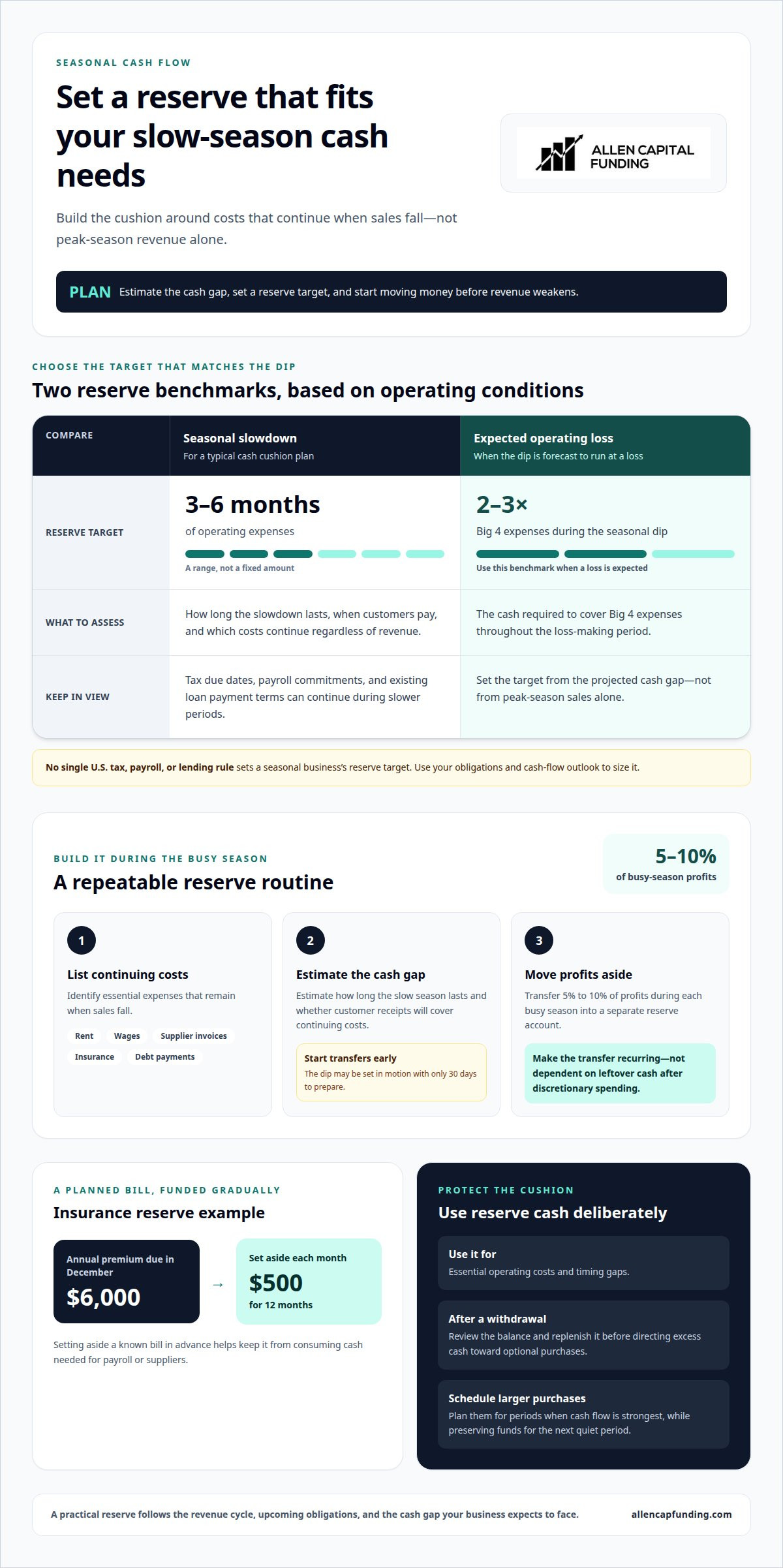
A seasonal slowdown can put pressure on cash even after a strong sales period. A common target for managing seasonal cash flow dips is a reserve equal to three to six months of operating expenses; if you expect to operate at a loss during the dip, plan for cash reserves of two to three times your Big 4 expenses during that period.
You still need to cover rent, payroll, supplier invoices, and taxes when sales slow. Building a reserve during busy periods helps, but the right target also depends on how long the dip lasts, when customers pay, and which costs continue regardless of revenue.
This guide shows how to estimate a practical cash cushion, forecast best-case, expected, and conservative revenue, and protect working capital as inflows slow. It also covers ways to adjust spending and receivables, and when short-term financing may help bridge a timing gap. The goal is to meet day-to-day obligations without tying up more cash than your business needs.
Table of Contents
1. How to generate and deploy your cash reserve?
Build cash reserves during the busy season, when customer receipts can exceed routine outflows. Set aside 5% to 10% of profits during each busy season, then transfer that share into a separate reserve account. This recurring step helps smooth seasonal cycles without relying on leftover cash after discretionary spending. A common target for small businesses is three to six months of operating expenses. If you expect to run at a loss during the seasonal dip, plan for reserves equal to 2-3x the Big 4 expenses during the dip.
No single U.S. tax, payroll, or lending rule sets a seasonal business’s reserve target. Build your plan around tax due dates, payroll commitments, and existing loan payment terms, since these obligations can continue during slower periods.
Use a simple sequence to size and protect an operating cash reserve. First, list essential costs that continue when sales fall, such as rent, wages, supplier invoices, insurance, and debt payments. Next, estimate how long the slow season lasts and whether customer receipts will cover those costs. Then set a target based on the gap, not on peak-season sales alone. Businesses may have only 30 days before the dip is set into motion, so start transfers early rather than waiting for revenue to weaken.
Separate predictable bills from unexpected shortfalls. For example, a business facing a $6,000 annual insurance premium due in December can set aside $500 per month for 12 months. That planned amount keeps a known bill from consuming cash needed for payroll or suppliers. Review the reserve balance as seasonal income arrives, and replenish it after withdrawals before directing excess cash toward optional purchases.
Use the reserve for essential operating costs and timing gaps, not routine overspending. Schedule larger purchases when cash flow is strongest, while keeping enough funds for the next quiet period. This makes the reserve a practical part of your business plan, aligned with revenue cycles and upcoming obligations.
2. Forecasting best-case, expected, and conservative revenue
Start with two or three years of monthly income statements and cash flow reports. Compare each month’s revenue, payment timing, and fixed costs to identify recurring cycles. This history helps predict when sales slow and which expenses remain steady. Then build a 12-month forecast showing expected cash receipts and payments by month. A forecast is useful only when it tracks timing, not just annual totals.
Prepare three revenue scenarios: best-case, expected, and conservative. Use past sales patterns to shape each one, then adjust for current bookings, customer behavior, and known cost changes. In the conservative case, reduce expected receipts or allow more time for collections. Compare the scenarios to decide when to delay purchases, protect cash for fixed costs, or revise operating plans. Show the cash balance after expected inflows and scheduled outflows in each scenario.
For businesses with significant seasonal variation, maintain a 13-week rolling cash-flow forecast and update it weekly. Also use a 12-month rolling forecast, updated monthly, to see longer cycles and upcoming obligations. Forecasting seasonal cash flow accurately means using historical results, actual payment timing, and current expense commitments, then updating assumptions as results change. A quarterly review alone can miss a January cash gap if the forecast is last updated in October.
Make receivables assumptions specific. Calculate the share of invoices collected within 30 days, 60 days, and beyond, then apply those collection patterns to expected sales. For example, if customer payments typically arrive later than invoice dates, place the expected receipts in the later cash-flow period. Compare projected results with actual cash each week or month, and revise the expected scenario when collections or sales differ. This gives owners a practical signal for decisions before a slower period tightens liquidity.
Planning for seasonal revenue and cash flow dips
Plan several months before the slower season by mapping expected income against fixed and operating expenses. Review at least two years of monthly revenue data to identify seasonal patterns, then compare expected receipts with recurring bills. A weekly cash-flow budget can reveal whether a shortfall may last two weeks or six weeks, helping you choose a response. Where possible, align recurring payment schedules with revenue cycles, and postpone nonessential spending when the forecast shows pressure.
Reduce slow-season expenses by reviewing the previous 30 days of spending and identifying costs to cut or renegotiate. Check subscriptions, staffing schedules, utilities, and supplier terms, while protecting spending that supports safety or essential operations. Inventory deserves its own review: reduce excess stock before season-end, adjust orders to expected demand, and consider inventory financing when stock ties up working capital but remains necessary for sales.
Use cost-volume-profit analysis to calculate the income needed to cover fixed and variable expenses, then set a target profit above break-even. Compare that target with conservative seasonal sales projections. If the gap is too large, adjust costs, pricing, or inventory plans before committing capital. This turns a revenue goal into specific operating decisions instead of relying on peak-season results.
Borrowing can help cover a timing gap or fund planned growth, but match repayment to the purpose and expected cash cycle. Before accepting credit, compare interest, fees, the repayment schedule, and total repayment with projected income. Payments that continue through a low-revenue period can deepen the shortfall.
For planned off-season investment in equipment, renovations, or acquisitions, SBA 7(a) loans are one financing option. Keep growth borrowing separate from money needed for routine expenses, and test repayment against conservative projections. Seasonal planning works best when inventory, operating costs, target profit, and financing decisions share the same cash-flow assumptions.
4. Seasonal fluctuations in working capital and liquidity
Managing seasonal cash flow dips starts with understanding why liquidity tightens: customer receipts fall while supplier payments, lease commitments, and payroll continue. A retailer, for example, may see sales slow after summer while rent, wages, and inventory bills remain due. Working capital, the difference between current assets and current liabilities, helps show whether short-term resources can cover those obligations.
Liquidity depends on timing as much as sales volume. Late invoices can leave a business short of cash even when recorded revenue looks healthy. Review accounts receivable ageing six to eight weeks before an expected dip, and flag overdue balances for prompt follow-up. A customer already 45 days late in mid-October may still be unpaid during a January cash trough.
Use forecasting to coordinate receivables, inventory, and outgoing payments. Send invoices promptly with clear payment terms, then compare expected collection dates with payroll and supplier due dates. Ask suppliers about extended terms or monthly payments when incoming cash is expected to slow. Before the season ends, reduce excess stock so less working capital is tied up in goods that may take longer to sell.
For businesses managing seasonal cash flow dips, a working capital line of credit can help cover short-term gaps between payables and receivables. It can support liquidity when cash is temporarily tied up in unpaid invoices, but it should not replace a plan for recurring losses. Match borrowing to the timing and size of the cash gap, and include repayments in your forecast before using funds to invest or increase spending.
Take action before the dip appears in the bank balance. Compare current cash results with previous periods, update expected payment dates, and identify obligations that cannot move. If your forecast points to a short-term liquidity gap, review working capital options as part of your funding plan.
Allen Capital Funding: Credit Lines
Allen Capital Funding offers Credit Lines that may help businesses cover short-term working capital gaps between customer receipts and operating payments. Consider this option when your forecast shows a temporary timing shortfall, rather than an ongoing mismatch between income and expenses. Include repayment obligations in your cash-flow projections before relying on a credit line.
For a longer-term investment or another funding need, Allen Capital Funding also offers SBA Loans, Real Estate financing, and Working Capital solutions. The right option depends on the purpose of the funds, the timing of expected receipts, and your planned repayments. Reviewing these factors can connect seasonal planning with a financing decision suited to the need.
Contact Allen Capital Funding to discuss your seasonal funding needs and next steps.
Make your next seasonal plan actionable
Make cash planning a regular management habit, not a response to a shrinking balance. Assign someone to update the forecast, flag changes in customer payment timing, and raise emerging gaps during operating reviews. Keep the plan visible to managers responsible for purchasing, staffing, and collections. A shared view helps the team act while options remain open, rather than making rushed choices after obligations come due.
Turn forecasts into a clear funding plan. Separate short-term timing gaps from longer-term investment needs, identify what the business can cover internally, and define where outside capital could support continuity. Managing seasonal cash flow dips becomes more deliberate when each funding decision has a clear purpose and fits the business’s repayment capacity.
Allen Capital Funding can help you consider financing options in light of your cash-flow needs and business plans. Start a conversation with Allen Capital Funding about the next step for your business. A practical plan can help you meet each new season with focus and confidence.
Frequently Asked Questions
How much cash should you have on hand?
Keep enough cash to cover operating expenses throughout your slowest expected period. A common small-business target is three to six months of operating expenses. If seasonal losses are expected, compare the projected shortfall with essential expenses and the length of the dip. Set aside cash for known upcoming bills separately from funds reserved for unexpected disruptions, so a planned payment does not obscure an approaching operating gap.
How to generate and deploy your cash reserve?
Build the reserve by transferring a planned share of busy-season profits into a dedicated account. Transfer funds as receipts arrive, then compare the balance with upcoming obligations. Use the reserve for necessary costs during the slow period or a temporary mismatch between receipts and bills. After drawing on it, include replenishment in the next operating plan rather than treating the withdrawal as extra spending capacity.
Need Help With Seasonal Cash Flow Management?
Start by identifying the timing and purpose of the gap: delayed customer receipts, recurring bills, or a planned investment require different responses. Allen Capital Funding offers Credit Lines and Working Capital solutions for business funding needs. Prepare a current cash-flow forecast and a summary of expected payments to make the discussion more focused. Contact Allen Capital Funding to explore a suitable next step for your business.
How much cash reserve should a seasonal business keep?
A seasonal business can use three to six months of operating expenses as a starting benchmark, then adjust for its sales cycle. Consider the length of the quiet period, fixed obligations, and timing of customer collections. If operating losses are expected during the dip, calculate the likely shortfall separately instead of assuming an expense-based reserve will cover lost income.
What financing options help cover seasonal cash flow gaps, and what do they cost?
Options may include Credit Lines, Working Capital, Factoring, or P.O. Financing, depending on whether the need involves timing, unpaid invoices, or fulfilling orders. Costs depend on the financing structure, repayment terms, and transaction details. Compare the expected cash benefit with repayment obligations before choosing funding.
How do business lines of credit compare with short-term loans for seasonal cash needs?
A credit line may suit recurring timing gaps because a business can draw funds as needed and include repayment in its cash plan. A short-term loan generally provides a set amount for a defined purpose, which may suit a specific one-time expense. Compare access to funds, repayment timing, and how each option fits seasonal receipts. The key is to avoid repayments that come due when revenue is weakest.



Comments