
Loan for Buying a Retail Storefront: A 2026 Buyer’s Guide
Updated: Oct 23
The right loan for buying a retail storefront should cover the property without leaving your business short of cash for inventory, payroll, and day-to-day expenses. Buying can provide long-term control over your space, but tying up too much working capital may make it harder to open, adapt, and serve customers. Compare financing options with both the storefront’s potential and your operating needs in view.
Loan structure, lender requirements, and property details all affect the funding plan. This guide explains how to compare commercial real estate financing and SBA options, evaluate a property for your business, and prepare information lenders may review. It also covers practical steps to take between making an offer and arranging financing, so you can plan for project costs and operating capital together.
Table of Contents
Before financing a retail storefront, clarify what the purchase needs to accomplish
Owning a storefront can give your business greater control over its space, more stability in its location, and a property that supports a long-term plan. But ownership is a business investment as well as a real estate transaction. The building needs to work for your customers and daily operations while fitting your financial strategy.
Separate the property purchase from the other costs of making the space usable. Renovations, fixtures, equipment, opening inventory, and operating reserves serve different purposes and may call for different funding. If you focus only on the purchase price, you risk leaving too little cash for the business to open and operate.
Does buying fit the retail business’s operating plan?
Weigh ownership’s control and location stability against the flexibility of leasing. Buying may suit a business that expects to stay in one place and needs a specific layout. Leasing may fit a concept that is still testing its market or could outgrow its space. Consider customer access, visibility, deliveries, storage, and room for expansion. The choice should reflect both your cash flow and your business strategy.
Map the full project before setting a funding target
Outline the acquisition separately from improvements and business expenses. For example, a storefront may need accessibility updates or new shelving before it can support your retail operation. List known needs, add estimates where available, and flag costs that remain uncertain. This gives you a more complete project budget than treating every expense as part of a single property figure.
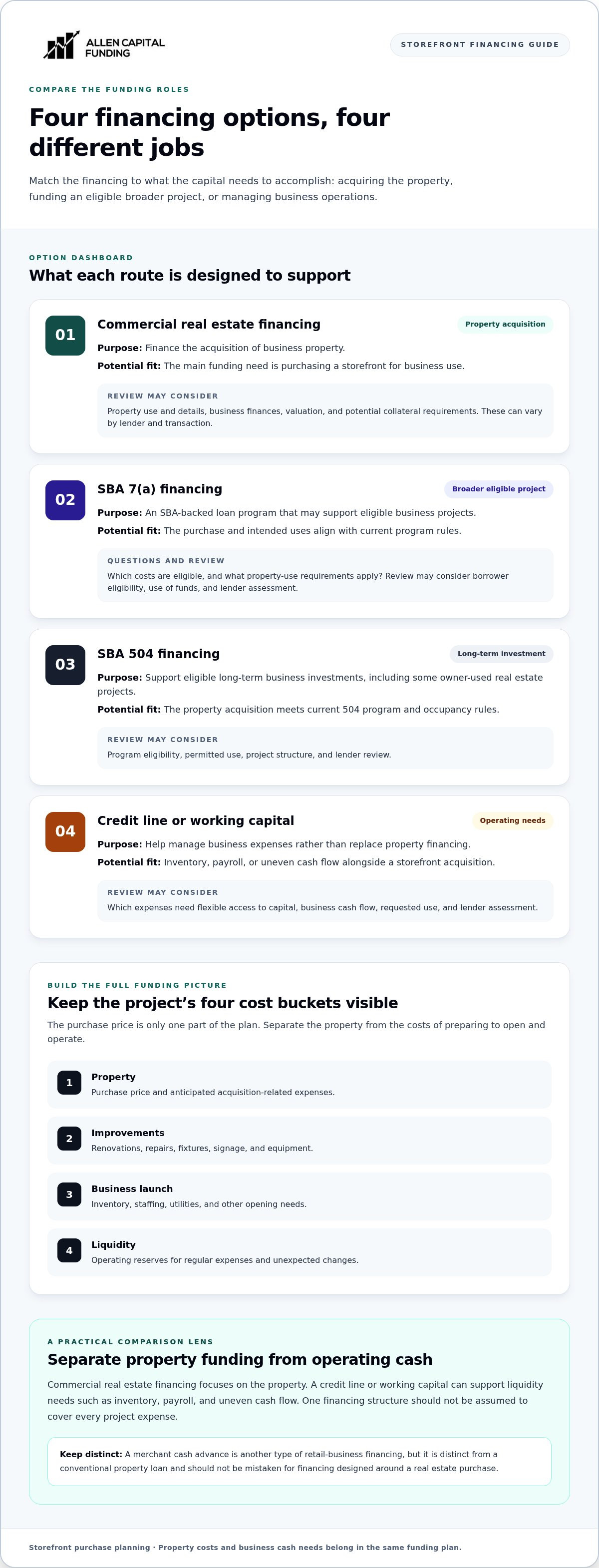
Property: Purchase price and anticipated acquisition-related expenses.
Improvements: Renovations, repairs, fixtures, signage, and equipment.
Business launch: Inventory, staffing, utilities, and other opening needs.
Liquidity: Operating reserves for regular expenses and unexpected changes.
Total project funding includes the property purchase and the related business needs required to open and operate. Keep those categories visible as you consider a loan for buying a retail storefront instead of assuming one financing structure will address every expense. A credit line or working capital can support liquidity planning, while commercial real estate financing focuses on the property. A Merchant cash advance is another type of retail-business financing, but it is distinct from a conventional property loan and should not be mistaken for financing designed around a real estate purchase.
Before exploring financing, clarify these business goals:
What will owning accomplish that leasing won’t?
How long do you expect to operate from this location?
Which property features are essential for customers and staff?
What improvements or equipment are needed before opening?
How much cash should remain available for inventory and operations?
Your answers create a practical starting point for evaluating the storefront and setting a funding target around the whole business plan, not just the building.
Compare financing options for buying a retail storefront
The right loan for buying a retail storefront depends on what the capital needs to accomplish. A property-focused loan and operating funds serve different purposes, even when they support the same business plan. Compare options by intended use, property fit, and the factors a lender may review.
Commercial real estate financing
Purpose: Finance the acquisition of business property. Potential fit: A buyer whose main funding need is purchasing a storefront for business use. Key questions: How will the property be used? Does the business plan support the purchase? Review factors: Property details, business finances, valuation, and potential collateral requirements, which can vary by lender and transaction.
SBA 7(a) financing
Purpose: A broad SBA-backed loan program that may support eligible business projects. Potential fit: A purchase where the broader project and intended uses align with current program rules. Key questions: Which costs are eligible, and what property-use requirements apply? Review factors: Borrower eligibility, use of funds, and lender assessment. Review current terms and requirements through the SBA loan programs resource.
SBA 504 financing
Purpose: Support eligible long-term business investments, including some owner-used real estate projects. Potential fit: A property acquisition that meets current 504 program and occupancy rules. Key questions: Does the business and property qualify under current requirements? Review factors: Program eligibility, permitted use, project structure, and lender review.
Credit line or working capital
Purpose: Help manage operating needs rather than replace property financing. Potential fit: A business planning for inventory purchases, payroll, or uneven cash flow alongside a storefront acquisition. Key questions: Which expenses need flexible access to capital? Review factors: Business cash flow, requested use, and lender assessment.
Match the financing route to the purchase
Commercial real estate financing centers on acquiring business property, but there is no single structure for every purchase. Lenders may consider how the storefront will be used, the business’s financial position, the property’s valuation, and available collateral. Those factors can shape the review, so the asking price alone does not determine the financing plan. Explore commercial real estate financing options with the full project in mind.
SBA 7(a) and 504 financing have different eligibility, permitted-use, and occupancy rules, which may change. Treat program descriptions as a starting point and verify current requirements before structuring an offer. For more information, review the SBA’s official program information.
Keep operating capital distinct
A credit line or working capital can help cover ongoing business needs, but it is not a substitute for financing designed around property acquisition. Separate the property request from the amount needed for inventory and day-to-day operations. Allen Capital Funding helps small businesses compare tailored funding options for real estate and operating capital as part of the same project plan.
Evaluate the storefront and financing together before committing
A property can look attractive on paper and still be a poor fit for your retail operation. Test it against your business plan: Does the layout support your products and customer flow? Can customers reach and access it easily? Does its condition match the improvements you are prepared to make? A mismatch with a core operating need can change the value of the purchase, even if the financing appears workable.
Whether evaluating commercial listings or purchasing commercial premises through specialists like Auction Property Ltd, be sure to assess the specific property with qualified professionals. Connect the building’s condition and intended use to your operating needs rather than relying on the asking price alone.
Test the purchase assumptions against business cash flow
Build a cash-flow model that includes projected sales, property-related expenses, utilities, staffing, insurance, inventory, and other ongoing costs. Account for seasonal changes if sales rise and fall during the year. Compare at least two scenarios: your expected case and a slower-sales period. Could the business still manage operating costs and projected debt obligations if revenue takes longer to build or dips temporarily?
Test the assumptions rather than relying on a single optimistic forecast. For example, model what happens if opening takes longer than planned or sales grow more slowly. The goal is to identify where cash could become tight and whether the funding plan leaves room to respond.
Sustainable property ownership depends not only on closing the purchase, but also on retaining enough liquidity to operate through changing business conditions.
Identify property and transaction risks early
Review the building’s physical condition, intended use, customer and delivery access, and planned improvements as separate diligence questions. An inspection may uncover work that changes the renovation budget. A valuation may differ from the price under consideration, affecting how the buyer and financing parties assess the transaction; in markets like Greater London, independent firms like Winfields Surveyors London provide commercial valuations to verify property values before moving forward. Either finding could call for a revised plan.
Condition: Identify visible repair needs and areas that warrant further evaluation.
Use: Confirm with qualified professionals that the planned retail activity fits applicable property and zoning requirements.
Transaction: Review title, environmental findings, and other property records for issues that could affect timing or costs.
Improvements: Define the scope and expected cost of work needed before the space can serve the business.
Legal, tax, zoning, environmental, and program-specific questions depend on the property and transaction. Have qualified professionals evaluate those matters rather than relying on general guidance. Share material findings with the financing team as they emerge. Consider a loan for buying a retail storefront alongside the property’s verified condition, the business’s cash-flow capacity, and any changes to the project budget.
Prepare a stronger retail storefront loan application
A well-organized application connects the business’s financial picture to the property purchase. Prepare a concise project summary and keep business records separate from property and transaction documents. Since requested information and underwriting criteria vary by lender and financing structure, treat this preparation sequence as a working file rather than a universal document checklist.
Organize the business and borrower information
Start with the business case for the storefront: explain how the space supports operations, what the business sells, and how the purchase fits its plans. Then organize financial records and ownership details that may be requested. Clear, current files make it easier to explain revenue patterns, existing obligations, and the business’s ability to manage the project.
Write a project summary. State what you plan to buy, how the business will use the space, and whether the project involves expansion, relocation, or a new operation.
Gather business financials. Prepare available financial statements, tax records, and bank statements. Label documents by period so a reviewer can follow changes in sales, expenses, and cash flow.
Document ownership and obligations. Organize ownership details and a clear summary of existing business debt or other financial commitments, as requested.
Explain the operating history. Describe the business’s revenue drivers, customer base, and seasonal patterns that put the numbers in context.
Show how the storefront supports the plan. Connect the property’s expected use to business activity. For a startup or expansion, prepare relevant supporting evidence for the proposed operation, since its documentation needs may differ from those of an established business.
Assemble the property and project information
Keep property materials in a separate folder. Include the purchase agreement and available property details, along with valuation materials, inspection findings, and other records as they become available. If improvements are planned, organize the scope and supporting estimates separately so acquisition costs are not confused with renovation needs.
Build a project budget that distinguishes the property purchase, improvements, fixtures or equipment, and operating capital. This gives the financing discussion a clearer view of how the pieces relate and where costs remain uncertain. Update the file if purchase terms, property information, or planned work changes. Present a loan for buying a retail storefront in the context of both the property and the business’s financial capacity.
Use a simple index to track what is ready, pending, or needs explanation. The records requested can differ by financing route, so tailor the final package to the specific application. Allen Capital Funding helps small businesses compare financing options while considering the property purchase and business liquidity needs together.
Explore commercial real estate financing guidance to shape a funding plan around your storefront project.
Move from storefront financing research to a tailored funding plan
A sound funding decision brings four parts of the project into focus: why the business wants to own the storefront, whether the property fits its operations, how much capital the full project needs, and how prepared the business is for a financing review. No single loan label answers all four questions. A clear project picture makes the next conversation more practical and focused.
Turn the project into a clear funding conversation
Summarize the property, its intended business use, the stage of the purchase, and the project’s broader capital needs. Note uncertainties such as planned improvements or costs that are still being estimated. Bring organized business financial information and property records so the discussion addresses the actual project, not just a general request for a loan for buying a retail storefront.
Commercial real estate financing and SBA options can be considered in light of the property and business plan. The relevant route depends on the proposed use, current program requirements, and lender review. Allen Capital Funding helps small businesses compare tailored financing options, including real estate and SBA financing, while considering business liquidity needs. This can help clarify what information is needed and which parts of the project warrant further evaluation. Financing outcomes, including eligibility, approval, rates, fees, and timing, depend on the application and financing structure.
Choose a practical next step with Allen Capital Funding
Before an online consultation, prepare a short project brief that answers:
What storefront are you considering, and what stage has the purchase reached?
How will the business use the space?
What financial or property information is ready to review?
Which parts of the project budget or funding plan remain uncertain?
These notes give the conversation a useful starting point and help distinguish questions about property acquisition from questions about operating capital, renovations, or financial readiness. If your plans change, update the summary so the funding discussion reflects the latest project assumptions.
Use an online consultation with Allen Capital Funding to discuss the storefront project and compare financing options tailored to your business’s needs. Bring the information you have, including open questions, to focus the discussion on practical next steps.
Keep the final decision grounded in the business purpose, property fit, project requirements, and readiness of your financial records. Plan for the acquisition without overlooking the cash your business will need to operate after closing.
Make your storefront plans actionable
A property purchase can shape how your business serves customers and grows over time. Turn your interest into a clear funding conversation: define what you want the storefront to make possible, identify open questions, and consider how the purchase fits alongside your operating needs. That context helps you evaluate a loan for buying a retail storefront without looking at financing in isolation.
Allen Capital Funding provides guidance on tailored business financing options, including commercial real estate and SBA loans. Discussing your project can help you explore how those options relate to your business goals and capital needs.
Discuss a tailored storefront funding plan with Allen Capital Funding and take a practical next step toward an informed purchase. Build the plan around the property, the full project budget, and the cash your business needs to keep operating.
Frequently Asked Questions
Can an SBA loan be used to buy a retail storefront?
Yes, an SBA loan may help finance a retail storefront if the borrower, property, and intended use meet the selected program’s current requirements. SBA 7(a) and 504 financing have different structures and rules, including requirements that can affect property use and occupancy. A business buying a space it will operate from should document its planned use and verify current eligibility before relying on a specific program.
Is a loan for buying a retail storefront secured by the property?
It may be, but collateral depends on the financing structure and lender requirements. A lender could secure a commercial real estate loan with a lien on the property, and some transactions may involve additional collateral or guarantees. Don’t assume the storefront alone secures the debt. Review proposed loan documents with qualified legal and financial professionals to understand what assets may be pledged and what obligations apply.
How much down payment do I need to buy a retail storefront?
There isn’t one down-payment amount for every purchase. Conventional commercial mortgages commonly require 20% to 30% down, while an SBA 504 project may require as little as 10%, depending on the borrower and project. These are general guideposts, not a promise or quote. The required contribution can depend on the property, financing structure, lender review, and program rules, so model available cash alongside closing and operating needs.
Can financing cover storefront renovations as well as the purchase?
It may, depending on the loan program, lender, project scope, and current rules for permitted uses. A buyer planning substantial improvements should prepare a defined work scope and cost estimates rather than combine renovation assumptions with the purchase figure. Some expenses, such as opening inventory or ongoing payroll, may need a separate capital plan. Understand how each proposed use would be treated before structuring the request.
Can a new retail business qualify for storefront financing?
A new business may be considered, but it won’t have an operating history to demonstrate established revenue. Lenders may instead review the owner’s financial profile, relevant experience, business plan, projected cash flow, and the proposed property’s role in the operation. A detailed forecast should explain its assumptions, such as expected customer demand and opening costs. Qualification depends on the full application and lender criteria, not one factor alone.
What happens if the storefront appraisal is lower than the purchase price?
A lower appraisal can prompt the lender to reassess the proposed transaction and the amount it may support. The buyer may need to consider options such as renegotiating the purchase price, contributing additional funds, or revisiting the financing structure. The appraisal doesn’t automatically determine the final outcome. Review the valuation with the lender and qualified real estate or legal professionals, and understand any contractual deadlines before deciding how to proceed.
Can I buy a vacant storefront and open my business later?
Possibly, but the planned timeline and future use matter. A lender may evaluate why the space will remain vacant, what work must happen before opening, and whether the business plan supports carrying property expenses during that period. For SBA financing, current program occupancy and use rules are especially relevant. Build a realistic opening schedule, account for costs before revenue begins, and verify the property’s permitted use with qualified professionals.



Comments