
How to Prepare for an SBA Loan Interview and What to Bring
A small-business loan interview typically lasts 30 to 90 minutes, and traditional banks or SBA programs typically take 2-6 weeks following the interview to provide a decision. Knowing how to prepare for an SBA loan interview means arriving ready to explain your business, support your funding request with clear records, and answer questions about repayment. The meeting is an important step, but underwriting continues afterward.
It’s natural to focus on what the lender will ask, especially when your business needs capital and the process feels unfamiliar. A clear explanation of your plans, organized financial documents, and thoughtful answers can help you approach the conversation with confidence. This guide covers what to bring, how to discuss credit issues or business challenges, which lender metrics may come up, and what to expect as your application moves through underwriting. You’ll also learn what to ask about the process and its timeline, so you can prepare for the interview and understand the steps that follow.
Table of Contents
1. Disclosing credit issues and business challenges
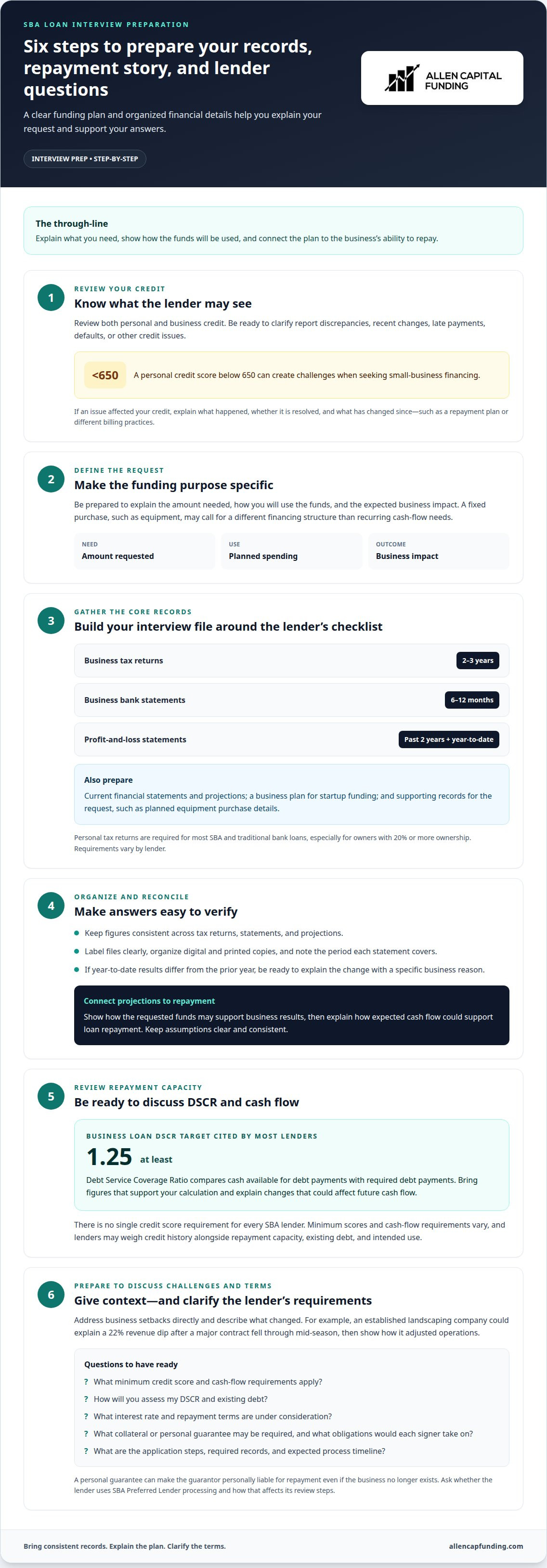
Start by reviewing your personal and business credit before the interview. Lenders use credit scores to assess credit risk and set interest rates. Most small-business loan requests involve inquiries into both personal and business credit. A personal credit score below 650 can create challenges when seeking small-business financing. Know what appears on your reports, and be ready to explain any discrepancies or recent changes.
Address past defaults, late payments, or other credit blemishes directly. Explain what happened, whether the issue is resolved, and what has changed since. For example, describe a repayment plan or a change in billing practices, if relevant. Apply the same approach to business setbacks. An established landscaping company might explain a 22% revenue dip last year after a major contract fell through mid-season, then show how it adjusted operations. Specific context helps the lender understand the record rather than guess at the cause.
Common reasons an SBA loan application may be declined include credit concerns, an unclear explanation of the funding request, or business information that does not support the proposal. Prepare a concise account of challenges and the steps you’ve taken to address them. Relate each explanation to current business conditions, not just past events. If revenue has changed, explain why and how the business is responding.
Before choosing a loan or credit product, define the purpose and timing of the funds. A fixed purchase, such as equipment, may call for a different financing structure than recurring cash-flow needs. Describe the amount needed, how you’ll use it, and the expected business impact. Personal credit matters too, because lenders may review it alongside business credit. If a personal issue affects your application, disclose it early and explain the circumstances. This preparation gives the interviewer a clearer view of your credit history, your plan, and your ability to move forward.
2. Application documents and checklist
Build your interview file around the lender’s checklist, then organize each document by type and date. Bring 2-3 years of business tax returns and 6-12 months of business bank statements. Personal tax returns are required for most SBA and traditional bank loans, especially for owners with 20% or more ownership. Requirements can vary, so ask for the lender’s document list before the meeting.
Prepare monthly or quarterly profit-and-loss statements covering the past 2 years, plus a year-to-date statement.
Gather current financial statements and projections showing how you’ll use the capital and repay the loan.
Bring a business plan if you’re seeking startup funding, with your business model and revenue plan clearly presented.
Include supporting records that explain the funding request, such as purchase details for planned equipment.
Keep figures consistent across your tax returns, statements, and projections. If your year-to-date profit-and-loss statement differs from the prior year, be ready to explain the change with a specific business reason. Label files clearly, keep digital and printed copies organized, and note the period each statement covers. This makes it easier to find a figure quickly when the interviewer asks about revenue, expenses, or cash flow.
Use your projections to connect the requested funds to business results. For example, show how a planned purchase could support capacity or revenue, then explain how expected cash flow could support repayment. Be prepared to refer to your financial statements, business plan, and projections during an underwriter interview. Keep assumptions clear and consistent so the lender can follow the reasoning behind your request.
Before submitting documents, ask the lender for an upfront checklist of application steps and required records. A financial check-up can also help you review your business finances and prepare a clearer picture of your funding needs.
3. Debt service coverage ratio and other lender metrics
Review the figures lenders use to assess repayment capacity before discussing your request. Most lenders want a business loan Debt Service Coverage Ratio (DSCR) of at least 1.25. DSCR compares cash available for debt payments with required debt payments. Bring financial figures that support your calculation, and explain changes that could affect future cash flow.
There isn’t one credit score requirement that applies to every SBA lender. Minimum scores and cash flow requirements vary by lender, so ask which standards apply to your application. Also ask how the lender weighs credit history alongside repayment capacity, existing debt, and the loan’s intended use.
The SBA helps guarantee some loans that might otherwise not qualify. An SBA Preferred Lender has authority to make decisions on the SBA’s behalf, which can help shorten the time to close. Ask whether the lender uses SBA Preferred Lender processing and how that affects its review steps. Lender Match participants offer SBA-approved loans, and many also offer conventional loans.
Be ready to discuss personal finances, collateral, and guarantees accurately. Lenders may require an asset, such as a home, car, inventory, or other property, as collateral. A personal guarantee can make the guarantor personally liable for repayment even if the business no longer exists. Ask what collateral or guarantee the proposed loan may require and what obligations each signer would take on.
Use the interview to clarify the lender’s criteria and process. Ask:
What minimum credit score and cash flow requirements apply?
How will you assess my DSCR and existing debt?
What interest rate and repayment terms are under consideration?
What collateral or personal guarantee may be required?
How long might the process take from application to funding, and what could help keep it moving?
When comparing a lender match, consider whether the product type and eligibility criteria fit your funding purpose. A focused request helps the lender explain whether an SBA-backed or conventional option fits your business needs.
4. Loan interview and underwriting timelines
Plan for the interview and the review that follows as separate stages. A small-business loan interview typically lasts 30 to 90 minutes. Use that time to explain your business model, revenue streams, customer base, and growth plans. Keep your answers tied to the figures and projections in your application. If an underwriter asks for clarification, ask questions and request guidance during the interview.
The interview is not the final funding step. Underwriting may involve reviewing documents, evaluating repayment capacity, and requesting more information. SBA-guaranteed loans require additional steps during closing, so approval and funding are not necessarily the same milestone. Ask the lender to explain what happens after the interview and what remains before closing.
Decision timing depends on the type of lender and program. Alternative lenders may take 1-3 business days following the interview to make an approval decision. Traditional banks or SBA programs typically take 2-6 weeks following the interview to provide a decision. These are decision timelines, not promises of when funds will arrive. Ask how long the full process from application to funding may take, and whether you can do anything to keep it moving.
Ask specific questions to clarify the schedule: when the lender expects to review your file, how it will notify you about missing documents, and what could cause delays. If the lender requests another record, confirm the format and due date, then respond promptly. Keep a dated record of requests and submissions so you can track outstanding steps without sending duplicate materials.
After the meeting, send a thank-you email within 24 hours. Briefly recap any requested follow-up documents and confirm your next step. For help discussing SBA financing and process expectations, talk with an SBA loan financing team.
Allen Capital Funding: Credit Lines
Allen Capital Funding helps businesses explore funding options that align with their financing needs. If preparing for the interview has clarified that you need ongoing access to funds, a Credit Line may be worth discussing. For a defined project or another business need, SBA Loans, Working Capital, or Real Estate financing may also fit.
Before pursuing an option, organize the facts lenders will evaluate: the purpose of the funds, your financial position, and how repayment fits your business cash flow. A focused discussion can help you compare financing paths with your business plans while keeping the interview and underwriting steps in view.
Contact Allen Capital Funding to discuss your business financing needs.
Turn Your Interview Preparation Into a Clear Next Step
Treat the interview as a planning checkpoint, not simply a test of your application. Knowing how to prepare for an SBA loan interview starts with connecting the financing decision to a clear business priority. Identify what progress the funds should support, what conditions would make the financing workable, and which questions you still need answered before moving ahead.
After the meeting, write down follow-up requests, open questions, and next steps. Compare the lender’s proposed process with your business timeline, then consider how repayment obligations fit your operating plans. This gives you a practical basis for evaluating the opportunity and keeping your financing decision aligned with the business you’re building.
If you’re ready to discuss your financing needs and possible next steps, start a conversation with Allen Capital Funding. A clear understanding of how to prepare for an SBA loan interview can help you approach your next financing decision with purpose and confidence.
Frequently Asked Questions
What Is a Small Business Loan Interview?
A small-business loan interview is a lender conversation about your application and business financing needs. The interviewer may ask you to clarify details, explain decisions, or expand on information in your file. Treat it as a working discussion, not a presentation to memorize. Keep your answers consistent with your records, and pause to ask for clarification if a question is unclear.
What happens next?
After the interview, the lender reviews your file and may request clarification or additional records. Keep one log of each request, who is handling it, the date you sent it, and the version submitted. If new information changes a prior answer, explain the difference directly rather than sending an unexplained replacement. The lender then communicates its decision and any remaining conditions before closing.
What should I ask a lender?
Ask how the lender will share updates, who will handle your application, and what could delay the review. Clarify whether the proposed terms include a prepayment penalty or grace period, and under what circumstances the lender can demand full repayment. Ask for a plain-language explanation of any unfamiliar term before deciding. Keep the answers with your application notes for later comparison.
What documents should I bring to an SBA loan interview?
Bring the records requested by the lender, organized so you can find them quickly. Keep business and personal documents in separate folders, label each file by type and reporting period, and clearly mark any revised version. A short index can help you locate a specific record during the discussion. Keep a secure digital copy available if the interviewer asks for an electronic file.
How should I explain my business plan and use of loan funds?
Describe the business opportunity first, then connect the proposed spending to the work needed to pursue it. For example, explain how additional production capacity could help meet customer demand, including the people, materials, or operating changes involved. Identify the assumptions behind your plan and what you would adjust if demand develops differently. This gives the lender useful context for your projections.
What financial statements and cash flow projections do SBA lenders expect?
Lenders use financial statements and projections to understand operating performance and whether cash flow can support debt payments. Make sure your forecast assumptions align with actual business patterns, including seasonal sales, customer payment timing, and recurring expenses. Explain unusual changes rather than leaving them unexplained. A useful projection shows how expected cash enters and leaves the business over time.


Comments