
How Long Does SBA Loan Approval Take? Prepare for the Process
Plan on 30 to 90 days from application to funding for a typical SBA loan. If you’re asking how long SBA loan approval takes, remember that the full timeline includes more than the lender’s decision: documentation, underwriting, review, and closing all affect when funds arrive.
A long wait can be challenging when your business faces a time-sensitive expense or growth opportunity. Knowing which stages take time and what can slow them down makes the process easier to plan for.
This guide explains what affects how long SBA loan approval takes and how organized records and prompt replies can help keep an application moving. It also covers ways to prepare your paperwork and financing alternatives to consider when an SBA timeline doesn’t fit your needs.
Table of Contents
SBA loan approval timeline: How long do you have to wait?
A typical SBA loan takes 30 to 90 days from application to funding. The exact wait depends on the loan program and whether you’re counting approval, closing, or money arriving in your account.
Overall Approval and Funding Timeline
The full timeline runs from submitting a loan application to receiving the funds. Approval is only one milestone, so it’s important to distinguish a decision from capital becoming available.
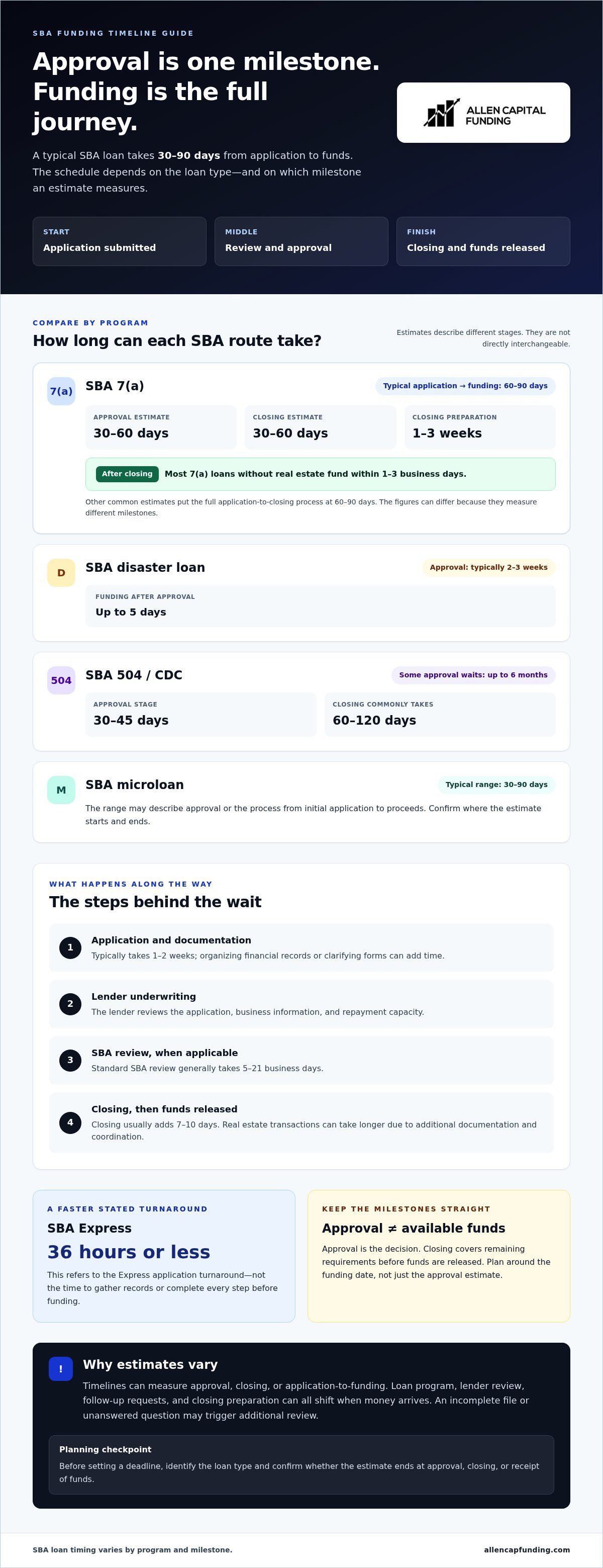
For an SBA 7(a) loan, one typical estimate for approval is 30 to 60 days, while the application-to-funding process commonly takes 60 to 90 days. These ranges describe different milestones, so check which stage a timeline refers to when planning for working capital or another business need.
Several stages make up the loan process: completing the application, lender underwriting, SBA review when applicable, and closing. Standard SBA review generally takes 5 to 21 business days, and closing usually adds 7 to 10 days. Delays at one stage can move the funding date even if another stage finishes quickly.
Approval and Closing Timelines
Approval means the lender or SBA has reviewed the application and made a decision. Closing covers the remaining requirements before funds are released. Track these milestones separately so you don’t mistake a decision date for the date the money will be available.
For a standard SBA 7(a) loan, estimates range from 30 to 60 days to close, while another common estimate places the full application-to-closing process at 60 to 90 days. The figures differ because timelines can measure different parts of the process and depend on lender review, follow-up requests, and closing preparation.
Closing preparation alone may take 1 to 3 weeks in a typical timeline. After closing, funding for most 7(a) loans without real estate occurs within 1 to 3 business days. A property-related transaction can take longer because the deal may involve additional documentation and coordination.
Timelines by SBA Loan Type
SBA program type changes the expected wait, so compare timelines for the specific financing you’re pursuing. Disaster loans, 504/CDC loans, and microloans follow different approval and funding paths.
A typical SBA disaster loan approval takes 2 to 3 weeks. After approval, funding can take up to five days. For an SBA 504/CDC loan, the approval stage may take 30 to 45 days, while closing commonly takes 60 to 120 days. Some 504 borrowers have waited up to six months for approval.
SBA microloan timelines also vary by estimate: a typical approval range is 30 to 90 days, and the process from initial application to proceeds commonly falls within that range. Before setting a deadline, identify whether the estimate starts at application or approval and ends at the decision, closing, or receipt of funds.
Application forms and supporting documents
Preparing the application package takes time before underwriting can begin. Application submission and documentation typically take 1-2 weeks, especially when financial records need organizing or lender forms require clarification. Prepare documents together so the sba lender can review a consistent picture of the business, its cash flow, and its repayment capacity.
Start with the required forms. According to the U.S. Small Business Administration, SBA loan applications require completing SBA Form 1919, along with any additional forms required by the lender. The lender’s forms can vary with the loan request and its review process, so use the specific instructions provided for your application.
Financial records help the lender evaluate business performance and repayment ability. Prepare two to three years of financial statements and business tax returns covering 2-3 years. Use financial documents no older than 90 days, so the review reflects current business conditions rather than outdated figures.
Financial statements: Organize two to three years of statements and make sure the periods are clear.
Tax returns: Gather the requested 2-3 years of business returns.
Cash flow projections: Show how expected business income supports repayment.
Personal and business records: Have tax returns and other lender-requested documents ready together.
Application forms: Complete Form 1919 and the lender’s additional paperwork.
For a real estate transaction, property-related records may also form part of the lender’s review. Keep those materials organized with the financial package, and distinguish current records from older supporting documents. Businesses exploring real estate financing can benefit from understanding how property details fit into a funding request.
An incomplete application can take longer to review. Missing pages, inconsistent figures, or unanswered questions may prompt follow-up. For example, if a tax return doesn’t align with a financial statement, the lender may ask for an explanation before underwriting continues. Check that business names, reporting periods, and figures match, and respond promptly to requests for clarification.
An SBA Express application has a faster stated turnaround than the broader document-gathering process: its application turnaround is 36 hours or less. That figure refers to the Express application turnaround, not the time needed to assemble records or complete every step before funding. A prepared file still matters because the lender needs enough information to make its credit decision.
Before applying, set aside time to gather the forms, recent financial documents, and tax records you’ll need. A well-organized package gives the lender a clearer basis for review and can reduce avoidable back-and-forth.
Borrower preparation and responding to lender requests
Preparation influences how smoothly an SBA application moves through lender review. Finding an SBA lender takes about 2 days, while gathering documentation and applying can take up to 30 days. Treat those as separate parts of the schedule: lender matching doesn’t mean the application package is ready to submit.
Before submitting, organize financial records, tax returns, cash flow projections, and explanations for unusual changes. Keep documents current, with financial records no older than 90 days. A clear file helps the lender assess credit, repayment capacity, and the business purpose without pausing to reconcile missing or inconsistent information.
After submission, respond to requests promptly and send complete answers. A lender asking about a large deposit, a change in revenue, or an existing debt needs enough context to continue its review. Complete documentation and quick responses can reduce the process by 10-20 days compared with applicants who delay. Track each request, its due date, and the materials sent.
Answer the full request: Include every page or explanation the lender asks for.
Keep figures consistent: Match financial statements, tax returns, and cash flow projections.
Explain changes clearly: Provide context for unusual revenue shifts or large account activity.
Submit promptly: Delayed follow-up can hold up underwriting and later steps.
The Preferred Lender Program (PLP) can change who handles parts of the SBA review. The SBA may authorize lenders to process, close, service, and liquidate certain 7(a) loans without prior SBA review. Preferred Lender status can affect approval timing because delegated authority allows eligible lenders to handle specified decisions directly.
A PLP lender can often close an SBA 7(a) loan in 20 to 45 days from application. That is a possible timeline, not a separate guarantee of approval. The lender still evaluates the business’s credit profile, documentation, and ability to repay, and closing requirements remain part of the process.
SBA Express applications follow another decision path: the lender makes the credit decision. The SBA’s Express response timeline is 36 hours, but that figure describes the SBA response, not the entire application-to-funding process. A borrower still needs to submit the requested information and complete the lender’s review and closing requirements.
Delegated review still requires a complete application. Whether a lender uses PLP authority or handles an Express request, accurate records and timely replies help its team move the file forward.
Factors that affect approval time
SBA applications don’t all move at the same pace. Lenders review different businesses, records, and transactions, and timing is often affected by incomplete information, follow-up requests, underwriting complexity, and collateral or property reviews. These factors can affect both the review before approval and the closing process afterward.
Documentation is a key driver. Financial statements that don’t align with tax returns, missing explanations for unusual transactions, or outdated records can prompt additional review. Each follow-up creates another task for the borrower and lender. Complete documentation and prompt replies can reduce the process by 10-20 days compared with applicants who delay.
Credit can also affect how much review a file needs. SBA applicants with personal credit scores below 650 may face additional scrutiny that slows the review. Lenders assess the full application, including the business’s financial picture and ability to repay. A credit concern may lead to requests for clarification or supporting records, extending the time before a decision.
Transaction complexity matters, especially when the request involves real estate. Property-related applications can require coordination around property details and third-party information. Complex SBA loan deals, particularly real estate transactions, can take 60 to 120 days to close, depending on documentation and lender efficiency. Allowing third-party companies timely access to the property or information they need can help keep the process moving.
Collateral can add review work because the lender needs to understand which assets support the request and how they relate to the financing. A real estate transaction, for example, may involve property records and outside parties, while another application may focus more on business financial statements. The type and details of the transaction shape which reviews are needed.
Application completeness: Missing records or inconsistent figures can trigger follow-up.
Borrower response time: Prompt, complete replies help prevent avoidable pauses.
Credit review: A score below 650 may bring additional scrutiny.
Property and third-party coordination: Delays in access or information can slow real estate review.
Lender workload: Application volume and follow-up questions can affect the pace of review.
The effect of these factors varies by application. Organized records can help prevent document-related pauses, while a complex property transaction may require more coordination. Review your financial statements for consistency, gather relevant property information early, and respond promptly after submission. These steps address common sources of delay, though every SBA loan follows its own process.
What documents are needed for an SBA loan application?
An SBA application combines forms and business records that help the lender assess operations, finances, and repayment capacity. Requirements vary by lender and request, but preparing core records in advance makes it easier to answer questions as they arise.
Start with the application paperwork. According to the U.S. Small Business Administration, SBA loan applications require completing SBA Form 1919, along with any additional forms required by the lender. Read each form carefully, use consistent business details, and complete every section that applies. A blank field or conflicting information can prompt a follow-up before review proceeds.
Financial records show how the business has performed and whether projected cash flow can support repayment. Applicants are advised to prepare two to three years of financial statements. Lenders typically request 2-3 years of business tax returns, while current financial documents should be no older than 90 days. Keeping the reporting periods clear helps the lender compare statements with tax filings.
Application forms: Complete SBA Form 1919 and lender-specific forms.
Business tax returns: Organize the requested 2-3 years in chronological order.
Financial statements: Prepare two to three years, with each period clearly labeled.
Recent financial records: Use documents no older than 90 days.
Cash flow projections: Show expected income and how it supports repayment.
Personal and business tax returns: Keep both available for lender requests.
Organizing documents is as important as gathering them. Label each file by type and reporting period, then check that names and figures match across statements and tax returns. If a statement covers a different period than its corresponding return, include a clear explanation instead of leaving the lender to reconcile the difference.
Keep a list of documents submitted and requests still outstanding. Mark each item as complete, pending, or needing an update. When the lender asks for clarification, provide the relevant record with a concise explanation. This makes the application easier to track, especially when several financial periods are under review.
For a property-related request, organize relevant real estate information with your business records. The lender may need to understand how the property relates to the financing purpose, so keep supporting materials easy to find and consistent with the application.
Preparing these materials can help you present a clear funding request. Explore real estate financing options if property is central to your business funding plans.
Allen Capital Funding: Credit Lines
Allen Capital Funding helps businesses explore SBA Loans and Credit Lines in light of their funding needs and timing. If an SBA timeline doesn’t fit an upcoming expense, a Credit Line may be an option for accessing working capital. For longer-term plans involving property, Real Estate financing may also be relevant.
The right financing depends on what the funds need to accomplish and how the option fits your plans. Allen Capital Funding can help you review these choices and identify a direction that aligns with your business priorities.
Contact Allen Capital Funding to discuss your funding needs.
Choose a Funding Path That Fits Your Next Move
Consider your financing timeline as part of the wider business decision. The question isn’t just how long SBA loan approval takes, but whether the funding structure suits the opportunity, cash flow, and pace of your plans. Clarifying those priorities can help you decide what to explore next.
Allen Capital Funding offers SBA Loans, Credit Lines, and Real Estate financing. As you weigh these options, consider what the capital needs to accomplish and how repayment would fit your business. A conversation can help you explore a direction aligned with your goals and practical timing needs.
Contact Allen Capital Funding today to discuss your business funding needs. With a defined purpose and a thoughtful financing plan, you can take the next step toward your business’s growth with greater clarity.
Frequently Asked Questions
How Long is the SBA Loan Process?
The full SBA loan process typically takes 30 to 90 days from application to funding. If your question is, “How long does SBA loan approval take?” remember that the answer depends on which milestone you mean. The full window includes underwriting, any SBA review, closing, and disbursement. Plan around when funds need to be available, since property-related transactions or additional lender questions can extend the timeline.
Can SBA loan be expedited?
Yes. Qualifying smaller loans may use expedited SBA processing, with a turnaround as short as 36 hours. SBA Express applications also have a 36-hour SBA response timeframe, but that response isn’t the same as receiving funds. The lender makes the credit decision for an Express loan, and the application, review, closing requirements, and funding steps remain part of the overall process.
Does SBA loan take longer than a bank loan?
An SBA loan isn’t automatically slower than a bank loan. Timing depends on the lender’s underwriting and closing process, and on whether SBA review is part of the application. Some SBA lenders have delegated authority to handle specified stages without prior SBA review. For a useful comparison, assess the lender’s decision, closing, and funding milestones separately instead of comparing a bank decision date with an SBA funding date.
How long does SBA loan underwriting take?
SBA lender underwriting typically takes 14 to 21 days. During this stage, the lender assesses the business’s financial position, cash flow, credit, and ability to repay. A complicated transaction or a file that requires clarification can add review time. For example, a lender may need to reconcile a financial statement with tax filings before completing its assessment, so keep explanations and supporting records organized.
How long does it take for a decision to be made?
A borrower commonly waits 1 to 3 weeks for an SBA loan decision. This is the decision stage, not the full period until funds are available. The lender’s review of credit, repayment capacity, and the application package shapes the timeline. Keep track of requests for additional information, since an unanswered question can hold up the review even after the original application has been submitted.
How long does it take to close an SBA 7(a) loan in 2026?
A standard SBA 7(a) loan typically takes 30 to 60 days to close from commitment. That period begins after the lender’s commitment, so it doesn’t represent the full application-to-funding timeline. Closing involves completing required conditions and documentation before disbursement. If you’re working toward a business purchase or another scheduled transaction, distinguish the commitment date from the date you need funds available.
Once approved, how long does it take to get SBA loan funds?
Approval alone doesn’t release the money; closing conditions must be met first. SBA loan funds are typically disbursed within 24 to 48 hours after all closing conditions are met. For most SBA 7(a) loans without real estate, funding occurs within 1 to 3 business days of closing. Ask which remaining conditions apply to your transaction, since they determine when disbursement can begin.
How long does SBA 7(a) loan approval take?
Typical SBA 7(a) approval estimates range from 30 to 60 days, while the broader application-to-closing process commonly takes 60 to 90 days. If you’re asking, “How long does SBA loan approval take?” separate the decision milestone from later steps. Approval means a decision has been made; closing and disbursement follow. Identify whether a timeline starts at application or commitment and ends at approval, closing, or receipt of funds.



Comments