
Down Payment for a Commercial Real Estate Loan: How Much
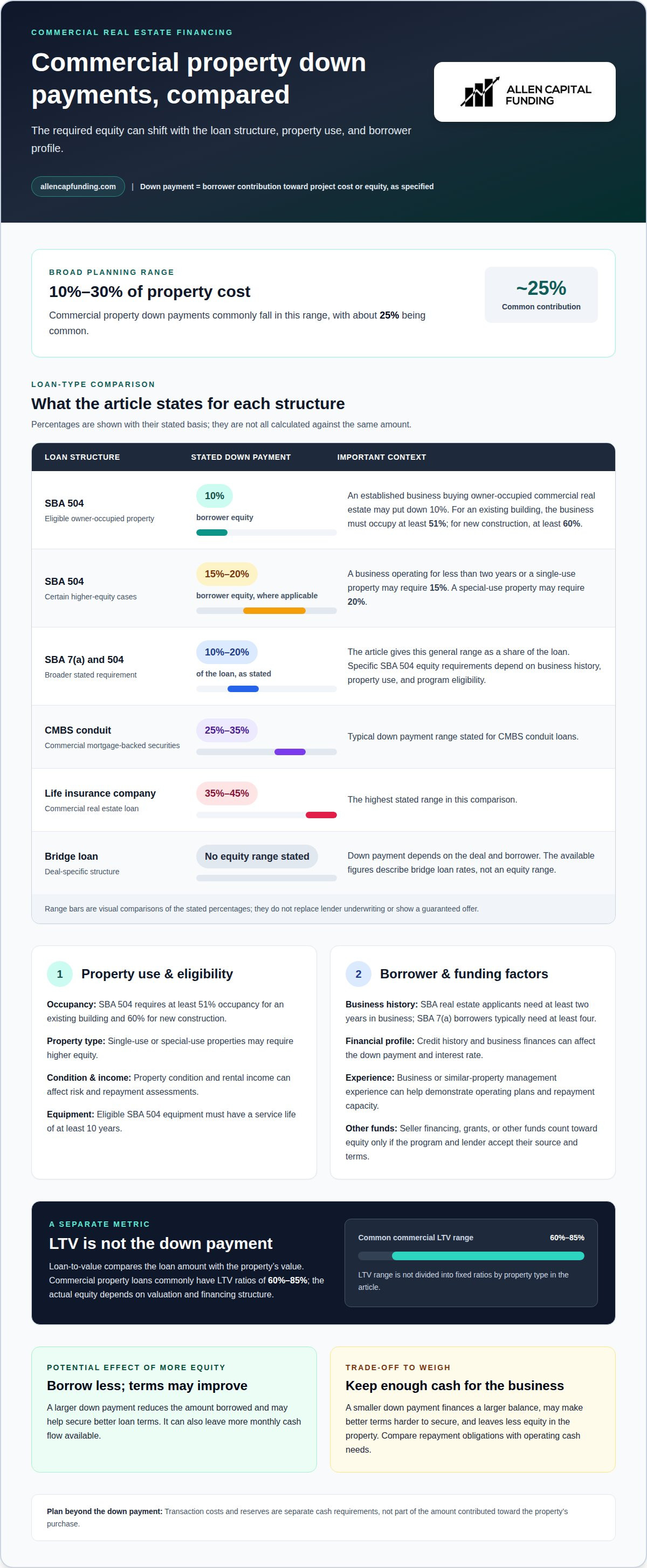
A down payment for a commercial real estate loan is typically 10% to 30% of the property’s cost, with about 25% being common. SBA 504 financing may allow an eligible business to put down 10% for owner-occupied commercial real estate. The amount depends on the loan type, property use, loan size, and your financial profile.
That range can feel broad when you’re planning a purchase. Lenders assess different risks and loan structures, so the down payment for one property or borrower may not suit another.
This guide explains what commercial real estate loans are and compares down payment ranges across common loan types, including SBA 504 and conventional financing. You’ll also learn how a larger down payment may affect loan terms and what factors can shape the amount you need to bring to the transaction, helping you assess your options with a clearer view of the financing ahead.
Table of Contents
What is a commercial real estate loan?
A commercial real estate loan can finance a business property purchase, construction, or a related project. The required equity depends on the loan structure, how the property will be used, and the borrower’s financial profile.
Down Payment Requirements by Loan Type
Equity requirements are the portion of a project’s cost the borrower contributes rather than finances. Comparing structures shows how much cash the purchase may require upfront. CMBS conduit loans typically require 25-35% down, while life insurance company loans typically require 35-45%. Bridge loan down payment requirements depend on the deal and borrower; the available figures describe bridge loan rates, not an equity range.
SBA 7(a) and 504 loans require a down payment of 10-20 percent of the loan. For established businesses buying owner-occupied commercial real estate, SBA 504 financing requires 10% borrower equity. A 504 purchase of an existing building requires the business to occupy at least 51%; new construction requires at least 60%. A single-use property or a business operating for less than two years may require 15% down.
Borrower Factors Affecting Down Payments
Borrower factors help lenders assess repayment risk and set loan terms. A borrower’s financial history can affect both the interest rate and down payment required, so credit history and business finances matter alongside the property. SBA real estate loan applicants need at least two years in business, while SBA 7(a) borrowers typically need at least four years in business.
Experience managing a business or similar property can help show how the borrower plans to operate the asset and support repayment. These factors shape a lender’s assessment, but do not replace program requirements. Borrowers must also meet the chosen loan’s criteria and show that the project’s financing fits their business plan and repayment capacity.
Seller financing, grants, or other funds count toward equity only if the loan program and lender accept their source and terms. Document each funding source as part of the transaction, and clarify how it will be treated before relying on it for the down payment.
What’s the Average Down Payment on a Commercial Property Loan?
A commercial property loan finances real estate used for business, including an owner-occupied building or an eligible rural project. Down payments commonly range from 10% to 30% of the property’s cost, with about 25% typical.
Estimating Down Payments and Loan-to-Value Ratios
Loan-to-value (LTV) compares the loan amount with the property’s value; commercial property loans commonly have LTV ratios of 60% to 85%. That range helps estimate the borrower’s equity, but the actual amount depends on the lender’s valuation and financing structure. Property type can affect underwriting, but the available LTV range isn’t divided into fixed ratios for each type.
Owners applying for SBA financing can compare a 504 structure with USDA Business and Industry financing. SBA 504 real estate financing may use 10% borrower equity, while USDA B&I loans are typically guaranteed by the USDA up to 80%. USDA B&I applicants must locate the property in an eligible rural area. These programs have different structures, so the guarantee amount is not the same as the borrower’s down payment.
Property and Borrower Factors
Occupancy, property condition, rental income, and business history help shape how lenders assess a property and its ability to support repayment. For SBA 504 financing, a business purchasing an existing building must occupy at least 51%. A special-use property may require 20% borrower equity, while property condition and rental income can affect the lender’s assessment of project risk and repayment capacity.
Some fixed assets may also fit SBA 504 financing: eligible equipment must have a service life of at least 10 years. A newer business may face a higher equity requirement; SBA 504 financing may require 15% when the business has operated for less than two years. The right investment structure depends on the property’s use, the borrower’s finances, and program eligibility. Explore commercial real estate financing as you assess options.
How a larger down payment may affect loan terms
A larger down payment reduces the amount borrowed and may help secure better loan terms. It can also lower the amount financed, leaving more monthly cash flow available.
Commercial mortgage terms vary by loan structure. Commercial mortgage interest rates are estimated at 5% to 7.5% as of May 2026, and commercial mortgages may have terms of up to 30 years. A lender weighs the property and borrower when setting terms, so compare the total repayment structure, not just the minimum down payment.
Loan Amounts and Repayment Terms
Loan amounts and repayment periods determine how much capital remains available for a business after a property purchase. SBA 7(a) real estate loans can reach $5 million, with qualifying repayment terms up to 25 years. The bank portion may run from 5 to 25 years, while the CDC second mortgage has a 25-year term. These options help borrowers compare financing horizons.
Risks of a Smaller Down Payment
A smaller down payment means financing a larger balance, which can increase repayment obligations and may make better terms harder to secure. The impact depends on the loan structure, interest rate, and repayment period. Compare the payment with the cash you need to retain for business operations.
A smaller down payment also means starting with less equity in the property. If business income or property performance weakens, scheduled mortgage payments are still due. Weigh that risk against the benefit of keeping cash available for operating expenses and other business assets.
Budget for transaction costs and reserves as well as the down payment. These are separate cash requirements, not part of the amount contributed toward the property’s purchase.
Down payment ranges by commercial real estate loan type
The financing structure can shift the required equity from 10% to 45%. Comparing loan types helps you estimate how much capital to set aside before evaluating a property.
For conventional commercial property acquisition loans, down payments typically range from 20% to 25% of the total cost. Traditional term loans may require 25% to 30%, while CMBS conduit loans typically call for 25% to 35%. Life insurance company financing generally requires a larger contribution, typically 35% to 45%. Agency multifamily loans often fall between 20% and 25%.
SBA 504 financing can start at 10% borrower equity for eligible owner-occupied real estate. A single-use property or a business operating for less than two years may require 15%. These figures make SBA financing a possible route for businesses seeking to preserve capital, but occupancy and project eligibility shape whether it fits.
USDA Business and Industry financing is another structure for eligible rural projects. Its guarantee can cover up to 80% of the loan, but that percentage is not the borrower’s down payment. Property location and underwriting determine how the financing is structured.
There is no single state-by-state down payment schedule. Lenders assess the loan type, property, borrower’s credit, and business income, so requirements can vary even for similar purchases.
Start by comparing loan types, then consider how the property and borrower profile affect the terms. A larger equity contribution can reduce the amount borrowed; a smaller one may preserve more working capital. Funds committed to the purchase will not be available for other business needs.
Compare your property plans with commercial real estate financing options to identify a structure aligned with your purchase and capital priorities.
Allen Capital Funding: SBA Loans
Allen Capital Funding helps business owners explore SBA Loans and Real Estate financing for commercial property goals. If you’re comparing an SBA option with another loan structure, consider how your planned down payment, property use, and business finances fit the purchase.
The right financing choice affects more than the cash you bring to closing. It can determine how much capital remains for operations and how the property supports your business plans. Allen Capital Funding offers guidance on funding options tailored to your business needs, including SBA Loans and Real Estate financing.
Contact Allen Capital Funding to discuss financing for your commercial property plans.
Set Your Property Plans in Motion
Choose a financing structure that supports both the property purchase and the business you’ll operate afterward. Your down payment for a commercial real estate loan is one part of the decision. Consider how much capital you’ll have left for other priorities. The right balance depends on your plans, property, and financing needs.
Allen Capital Funding offers Credit Lines, SBA Loans, and Real Estate financing to support business funding goals. If you’re ready to explore how commercial property financing could fit your next move, contact Allen Capital Funding to discuss your plans.
A clear financing conversation can help turn your purchase goals into a practical plan. Take the next step with Allen Capital Funding to explore options for your business.
Frequently Asked Questions
How do commercial mortgages work?
A commercial mortgage finances property used for business and is generally repaid through scheduled payments. The property secures the loan, and the agreement sets the interest rate, repayment period, and payment structure. Some commercial borrowers pay principal and interest before a remaining balance comes due as a lump sum. Review the full repayment schedule to understand regular payments and any balance due later.
How is a down payment determined?
A down payment is the borrower’s contribution toward the property or project cost, with the rest funded by the loan. Lenders assess the property’s value, intended use, loan structure, and borrower’s finances to determine how much they will lend. Compare the approved loan amount with the transaction cost to estimate your contribution, then budget separately for other closing costs.
How much can I borrow and what will my payments look like?
How much you can borrow depends on the property, loan program, and your ability to repay. Payments reflect the principal, interest rate, and repayment schedule. A longer repayment period spreads principal over more time, while a balloon structure can leave a larger balance due later. Estimate cash flow using the proposed payment schedule and your business’s expected income.
Is SBA 504 really 10% down?
It can be: an established business acquiring owner-occupied commercial real estate may contribute 10% borrower equity under SBA 504 financing. That amount can rise to 15% for a single-use property or a business operating for less than two years. The project must also meet program requirements, including business occupancy. Review the property’s use and your eligibility alongside the down payment figure.
How much down payment is required for a commercial real estate loan?
Commercial property loan down payments typically range from 10% to 30% of the property’s cost, with about 25% being typical. The actual amount depends on the financing structure, property use, loan size, and borrower’s financial profile. To estimate your contribution, apply the relevant percentage to the project cost, then keep closing expenses and operating reserves separate.
Typical commercial property loan-to-value ratios by property type
Commercial property loans commonly have loan-to-value ratios of 60% to 85%. Property type can affect underwriting.



Comments