
Choose a Line of Credit or Term Loan for Unexpected Costs
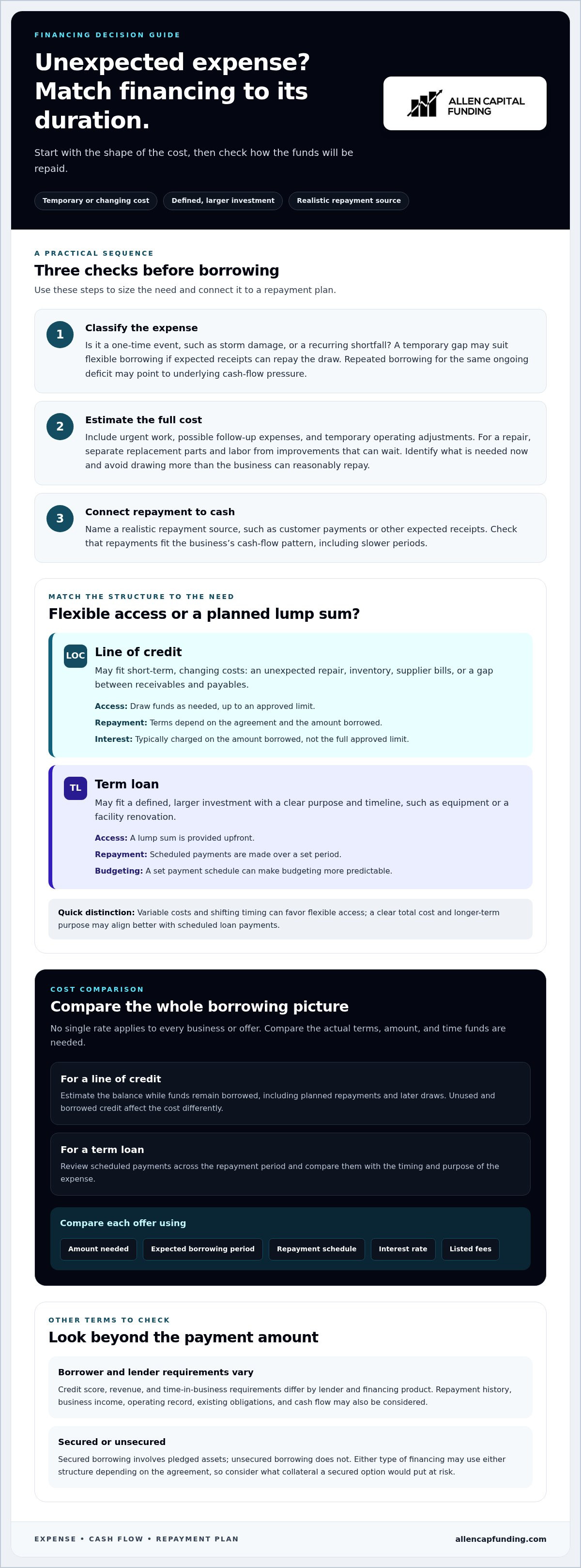
A one-time expense doesn’t automatically call for a term loan. Knowing when to use a line of credit instead of a term loan depends on what the money needs to cover. A line of credit can suit short-term, changing needs such as an unexpected repair, inventory, or a seasonal cash-flow gap. A term loan may suit a larger investment with a defined purpose and timeline. A line typically charges interest only on the amount borrowed, while a term loan provides a lump sum with scheduled repayments.
Choosing between them can be difficult when cash is tight. Flexible access can help manage uneven expenses, while predictable payments can make budgeting easier. Start by considering whether the cost is one-time or ongoing, and how repayment would fit during slower periods.
This article explains how each option can cover operating expenses and unexpected costs, why seasonal businesses may value funds they can draw and repay as needed, and what can affect the cost of a line of credit. The comparison and decision guidance can help match the financing structure to the expense, cash-flow pattern, and repayment plan.
Table of Contents
Covering short-term operating expenses
A line of credit can cover short-term operating costs when timing matters. A business might draw funds to purchase inventory, pay a supplier, or bridge a gap between receivables and payables. Revolving access can help manage several smaller expenses without borrowing the full approved limit at once.
A term loan works differently: it provides a lump sum upfront, followed by scheduled payments over a set period. That structure may suit a defined investment, such as equipment or a facility renovation, better than recurring bills. The key question is whether the expense is temporary and variable or planned and substantial.
Repayment schedules differ: a line of credit’s repayment terms depend on its agreement and borrowed balance. A term loan has scheduled payments over a set period, which can make budgeting more predictable.
Credit limits and loan amounts differ: a line of credit provides access up to an approved limit, and the business draws what it needs. A term loan provides an upfront lump sum; its amount reflects the financing request and approval.
For a large, one-time purchase or long-term investment, a term loan may be a better fit because it funds a defined purpose with scheduled repayment. For example, a business planning an equipment purchase can compare the project cost with the loan structure.
Secured and unsecured financing differ by collateral: secured borrowing involves pledged assets, while unsecured borrowing does not. Lines of credit and term loans may use either structure, depending on the agreement. Consider what collateral a secured option would put at risk.
Choose based on the expense’s timing, purpose, and repayment source. If supplier bills vary while customer payments arrive later, flexible access may help. If a purchase has a clear total cost and long useful life, scheduled loan payments may align more closely with the investment.
Handling unexpected expenses
A sudden repair can interrupt work and strain cash flow. For example, a plumbing failure may need attention before a business can serve customers normally. A line of credit can help cover an unexpected expense when its size or timing varies. Deciding when to use a line of credit instead of a term loan starts with the cost’s duration and a realistic repayment source.
First, classify the expense. Is it a one-time event, such as storm damage, or a recurring shortfall? Flexible borrowing may suit a temporary gap if customer payments or other expected receipts can repay the draw. Repeated borrowing for the same ongoing deficit may signal that short-term financing isn’t addressing the underlying pressure.
Next, estimate the full cost. A repair might include replacement parts, labor, and temporary operating adjustments. Separate urgent work from improvements that can wait. This helps identify the amount needed now and whether follow-up costs may arise. Avoid drawing more than the business can reasonably repay.
A term loan may suit a larger, defined project with a clear purpose. For instance, rebuilding a damaged section of a facility may be more than a quick repair. Deciding when to use a line of credit instead of a term loan should reflect whether the expense is temporary or part of a longer-term investment.
Classify the cost as one-time or ongoing.
Estimate immediate and possible follow-up expenses.
Connect repayment to a realistic source of cash.
Choose financing by matching the expense, timeline, and repayment plan. If property damage calls for a broader financing assessment, explore business financing guidance as a next step.
Interest on borrowed line-of-credit funds
A line of credit typically charges interest on the amount borrowed, not the full approved limit. Compare that cost with a term loan’s scheduled repayment structure and the expense’s timing.
Interest rates and fees
U.S. lenders set rates and fees according to the financing terms and borrower’s circumstances. No single rate applies to every business line of credit or term loan. Compare each offer’s interest rate and listed fees, then note whether interest applies to drawn funds or the loan balance. Unused and borrowed credit affect a line differently.
Total borrowing costs
Compare total borrowing costs by matching the amount needed, expected borrowing period, repayment schedule, interest, and listed fees. For a line of credit, estimate the balance over the time funds remain borrowed, including planned repayments and later draws. For a term loan, review the scheduled payments across its repayment period. This side-by-side comparison helps show which structure better fits the expense.
The main difference is access and repayment: a line of credit lets a business draw funds up to its approved limit, while a term loan provides a lump sum with scheduled payments. Interest on a line typically applies only to borrowed funds, so the drawn balance matters when comparing costs.
Credit score, revenue, and time-in-business requirements vary by lender and financing product. Lenders may weigh repayment history, business income, operating record, existing obligations, and cash flow. Prepare current financial records so these factors can be assessed together.
U.S. small businesses can also compare SBA loans and business credit cards. Match each option to the expense, amount required, and repayment plan. An SBA loan may be worth considering for a defined financing need; a business credit card is another option to assess against its terms.
Risks of a line of credit include borrowing repeatedly without reducing the balance, using short-term funds for a long-term need, or relying on available credit to cover an ongoing cash shortfall. Before drawing, identify the repayment source and consider how slower sales could affect repayment. A term loan’s scheduled payments also need to fit the business budget.
Managing seasonal cash flow
A seasonal business can face expenses before its busiest sales period begins. A landscaper, for example, may need to prepare equipment and buy supplies before customer payments increase. A line of credit can provide access to funds up to an approved limit, helping bridge that timing gap. The business can borrow, repay, and borrow again as needed.
Build a cash-flow calendar around the business’s sales cycle. Mark when customer receipts typically rise, when supplier bills are due, and when payroll or other operating costs continue. This reveals whether the shortfall is temporary and seasonal, or ongoing despite higher sales. A seasonal gap with a clear repayment source may suit flexible access; a lasting deficit calls for a closer look at underlying costs and revenue.
Before borrowing, map expected repayments against the slower period. For example, a retailer preparing for holiday demand should consider whether post-season receipts can cover repayment and regular bills. If income falls before borrowed funds are repaid, the remaining balance can pressure the next cycle. Set a borrowing plan around realistic receipts, not the strongest sales weeks.
Identify the months when sales and receipts typically change.
List bills due before seasonal revenue arrives.
Connect planned repayments to expected cash receipts.
A term loan may suit a separate, defined investment, such as a facility improvement with a clear project purpose. It may be less adaptable to recurring seasonal swings because funds arrive as a lump sum and payments follow a schedule. Compare that schedule with cash flow during slower periods before choosing. If the business cannot comfortably make payments then, the repayment structure may not fit its cycle.
Use the forecast to decide whether flexible borrowing matches the seasonal gap and repayment source. Review seasonal business financing options when planning how to manage changing cash flow.
Allen Capital Funding: Credit Lines
Allen Capital Funding offers Credit Lines for businesses weighing flexible access to funds against a term loan’s scheduled payments. A line may suit short-term expenses, temporary cash-flow gaps, or seasonal needs when the business can connect borrowing to a repayment source. For a defined, longer-term investment, compare this structure with options such as SBA Loans or Real Estate financing, based on the purpose of the funds.
Before choosing, outline the expense, timing, expected cash receipts, and repayment plan. This gives you a clearer basis for discussing whether a credit line fits your business need or another financing approach may be more appropriate. Contact Allen Capital Funding to discuss your financing needs.
Plan Your Next Financing Decision
Use your next financing decision to build a clearer plan for future cash needs. Record the purpose of the funds, when the expense is due, and how repayment fits your operating cash flow. This gives you a practical framework for deciding when to use a line of credit instead of a term loan, rather than choosing under pressure after a cost arises.
Allen Capital Funding can help you consider financing options in relation to your business needs and plans. Bring a clear description of the expense and the repayment approach you have in mind. A focused discussion can help you take the next step with greater clarity.
Contact Allen Capital Funding to discuss your business financing needs and move forward with a plan.
Frequently Asked Questions
When is a line of credit better than a term loan?
A line of credit may be a better fit when a business faces several separate expenses with uncertain timing. For example, a repair company might need to purchase different parts as jobs arise, rather than fund one project upfront. Track each draw against its purpose and expected cash source. That record helps distinguish temporary use from a balance that keeps growing without a clear payoff plan.
Which financing option is best for short-term cash flow gaps or seasonal expenses?
A line of credit can suit short-term gaps or seasonal expenses that change as business activity shifts. A catering company preparing for event season, for instance, may need to cover ingredient orders before client payments arrive. Compare the expected timing of those receipts with upcoming bills. If the need is instead one known, fixed expense, compare a term loan’s payment schedule with the business’s regular cash commitments.
How do secured and unsecured lines of credit and term loans differ?
Secured financing involves pledged assets, while unsecured financing does not. Either a line of credit or a term loan may be secured or unsecured, depending on the agreement.
What interest rates and fees do U.S. lenders charge for business lines of credit versus term loans?
No single rate or fee applies to every business line of credit or term loan; terms and borrower circumstances affect them. Compare each offer’s interest rate and listed fees, including whether interest applies to drawn funds or the loan balance.



Comments