
Business Funding to Take on Bigger Orders: A Practical Guide
A larger order can put more pressure on cash flow than a slow month. You may need to pay for materials, labor, production, or shipping well before the customer pays you. The right business funding to take on bigger orders can help bridge that gap, but choosing based on order size alone may leave you with repayments due before the cash arrives.
It’s reasonable to be cautious. Funding can help you accept work with growth potential, but costs, repayment schedules, and the risk of late customer payment all matter. The goal is to fund the cash-flow gap, not simply borrow against the order.
This guide shows you how to map upfront costs and expected payment dates, then compare options such as purchase order financing, factoring, working capital, and credit lines. You’ll also learn what costs and repayment terms to evaluate, how to plan for a delay, and which order and financial records can support a clear funding request.
Table of Contents
Business funding for bigger orders starts with the cash-flow gap
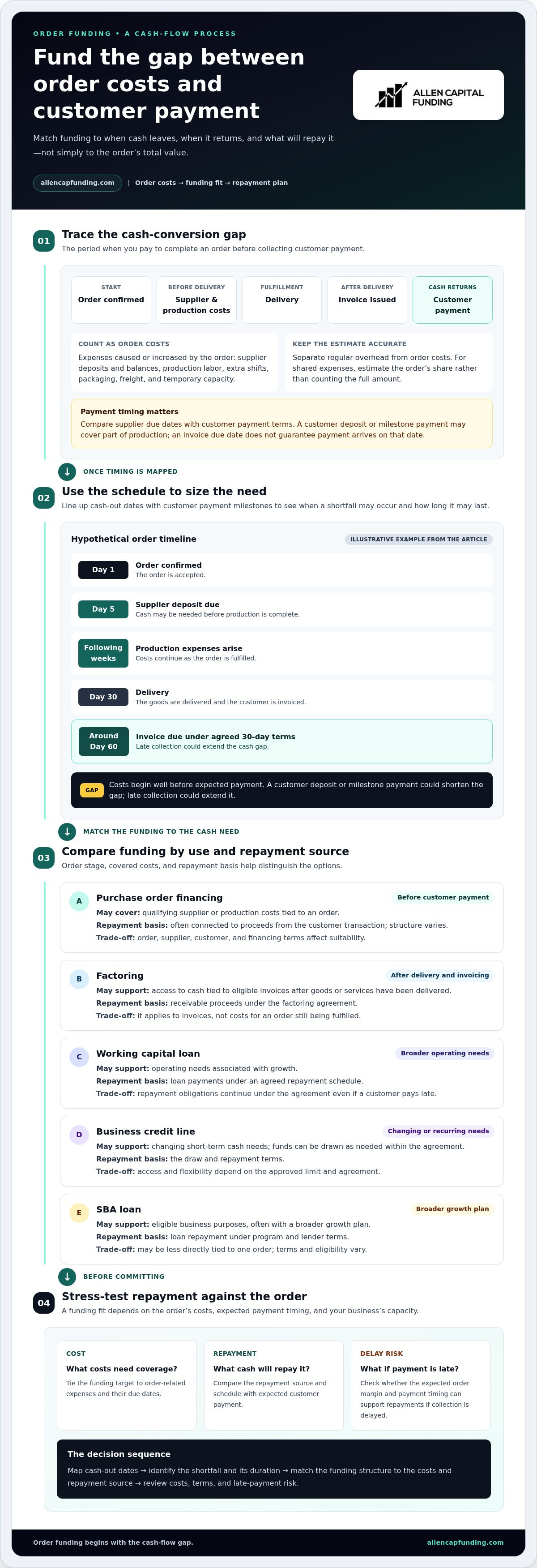
Order-related funding is capital used to pay the costs of fulfilling a customer order before the customer’s payment reaches your business. To see where funding may be needed, map the sequence: order confirmation, supplier and production costs, delivery, invoicing, then collection. The wider financing picture includes debt and alternative approaches, as outlined in Small Business Financing Options. For a specific order, start by identifying when cash leaves your business and when it is expected to return.
The cash-conversion gap is the period when your business must pay to complete an order before collecting the customer’s payment. Estimating that gap helps you determine how much capital may be needed and when it must be available. Business funding to take on bigger orders should reflect the timing and costs of the order, not just its total value.
Which costs arrive before your customer pays?
Start with expenses directly caused by the order. A supplier deposit may be due as soon as you accept it, with the balance due later. Production labor, extra shifts, packaging, freight, and temporary capacity costs may follow as work progresses. Include an expense when the order creates or increases it.
Separate those amounts from regular overhead, such as rent or routine payroll, that your business would owe even without the order. If an expense supports both the order and normal operations, estimate the order’s share rather than counting the full amount. This gives you a more accurate funding target and avoids treating every business expense as order-related.
How do payment terms affect the funding need?
Compare each supplier due date with the customer’s agreed payment terms. A customer deposit or milestone payment may cover part of production and reduce the amount you need to carry. If payment is due only after delivery and invoicing, you may need to cover more costs for longer. An invoice due date is not a guarantee that payment will arrive on that date, so account for possible delays when assessing repayment risk.
Hypothetical timeline: Your business confirms an order on Day 1. A supplier deposit is due on Day 5, production expenses arise over the following weeks, and delivery takes place on Day 30. You invoice after delivery under agreed 30-day terms, making the invoice due around Day 60. Here, costs begin well before the expected payment date. A customer deposit or milestone payment could shorten the gap, while late collection could extend it.
List expected cash-out dates alongside customer payment milestones. This schedule shows when a shortfall may occur, how long it could last, and which order costs need coverage.
Which business funding options can support a larger order?
The right structure depends on when you need funds, which costs need coverage, and what cash will repay the financing. Some options are tied to an order or invoice; others provide broader working capital. Use this comparison to narrow the choices, then review the specific terms and eligibility conditions for each option.
When might purchase order financing be relevant?
Purchase order financing may be relevant when a confirmed customer order requires supplier or production spending before customer payment arrives. Its order-linked structure can address a specific fulfillment gap, but it does not fit every business or transaction. Suitability depends on the order, the parties involved, and the financing terms. Review the applicable requirements, costs, and repayment mechanics before committing.
When might a credit line, working capital, or factoring fit?
A credit line may suit recurring needs that change from order to order, since the business can draw funds as needed within the agreement. A working capital loan generally provides defined funding with a repayment structure and may support wider operating demands tied to growth. Factoring is different: it relates to eligible receivables once an invoice exists, not an unfulfilled order. The SBA Loan Programs for Business Growth page outlines SBA loan options for businesses considering broader financing needs.
When comparing business funding to take on bigger orders, match each structure to the order’s costs and likely repayment source. Allen Capital Funding helps businesses compare these funding categories in context. Explore tailored funding options based on the order and your broader business needs.
Compare order funding by timing, repayment, and business risk
Once you’ve identified the order’s cash needs, compare funding structures by asking four questions: When can funds be used? Which costs qualify? What cash repays the funding? How much flexibility does the business retain? A structure that covers supplier costs before production may not address a later gap caused by customer payment terms. Timing, eligibility, and repayment terms vary by product, so assess the actual agreement rather than relying on a general description.
Next, test the order’s economics. Estimate the customer revenue you expect to collect, subtract direct fulfillment costs, and account for financing charges and likely changes to production, shipping, or labor. The remaining margin should make sense for the work and leave room for ordinary operating needs. If a small delay or cost increase would erase the margin or disrupt other commitments, revisit the funding amount, schedule, or order plan.
Funding timing: Will capital arrive before the expense it is meant to cover?
Eligible costs: Can it cover supplier, production, or other relevant order expenses?
Repayment source: Does repayment rely on customer collections, a set payment schedule, or another agreed source?
Flexibility: Can the structure accommodate changing costs or timing, and what obligations remain if plans shift?
Can the order support its own financing obligation?
Compare the revenue you reasonably expect to collect with fulfillment costs and the full financing obligation. Test a base case and a slower-collection case, then consider possible returns, cancellations, or customer disputes. A signed order is evidence of demand, but it does not guarantee that delivery will go as planned or cash will arrive on schedule. Make sure the business can manage the obligation if collection takes longer than expected.
What risks should owners weigh before accepting more work?
Consider whether the order depends heavily on one customer, a supplier with limited reliability, or production capacity already committed elsewhere. Check whether added labor, expedited shipping, or other fulfillment changes could squeeze the margin. A realistic schedule and contingency plan can help you manage these risks. If delays could leave payments due before cash is available, adjust the plan before accepting the obligation.
For a closer look at flexible borrowing and its trade-offs, read the business line of credit strategic guide. Apply the same discipline to business funding to take on bigger orders: match the structure to eligible costs and repayment capacity, not just the size of the opportunity.
Prepare a funding request for a larger business order
A clear funding request connects the order, the cash shortfall, and a realistic repayment plan. Work through the information in sequence: quantify order-specific costs, map when each payment is due, assess the expected margin, gather supporting records, then compare funding structures against the gap. This explains not only how much capital you’re seeking, but why it’s needed and how the business expects to repay it.
Build a clear order-level cash-flow forecast
Create a schedule of expected amounts and dates for supplier deposits, materials, production, labor, packaging, and delivery. Place customer deposits, milestones, invoice dates, and agreed payment terms alongside those costs. The forecast should show the largest projected cash shortfall and when it occurs. Then test a delayed-payment scenario to see whether the business can manage the obligation if collection takes longer than planned.
Organize records that explain the funding request
Prepare documents that support both the order and your business’s ability to fulfill it. Requirements differ by funding structure and lender, so use this as a starting checklist rather than a universal application list:
Customer purchase order or signed order agreement, including delivery requirements and payment terms
Supplier quotes or invoices, plus relevant production, shipping, and packaging estimates
Current business financial statements and cash-flow information
Receivables aging and other records showing outstanding customer invoices
A concise order forecast outlining the funding purpose, timing, margin, and expected repayment source
Keep the figures consistent across the forecast and supporting documents. If a supplier quote changes, update the cash-flow schedule. If the projected margin depends on specific delivery or payment milestones, state those assumptions clearly. For funding needs connected to business assets, the asset-based lending guide offers additional context on using balance-sheet assets to support liquidity.
With this groundwork in place, you can discuss business funding to take on bigger orders using the facts of the order rather than a general estimate. Review funding options for your order with Allen Capital Funding.
Explore a tailored funding path for the order with Allen Capital Funding
A sound funding decision brings three factors into alignment: the costs required to fulfill the order, the timing of customer payments, and your business’s capacity to meet repayment obligations. An order’s size alone does not determine the best structure. Consider where the cash shortfall occurs, what the funds need to cover, and what cash flow can realistically support the obligation, including if collection is delayed.
Allen Capital Funding helps businesses compare commercial funding categories in context. Depending on the order and broader business needs, options include purchase order financing, factoring, working capital, credit lines, and SBA loans. Each has a different potential use and structure. Compare the costs it may cover, the timing of funds, and the expected repayment source against your specific order.
What to bring to a funding conversation
Bring the customer order, fulfillment budget, payment terms, and expected delivery timeline. Add a simple cash-flow forecast showing the projected gap, current cash flow, and existing obligations. Note uncertainties that could affect the schedule, such as supplier deposit dates, production milestones, delivery requirements, or expected customer payment timing. These details keep the discussion grounded in the order’s actual funding need.
How a tailored funding discussion supports the next decision
Compare possible structures against the costs they may cover, when funds are needed, and how repayment is expected to work. Review documentation requirements, repayment expectations, and material terms before moving forward. Focus on the details of the specific funding path rather than relying on general assumptions.
Prepare a few clear questions: Does the potential structure address the timing of the cash shortfall? What is the expected repayment source? How could a later customer payment affect the business’s ability to meet its obligations? The answers can help you decide whether to proceed, adjust the order plan, or consider a different funding structure.
Matching business funding to take on bigger orders with your cash flow and repayment capacity supports a more informed decision. If you’re ready to discuss the order, its costs, and the funding gap, book an online consultation with Allen Capital Funding.
Plan your next order with a clear funding strategy
A larger order is easier to evaluate when you understand its cash-flow gap, compare funding structures, and check whether expected repayment fits your business’s capacity. A forecast that connects fulfillment costs with customer payment timing can help you prepare a focused funding request and weigh risks before committing.
Allen Capital Funding helps businesses explore purchase order financing, factoring, working capital, and credit lines. Its team provides guidance to compare these funding categories with your order’s needs. The right business funding to take on bigger orders starts with a clear view of the costs, timing, and repayment plan.
Book an online consultation to explore funding options for your next order. With a practical plan and tailored guidance, you can assess your next growth opportunity with greater confidence.
Frequently Asked Questions
How can a small business finance a large order before getting paid?
Compare financing options with the order’s upfront costs and expected customer payment date. Purchase order financing may be relevant to certain supplier or production expenses, while working capital or a business credit line may address a broader cash-flow need. First map costs and due dates, then identify what cash will repay the funding. Review the terms and eligibility for the specific structure before committing.
What is purchase order financing, and when might it help?
Purchase order financing is an order-linked funding option that may help businesses cover qualifying fulfillment costs before customer payment arrives. It may be relevant when supplier or production expenses arise early in the order cycle. Suitability depends on the transaction, the parties involved, and the financing terms. Review applicable eligibility, repayment expectations, and costs for the specific arrangement before deciding.
Is invoice factoring the same as purchase order financing?
No. Purchase order financing may help address certain costs before an order is fulfilled, while invoice factoring relates to eligible receivables after an invoice exists. In a factoring arrangement, a business receives funding connected to its invoice, subject to the applicable terms. Factoring may therefore help manage cash flow after delivery and invoicing, but it is not the same as financing costs for an unfulfilled order.
Can a business line of credit help fund a bigger order?
A business line of credit may help cover order-related costs when the business needs flexible access to funds, depending on its approved limit and agreement. It differs from a loan with a defined funding amount and repayment structure. Compare draw and repayment terms with supplier due dates, customer payment timing, and existing obligations. A line of credit can create repayment risk if collections arrive later than expected.
What documents are commonly useful when seeking funding for a large order?
Useful records may include the customer purchase order or agreement, supplier quotes or invoices, delivery requirements, and an order-level cash-flow forecast. Current business financial statements, cash-flow information, and receivables aging can help explain repayment capacity and outstanding collections. Requirements differ by funding structure and lender, so use this as a preparation checklist rather than a complete or universal document list.
How do I know whether a large order is profitable enough to finance?
Estimate the revenue you expect to collect, then subtract direct fulfillment costs and financing charges to assess the remaining margin. Include relevant labor, materials, production, packaging, and delivery expenses. Test whether the order still makes financial sense if costs rise or customer payment is delayed. Consider returns, cancellations, or disputes too. A signed order does not guarantee that payment will arrive on schedule.
Can SBA loans be used to fulfill a large customer order?
An SBA loan may support eligible business purposes, but whether it fits a particular order depends on the loan program, lender requirements, and the business’s circumstances. Compare it with order-linked options if the need also relates to a broader growth or operating plan. Review the proposed use, eligibility, documentation, repayment structure, and timing before relying on an SBA loan for fulfillment costs.