
4 ways to respond after an SBA loan denial
A denial doesn’t automatically end your path to SBA financing. If your SBA loan was denied, what you do next is review the lender’s reasons, address the gaps, and decide whether to reapply; some SBA lenders require a 90-day wait after sending a denial notice.
It’s understandable to want to try again quickly, especially when your business needs capital. But the stronger next move may be to improve your application, approach a different lender, or consider another type of funding. This guide explains common reasons SBA applications are denied and practical ways to respond. You’ll learn how to strengthen your financial records and projections, when a new lender may make sense, and which alternative funding options could better match your needs. With a clear plan, you can choose your next step based on the reason for the denial and the financing your business needs.
Table of Contents
1. Common reasons business loan applications are denied
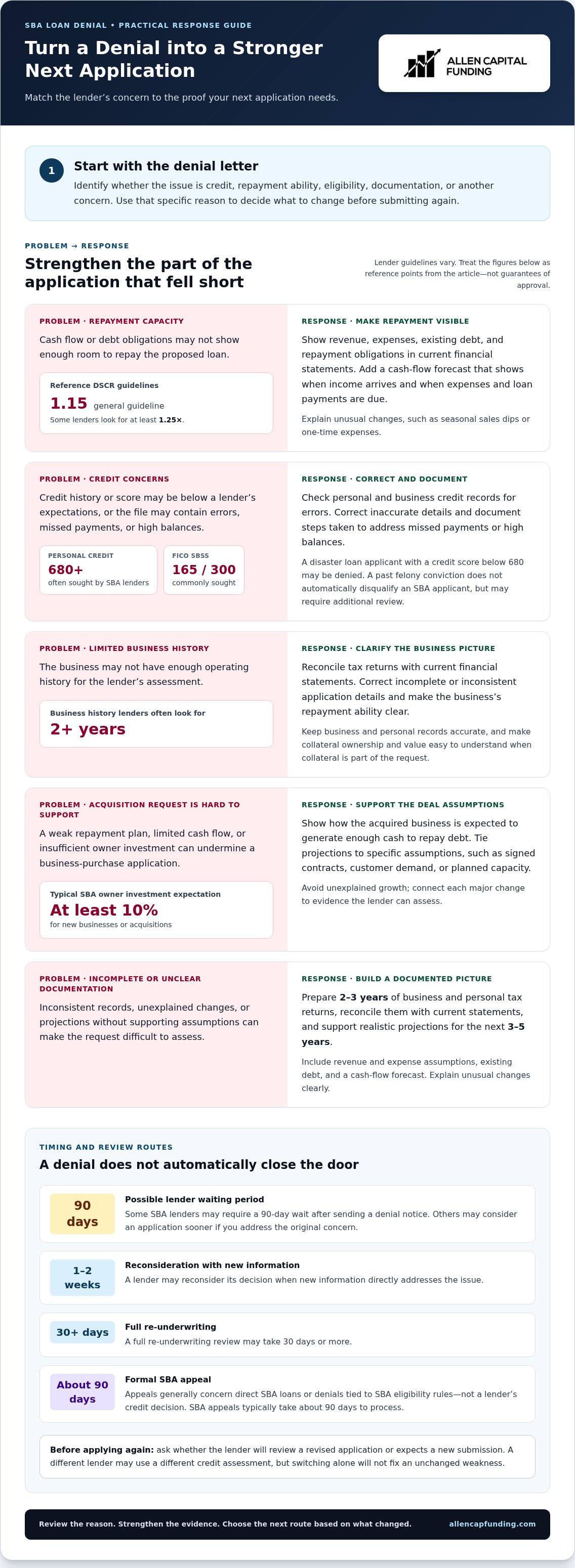
An SBA loan denial often points to concerns about repayment capacity, credit, or eligibility. Many SBA lenders look for a personal credit score of at least 680 and two or more years of business history. A debt service coverage ratio, or DSCR, of 1.15 is a general guideline; some lenders look for at least 1.25x. Lenders may also consider the FICO SBSS score, commonly seeking 165 out of 300 points. Review the denial letter for the specific issue before changing your application.
Acquisition applications can face added scrutiny because the lender assesses both the buyer and the business being purchased. A weak repayment plan, limited cash flow, or insufficient owner investment can undermine the request. The SBA typically expects at least a 10% owner investment for new businesses or acquisitions. A lender may also question projections that don’t show how the acquired business will generate enough cash to repay debt.
Disaster loan denials can reflect credit concerns or gaps in the application. An SBA disaster loan applicant with a credit score below 680 may be denied. A past felony conviction doesn’t automatically disqualify an SBA applicant, but it may require additional review. For any denial, identify whether the letter points to credit, repayment ability, eligibility, documentation, or another concern.
How do SBA loan denial rules differ for 7(a), 504, and microloans? The programs have different eligibility requirements and financing purposes, so the relevant issue depends on the program and application. For most SBA-guaranteed 7(a) and 504 loans, the participating lender makes the initial credit decision, rather than the SBA.
Does an SBA loan denial affect your credit score or future loan applications? A hard inquiry from an SBA application can temporarily lower your credit score, with the effect usually fading within 12 months. A denial itself doesn’t automatically bar future applications, but lenders may review the same credit and repayment factors again. The Equal Credit Opportunity Act requires lenders to provide a written explanation when they deny credit, so use that explanation to plan your next step.
2. Preparing stronger financial documentation and projections
Use the denial reasons to decide what the next application must prove. Prepare two to three years of business and personal tax returns, then reconcile them with current financial statements. Include revenue, expenses, existing debt, and repayment obligations. Explain unusual changes clearly, such as a seasonal drop in sales or a one-time expense. Keep business and personal credit records accurate, and document steps taken to address missed payments or high balances. If collateral is part of the proposed financing, make its ownership and value easy to understand.
What documents or credit issues should you address before reapplying for an SBA loan? Start with the lender’s denial letter, correct incomplete or inconsistent application details, and organize tax returns for the requested period. Resolve errors in personal or business credit records and show how the business can manage repayment.
Support your request with realistic projections for the next three to five years. Tie expected revenue to specific assumptions, such as signed contracts, customer demand, or planned capacity. Include a cash-flow forecast showing when revenue comes in and when expenses and loan payments are due. Avoid relying on unexplained growth. Connect each major change to evidence the lender can assess.
Seller financing may suit a business sale if an SBA application has stalled or the buyer and seller can agree on deferred payments. These terms may help bridge a funding gap, but both parties should assess affordability and deal risk.
Compared with an SBA-financed sale, seller financing can close in two to four weeks with proper documentation; an SBA business-sale process can take 60 to 90 days at minimum. Compare the buyer’s repayment capacity, seller’s desired proceeds, and timing before choosing a structure.
For borrowers with low credit, some alternative financing options may consider FICO scores of 600 or higher. Compare the full repayment terms and required collateral, then choose financing that fits the business’s cash flow.
3. Choosing a lender and timing a new application
After an SBA loan is denied, what you do next depends on the reason and the lender’s process. Some SBA lenders may require a 90-day wait after sending a denial notice. Others may consider an application sooner when you address the original concern. Use the waiting period to update records, review expenses, and document changes in revenue or repayment capacity. Ask whether the lender will review a revised application or expects a new submission.
Reconsideration and a formal appeal are different routes. A lender may reconsider its decision when new information addresses the issue; that review can take a week or two. If the lender must complete full re-underwriting, it may take 30 days or more. Formal SBA appeals generally concern direct SBA loans or denials tied to SBA eligibility rules, rather than a lender’s credit decision. SBA loan appeals typically take about 90 days to process.
To decide what to do next after an SBA loan denial, consider whether the issue reflects that lender’s credit assessment or underwriting approach. For most SBA-guaranteed 7(a) and 504 loans, participating lenders make the initial credit decision. Present the denial letter and updated application clearly, explaining what has changed. A different lender still reviews eligibility, repayment ability, and supporting documents, so switching alone won’t resolve an unchanged weakness.
Online lenders and nonprofit intermediaries may offer other routes when your timing or qualification needs differ. Compare repayment schedules and interest with projected cash flow, not just decision speed. Keep the funding purpose and planned payments consistent across applications.
Where can you get free help reviewing an SBA loan denial, such as from an SBDC or SCORE mentor? Contact a local Small Business Development Center (SBDC) or SCORE mentor for guidance, and bring your denial letter, application, and current financial records. Ask for help identifying gaps and organizing questions before approaching another lender.
4. Alternative business funding options
An SBA denial doesn’t mean every funding route is closed. Match the amount and timing to your cash flow, then compare total repayment, payment frequency, and how each option affects your balance sheet. A business line of credit generally charges interest only on the amount used, which can help manage short-term expenses. Typical business line of credit APRs range from 10% to 30%, so calculate payments against reliable business income before drawing funds.
Online term loans may provide another route when a business needs a defined amount and repayment schedule. Typical APRs range from 10% to 40%, with funding often taking one to seven days. Short-term business loans typically have repayment terms of three to 18 months. Faster access can come with frequent payments, so compare the schedule with the timing of customer receipts, not just projected annual revenue.
Unpaid invoices may support invoice financing, which uses those invoices as collateral for a lump sum from a financing company. This can help bridge a gap between completing work and receiving payment. Business credit cards may also cover smaller, planned expenses, but typical APRs range from 20% to 28%. Merchant cash advances carry factor rates of 1.2 to 1.5, described as very high; weigh the repayment structure carefully against daily cash flow.
For disaster-related losses, FEMA grants may be available to people formally denied an SBA disaster loan, and may help with business and personal disaster expenses. Grants don’t have to be repaid. Each alternative has a different trade-off: revolving access, invoice-based funding, scheduled loan payments, or grant eligibility. Choose based on the need, expected income, and amount the business can repay without disrupting operations.
If business property is part of your funding plan, explore real estate options as one avenue to consider. Keep the decision grounded in the property’s role, your business’s cash flow, and the obligations any funding would create.
Allen Capital Funding: Credit Lines
Allen Capital Funding offers credit lines for businesses considering funding after an SBA loan denial. A credit line may suit ongoing or changing cash needs, where access to capital over time matters more than receiving one lump sum. Businesses generally pay interest only on the amount used, so compare the expected balance and payment obligations with incoming revenue before drawing funds.
Consider this option when you need working capital for expenses and want to align borrowing with your business’s cash flow. A credit line isn’t automatically the right fit for every need, so compare its repayment structure with the purpose and timing of the funds. Allen Capital Funding can help you consider financing options in light of your business goals.
Contact Allen Capital Funding to discuss whether a credit line fits your next step.
Turn your next financing decision into a clear plan
What to do next after an SBA loan denial depends on the funding purpose, urgency, and your business’s ability to manage repayment. Treat the decision as a chance to match financing to the need, whether that means pursuing another SBA application or considering a different structure. A clear picture of your goals and cash flow can help you choose deliberately.
Allen Capital Funding offers SBA Loans, Credit Lines, and Real Estate financing. If you’re weighing these options, bring your funding priorities and the lender’s reasons for denial into the conversation. That gives you a practical starting point for exploring a path that supports your business plans while keeping repayment in view.
Contact Allen Capital Funding to discuss your next financing step. A thoughtful plan can help you move forward with greater clarity and confidence.
Frequently Asked Questions
Can I reapply for an SBA loan after being denied?
Yes, an SBA loan denial doesn’t automatically prevent a later application. Before reapplying, identify what has changed since the first submission, such as updated financial results, corrected application details, or a different funding request. Some SBA lenders require applicants to wait 90 days after a denial notice. If the underlying concern remains unchanged, submitting the same case again may not address the lender’s reasons.
Can you switch SBA lenders and apply right away?
You can approach another SBA lender, but switching lenders doesn’t guarantee an immediate application. Some lenders require a 90-day wait after issuing a denial notice, and each participating lender makes its own initial credit decision for most 7(a) and 504 loans. Before sending another application, prepare a clear explanation of what has changed and provide the new lender with accurate, current supporting documents.
How do I read my SBA loan denial letter?
Start by identifying the stated reason and whether it concerns credit, repayment capacity, eligibility, or missing information. Separate issues you can correct, such as an incomplete document, from concerns that require a stronger financial record. Compare each reason with the figures and statements in your application. Note any wording you don’t understand, then ask the lender to explain how that concern affected its decision.
What disqualifies you from an SBA loan?
There isn’t one universal disqualifier for every SBA loan program. A business may fail to meet a program’s eligibility rules, or a lender may decide its credit profile, repayment capacity, or application evidence doesn’t support approval. A denial based on program eligibility differs from a lender’s credit decision. Read the reason carefully to determine whether correcting documentation could help or whether the request needs a different approach.
Why was my SBA loan application denied, and how do I get the lender's reason in writing?
The lender’s decision may reflect credit, repayment ability, eligibility, or information in your application. The Equal Credit Opportunity Act requires lenders to provide a written explanation when they deny credit. Use that explanation to compare the lender’s concern with the records you submitted. If the letter uses broad wording, ask which part of your application or financial picture drove the decision.
How do I appeal an SBA loan denial, and what are the deadlines?
For most 7(a) and 504 loans, the participating lender makes the initial credit decision, so an SBA appeal generally isn’t the route for challenging that decision. For an SBA disaster loan denial, according to the U.S. Small Business Administration, submit a reconsideration request within six months of receiving the denial letter. A secondary appeal must go to the director of the SBA Disaster Assistance Processing and Disbursement Center within 30 days of the denial notification.



Comments